
Lake life
An oyster roast on Boyce Lawn: a coastal feast in a lake town and the winter tables that came before
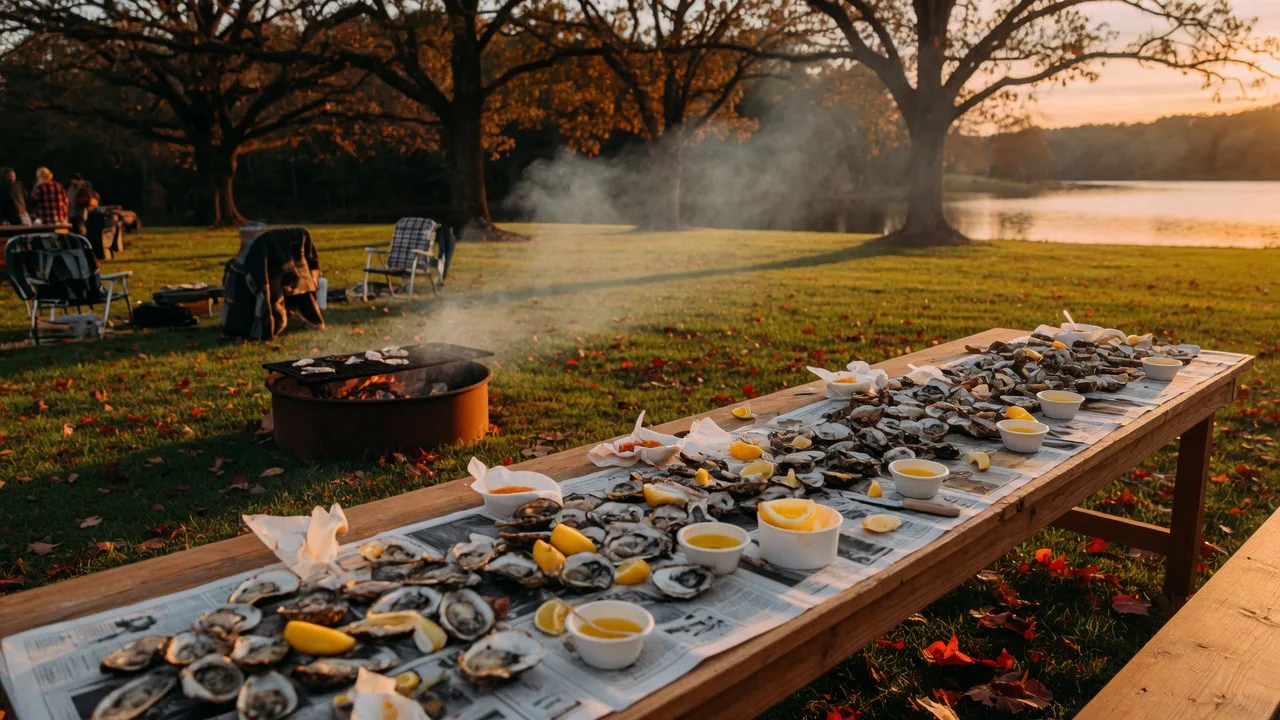
On Sunday, November 8, 2026, from two to four in the afternoon, Jones Oyster Co. will hold its fall oyster roast at Boyce Lawn in Hartwell. Oysters roasted over open fire, selected light bites, beer, wine, and bubbles, and an all-you-can-eat spread that sells out quickly. It is a coastal tradition sitting a long way from the coast, and it is exactly the way this lake town likes to close out fall. We have spent our careers around waterfront communities, from Lake Norman to Lake Wylie to Lake Hartwell, and we have learned one thing above all: the table is where a lake town does its best work. This is the story of how Hartwell's winter tables came to be, from the smokehouse at the 1873 farmhouse to the fires of Boyce Lawn.
The roast
Picture a November afternoon at Boyce Lawn: the air has turned crisp, the pecans are dropping in the yards around town, and the fire pit is already glowing when the first guests arrive. The oysters go on the grate by the basketful, crack open over the heat, and land on long tables with lemon wedges, ramekins of melted butter, and paper cups for something cold. It is communal in the truest sense of the word. Nobody comes to an oyster roast alone for long. The whole point is the shared table, the cracked shells piling up, the stories getting louder as the afternoon wears on.
The roast on November 8 arrives at the hinge of the Hartwell calendar. The Northeast Georgia Ag Expo has just wrapped its late-summer run. The harvest festivals of September and October have come and gone. The tree lighting on the courthouse square is two weeks away. November is the small narrow season between harvest and holidays, and the oyster roast is Hartwell's way of filling it with fire and food. Tickets sell out fast; we mention it now so you can mark the date before it is gone.
The winter table before the lake
The table at 257 Methodist Park Lane in the 1870s and 1880s looked nothing like an oyster roast, and it obeyed a much older calendar. November was the last big push of the food year: the pecans came in from the grove that still shades the yard, the kitchen garden was put to bed, and the family filled the smokehouse and the cellar for the months ahead. Salt pork, cured hams, dried beans, preserved fruit, apples from the orchard, and whatever the river gave up in the cold months. There was no icebox and no grocery store a mile down the road; the winter table was the harvest, stored by hand.
That kind of table made the cook the center of the household in a way that is hard to feel today. Every jar and every ham was a decision made months earlier. Company in the winter was company at the family's own stores, and the measure of a good farm was the fullness of its smokehouse and its stories. The family on this land did not think of their November as busy; they thought of it as the difference between a comfortable winter and a hungry one. The pecan harvest, which still runs October through December across Georgia, was their version of the season's guarantee.
When the lake changed what the town ate
The creation of Lake Hartwell changed Hartwell's table the way it changed everything else, gradually and then completely. The reservoir began filling in February 1961 and reached full pool on March 12, 1962, and the flat water brought a new kind of neighbor: summer families from Atlanta and Charlotte, weekend boaters, retirees who came for the shoreline and stayed. With them came the habits of bigger places, including the idea that a community gathering could be built around a fire instead of a harvest.
At the same time, the roads and the freezers arrived. Refrigeration, better highways, and the new tourism economy made the grocery store and the restaurant part of ordinary life, and foods that once required a trip to the coast became things you could find in town. The old all-you-can-eat generosity of the harvest table proved perfectly suited to the new world. Hartwell never lost the instinct that a gathering should feed everyone; it just changed what was on the table. Oysters, hauled up from the coast and roasted over a fire on a lawn in the foothills, are the modern version of the smokehouse dinner: food as hospitality, served until nobody can eat another bite.
The feast of the lake town today
November in Hartwell today is a month of tables. The oyster roast on Boyce Lawn opens it; the harvest festivals that ran through the fall close it out; and the tree lighting on November 23 begins the holiday feasting that runs straight through Christmas. The town feeds itself, and it feeds its visitors, with a confidence that comes from a century and a half of practice. A lakefront community learns early that hospitality is the amenity nobody can buy, and Hartwell has perfected it.
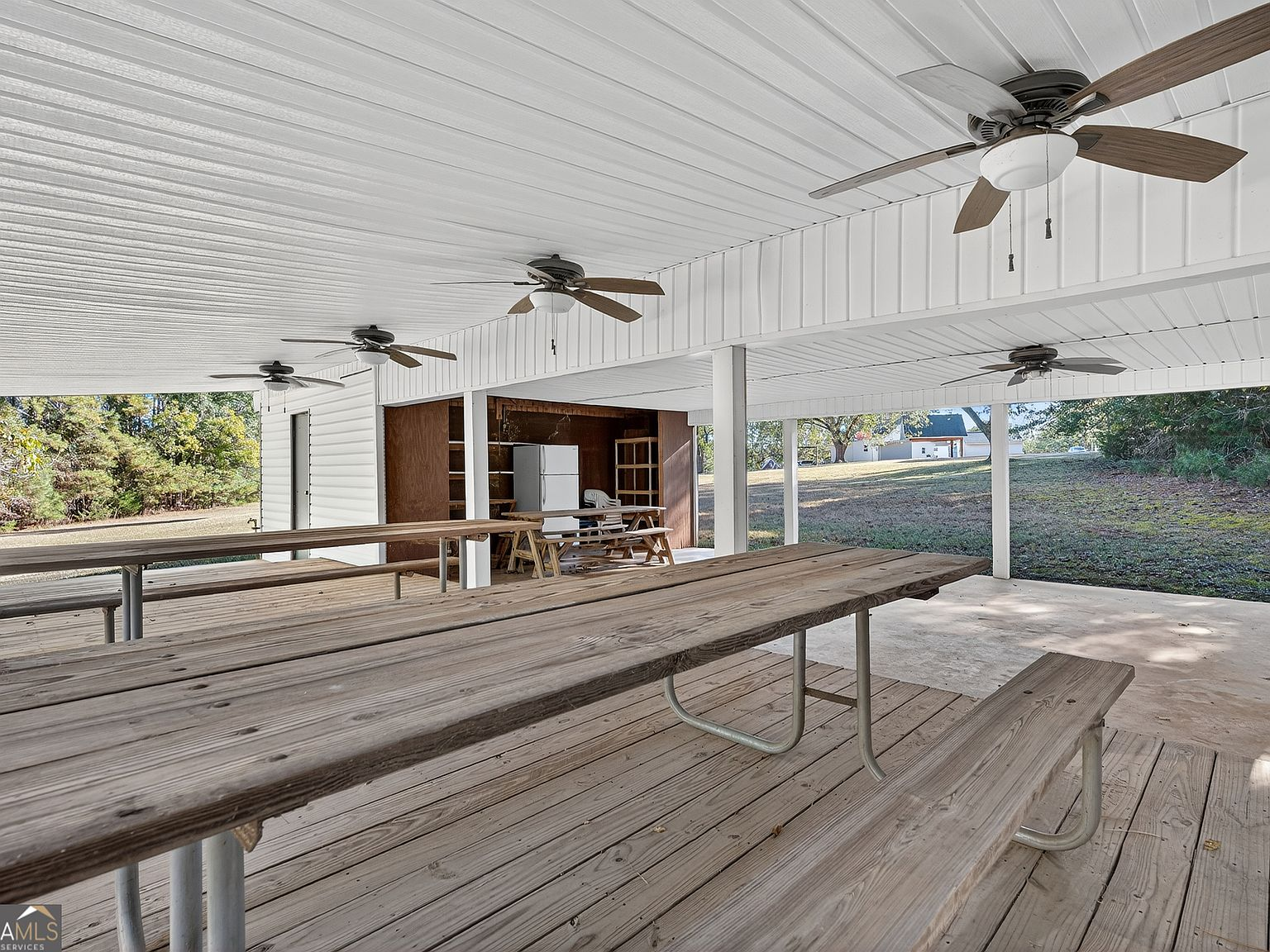
The estate at 257 Methodist Park Lane was built for that same table. The lakeside pavilion, with its two full bathrooms and room for a crowd, sits a short walk from the covered porch and the open-air deck, and the flat 4.546 acres can host everything from a family dinner to a wedding. The family who built this home in 1873 fed their winters from a smokehouse; the family who buys it next will feed their summers from a pavilion at the water's edge. Same gathering. Same land. Different century.
What the table teaches
We have watched generations of lake families learn the same lesson: the property matters less than what happens on it. An oyster roast on Boyce Lawn, a pecan harvest under a 150-year-old grove, a pavilion full of guests at dusk, these are the events that make a place beloved. The land at 257 Methodist Park Lane has held the same tables for 153 years, from the smokehouse winters of the 1870s to the all-you-can-eat generosity of today. Buyers often ask us what life on the lake is really like. The answer, in Hartwell, is that life on the lake is one long table, and there is always room for one more. Written by Amy Petrenko of The Petrenko Group.