
Generations
150 Augusts: what the same month has looked like from this porch across the generations
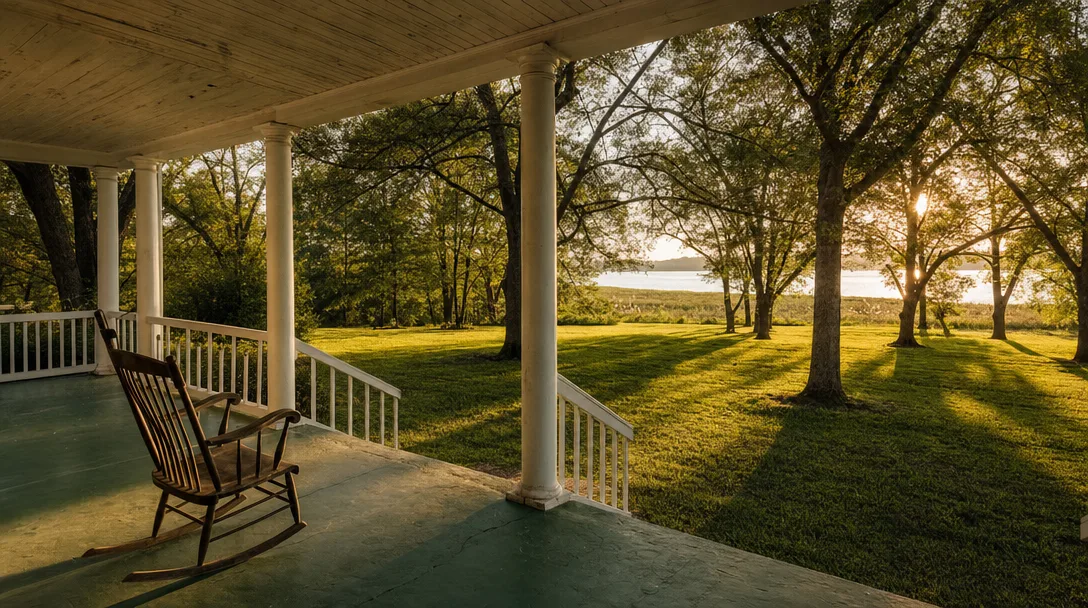
We have written before about what it means for a property to be held by the same family since the 1800s. But a statistic like "153 years of ownership" is abstract. What does that span of time actually feel like when you stand in one place and let your mind move through it? One way to make it concrete is to take a single month and imagine what it has looked like from the same spot across the generations. August is a good month for this exercise. It is the hottest month of the year in northeast Georgia, the month when the land is at its most demanding and its most generous. A month that has tested every family who has ever lived on this land.
August 1886: the river valley
In the summer of 1886, the porch at what is now 257 Methodist Park Lane looked out across the Savannah River valley, not a lake. The water was half a mile away and sixty feet lower, running through the bottomlands in a channel that flooded every spring and dropped to a trickle in late summer. The family who built this home thirteen years earlier had chosen this spot not for the view of the river, but for the flat ground, the rich soil, and the mature pecan trees that were already producing when they arrived.
An August morning in 1886 began before dawn. The heat arrived early in the Georgia Piedmont, and the work of summer could not wait for it to break. The cotton fields needed tending. The corn needed to be checked for worms. The livestock needed water, and the well was a hundred feet from the house. The family who lived here did not think of August as a time for leisure. They thought of it as the crucible of the growing season — the month that determined whether the fall harvest would be enough to carry them through the winter.
The pecan trees that shaded the house had been planted by an earlier generation, and by August of 1886 they were mature enough to produce consistently. The family gathered the nuts in November, but in August they watched the developing clusters and read the signs. A dry August meant smaller nuts but richer flavor. A wet August meant a heavier harvest but more risk of rot. The trees communicated with the family through the language of their branches — a language that the family had learned to read because their survival depended on it.
In the evenings, the family sat on this same porch. Not for pleasure in the way we use the porch today, but because the house was still radiating the day's heat and the porch was the only place where the evening breeze could reach them. The river valley below them was invisible in the dark, but they could hear it — the sound of water moving over the rocks, the same sound that had been running through this valley for millennia. They did not know that in seventy years, the federal government would dam that river and flood that valley. They only knew that the water was there, that the land was holding, and that the season was passing as it always had.
August 1966: the new lake
By August of 1966, the world had changed completely. The Hartwell Dam had been completed in 1962, and the valley that the family had known for generations was now under 56,000 acres of water. The river was gone. The bottomland farms were gone. The neighbors who had lived within walking distance were scattered across the region, their homes demolished or relocated.
The family at 257 Methodist Park Lane had held on. Their property sat above the full-pool line, and they had watched the water rise from this porch — not in a single flood, but over the course of years, as the Corps of Engineers closed the dam gates and the reservoir filled. By 1966, the water was fully established. The view from the porch was no longer a river valley. It was a lake.
An August morning in 1966 was different from 1886 in almost every way that mattered. The work was no longer agricultural. The family had adapted to the new economy that the lake had created. Some of them worked at the marina. Some of them rented rooms to weekend visitors. Some of them had simply retired and were living on the land they had always lived on, watching the lake transform their front yard into a destination.
The pecan trees were still producing. August of 1966 was a dry year, and the nuts were small but dense. The family harvested them in November as they always had, selling some to the visitors who came from Atlanta and Charlotte and wanted to take home a taste of the lake country. The trees did not know that the river was gone. They had adjusted their root systems to the new water table and they were doing what pecan trees do: surviving, producing, and marking the passage of time in their annual rings.
The evenings on the porch in 1966 were different too. The sounds were different. Instead of the river moving over rocks, there was the slap of boat wakes against the shoreline. Instead of the distant calls of farm animals, there was the hum of outboard motors and the laughter of visitors who had come to enjoy the lake. The family sat on the same porch, in the same chairs, watching a world that had been remade without their consent. But they were still here. They had absorbed the change the way the pecan trees had absorbed the change. Their roots ran deep enough to hold.
August 2026: the legacy estate
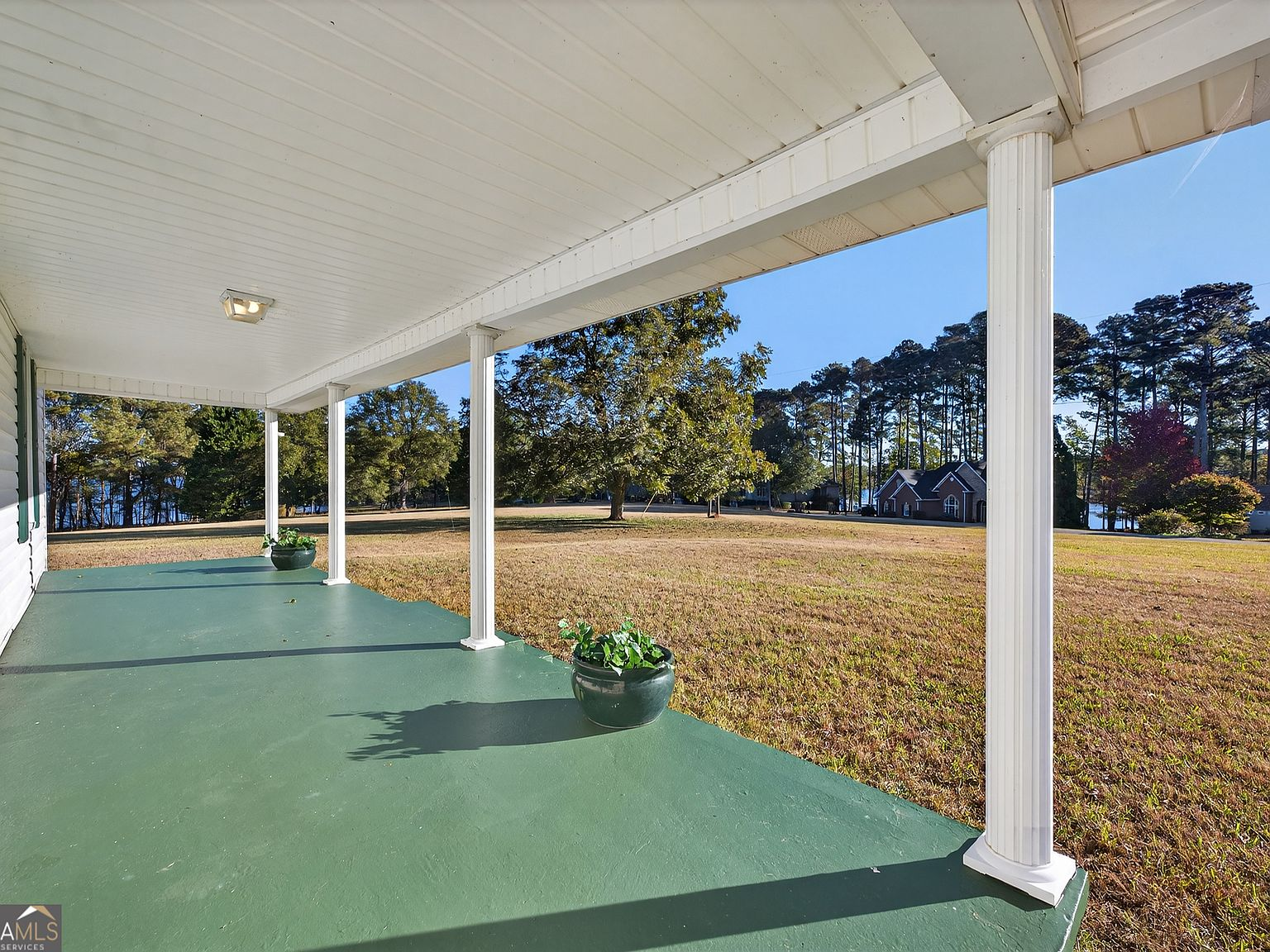
This morning, August 10, 2026, the covered porch at 257 Methodist Park Lane looks out across the same lawn, the same pecan trees, and the same body of water that has been here since 1962. The lake is running low this year, more than seven feet below full pool, but the view is still the view: flat grass, mature trees, and blue water visible through the gaps in the canopy.
An August morning in 2026 is different from both 1886 and 1966. There is no farm work. There is no adaptation to a newly created lake. There is just a property that has been held and maintained for 153 years, now offered to the next generation. The morning starts with coffee on the porch, watching the mist burn off the lake. The pecan trees are heavy with developing nuts, their branches showing the stress of the dry summer in the slight curl of their leaves. The family who holds this property today is preparing to pass it on, and the question of what comes next is not an abstract one.
What connects these three Augusts, spread across 140 years, is not the water or the economy or the work. What connects them is the porch. The same covered porch, the same orientation to the sun and the breeze, the same view across the same land. The family who built this home in 1873 chose this exact spot because of the quality of the light, the direction of the prevailing wind, and the maturity of the pecan trees. Those elements have not changed. The land has held its shape, and the porch has held its position.
The family who lived here in 1886 could not have imagined the lake. The family who lived here in 1966 could not have imagined the Bassmaster Classic or the clean-water ranking or the real estate market that would make this property one of the most desirable on Lake Hartwell's Georgia shoreline. And we, sitting on this porch in 2026, cannot imagine what the family who holds this property in 2126 will experience. But the porch will be here. The pecan trees will be here. The land will be here, holding its ground as it has for every generation before.
What remains constant
Across all three Augusts, certain things have not changed. The heat. The sound of cicadas in the pecan trees at dusk. The particular quality of light in late afternoon, when the sun drops low enough to turn the landscape gold. The way the porch catches the evening breeze after a day of still, heavy air. The feeling of sitting in the same spot that earlier generations sat, looking out at a view that is both completely different and exactly the same.
The family who built this home did not build it for a lake that did not exist. They built it for the land as it was: rich bottomland on a river valley, shaded by pecan trees, oriented to catch the breeze. The fact that the property survived the creation of the lake and thrived in its aftermath is not an accident. It is a testament to the wisdom of the original choice. Good land, well chosen, adapts to whatever comes.
At The Petrenko Group, we have helped families find properties that will outlast them. We know that the most valuable waterfront estates are not the ones with the newest finishes or the most square footage. They are the ones with the deepest roots. 257 Methodist Park Lane has roots that go back to 1873. The pecan trees remember every August since then. The porch boards remember every footstep. And the land remembers why it was chosen in the first place: because it was good ground, and because someone understood that good ground is worth holding onto through every change.
The next August
The question that every great property asks is not what it has been. It is what it will become. The next family to own 257 Methodist Park Lane will add their own Augusts to its story. They will sit on the porch in the evening heat, watch the pecan trees do their slow work, and become part of a tradition that started in the 1870s and has not stopped since.
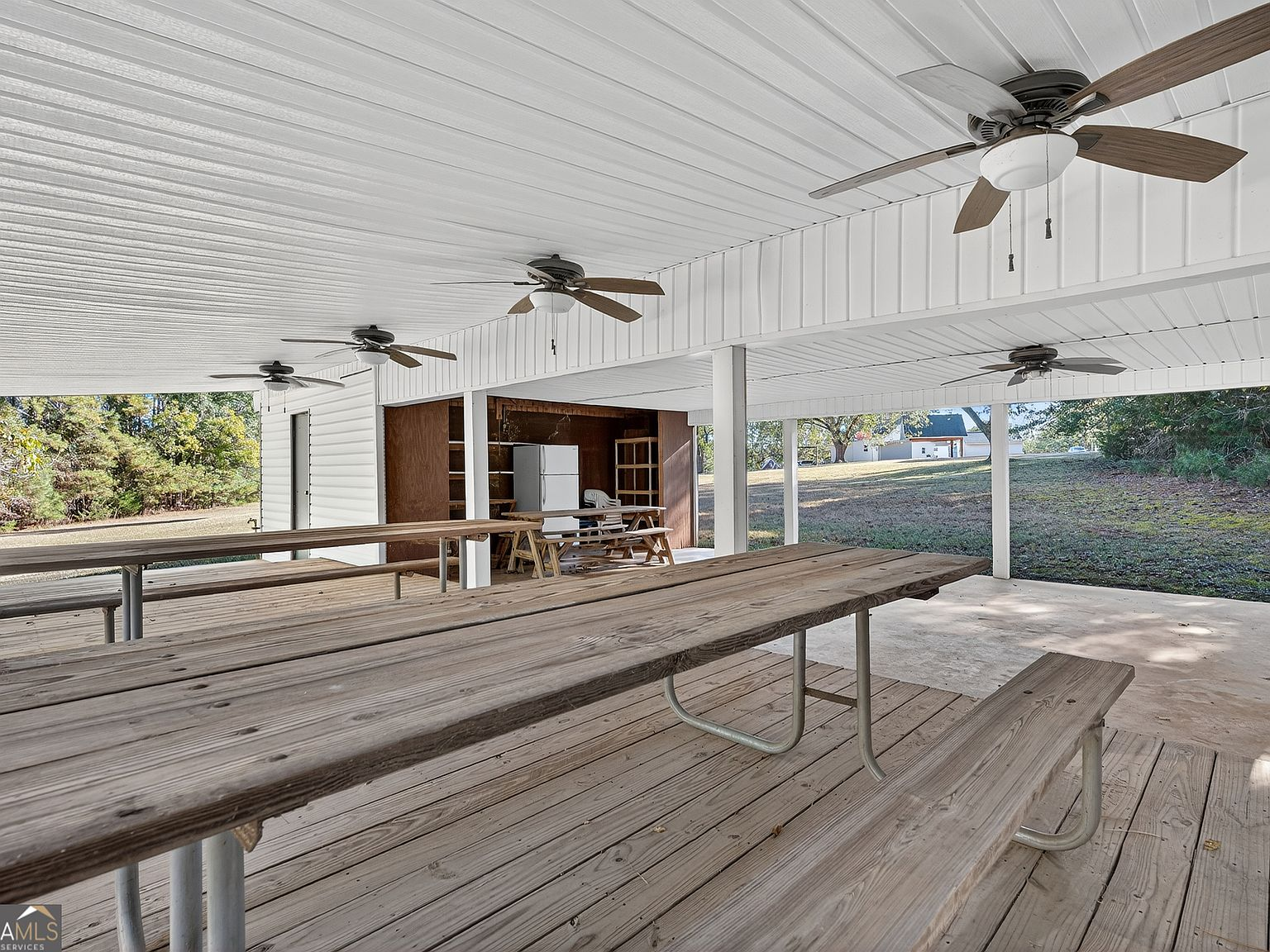
The history of this land is not a museum piece. It is a foundation. The 1873 farmhouse, the 4.546 acres of flat private lawn, the pecan grove, the lakeside pavilion, the covered porch that has faced the same direction for 153 years — these are the physical anchors of a property that has proven it can hold through anything. The next family will not be buying a house. They will be stepping into a story that has been running through every August since before the telephone, before the automobile, before the lake.
And next August, someone will be sitting on this porch, watching the sun set over the water. The question is who.