
Fishing & Outdoors
Fishing the same water three ways: from Savannah River cane poles to a fall of tournaments
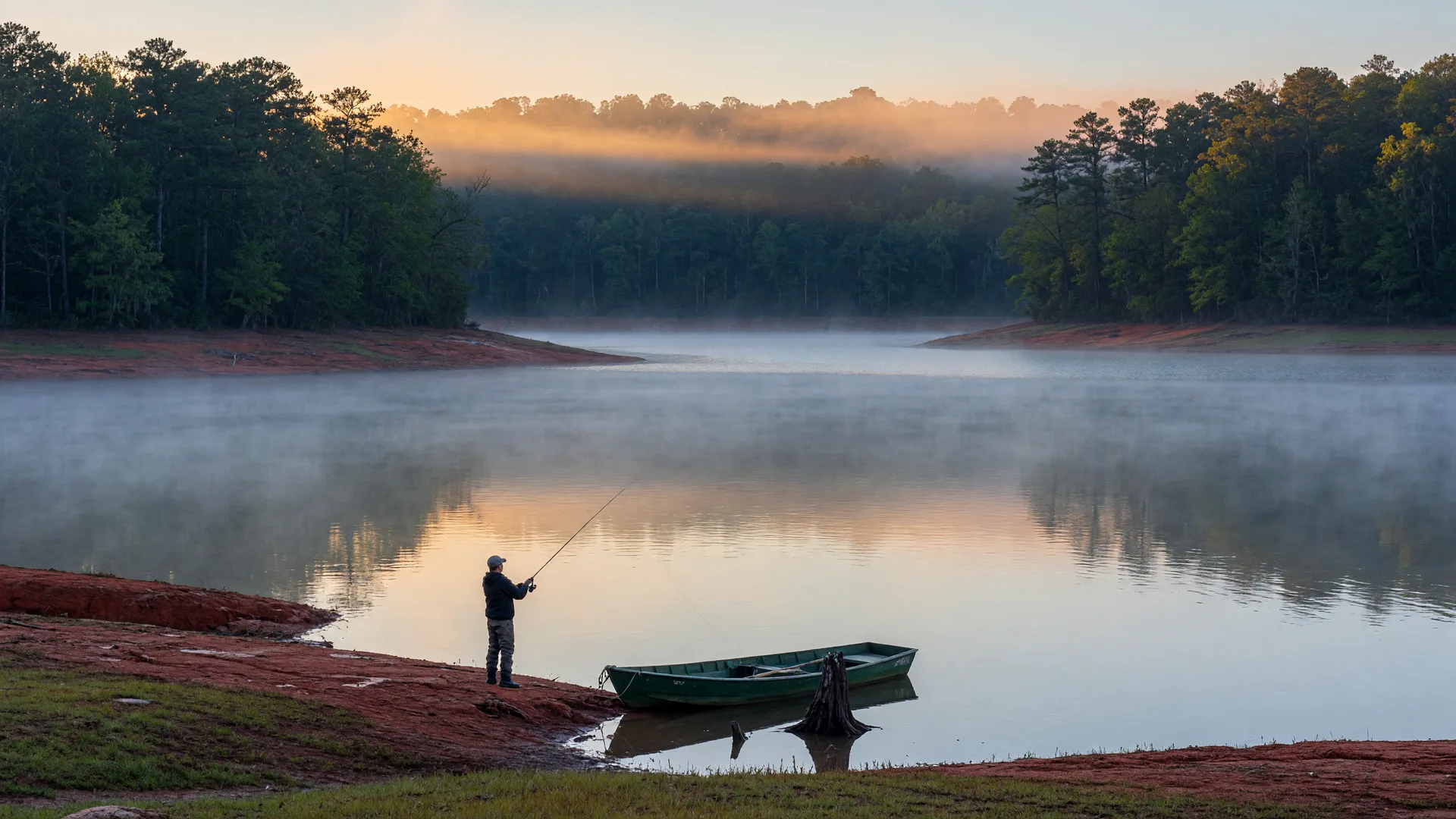
Fall 2026 is a banner season for bass fishing on Lake Hartwell, and it lands on a lake that has been fished for a century and a half from the same high ground. The Mercury B.A.S.S. Nation Championship runs November 18-21 out of Green Pond Landing across the state line in Anderson, with weigh-ins free and open to the public. Georgia Bass Nation takes over the Gum Branch ramp on October 11. The Bassmaster Team Championship closes the year here December 4-7. For the family at 257 Methodist Park Lane, the tournament boats are the latest chapter in a much older story that started with cane poles on a river.
Cane poles on the Savannah
Before Lake Hartwell existed, the water at the bottom of this property was the Savannah River, and the family who lived here fished it the way everyone fished it: with a cane pole, a length of line, a hook, and patience. The river gave them catfish, bream, and redbreast sunfish, protein that cost nothing but an evening by the bank. The fishing was not sport in the way we use the word now. It was part of how a farm household ate, and the river was as much a pantry as a boundary.
The flat, elevated ground that made the house site safe from floods also made it easy to walk to the water. The family did not have to descend a steep bluff to fish; they crossed the fields, reached the river bottom, and set up wherever the shade was. That proximity to the water, taken for granted for eighty years, would become the most valuable accident in the property's history when the dam turned the river into a lake.
Learning a new reservoir
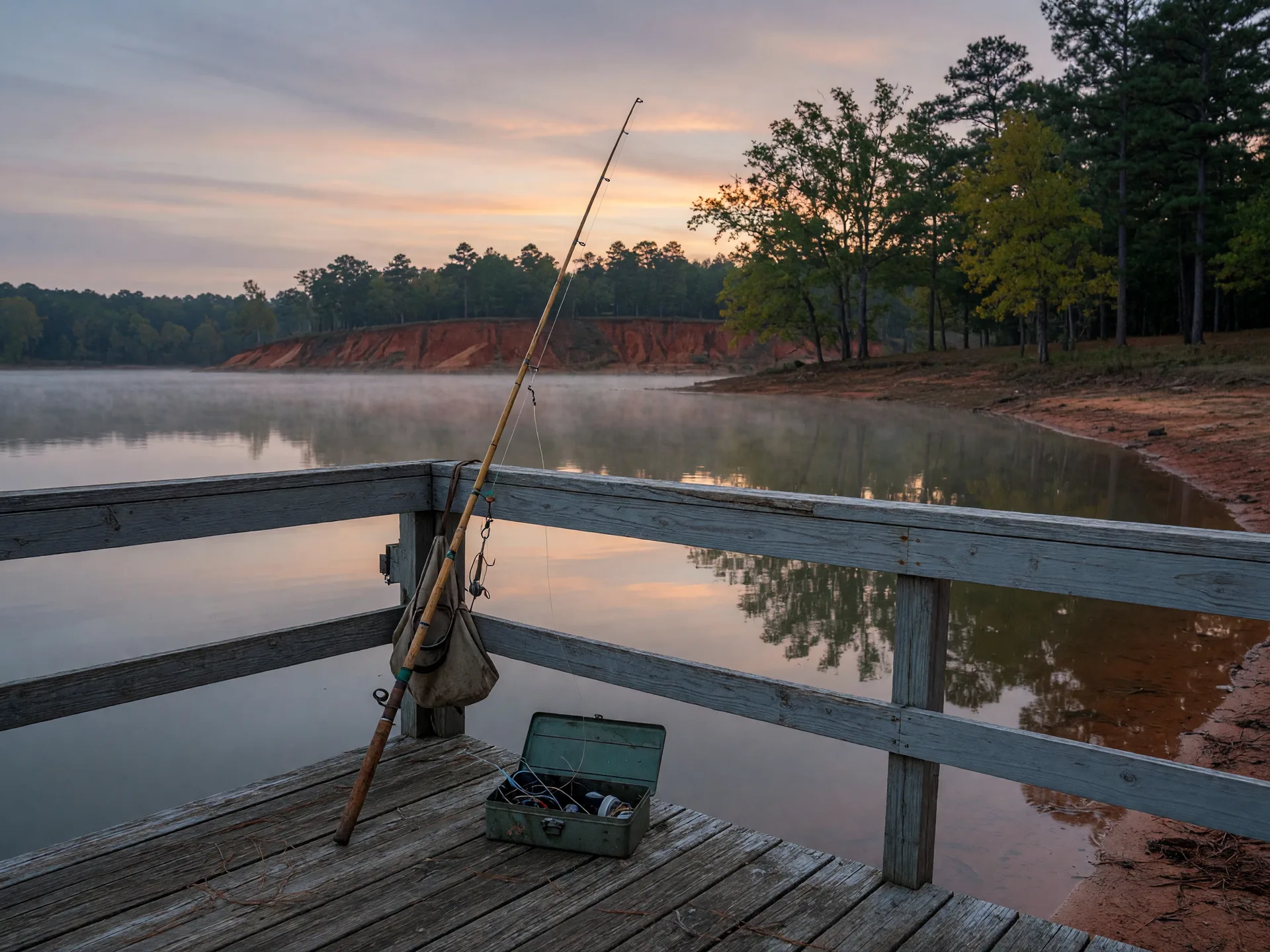
When Lake Hartwell filled in 1961 and 1962, the family on the high ground did not lose their fishing; they gained a bigger one. The same banks that had produced river catfish now fronted 56,000 acres of still water, and the fishing changed with it. The shallow, current-fed spots that held bream became deeper flats that held bass. The old river channel, now submerged beneath the reservoir, became the roadmap for everyone who wanted to find fish. The family who had known the river's bends and sandbars got to fish a lake they had watched being born, which is an advantage no guidebook can sell.
Across the decades that followed, Lake Hartwell grew into one of the premier bass fisheries in the Southeast. Its size, its water quality, and its structure drew tournament organizers and anglers from across the country, and the lake that began as a flood-control project became a stage for the sport's biggest events. The families on the Georgia and South Carolina shores, including the one at Methodist Park Lane, watched the transformation from their own docks and banks.
Fall 2026: the tournament season
This fall is especially full. On October 11, Georgia Bass Nation runs an adult trail event out of Gum Branch on the Georgia side, the same day the Clemson Bass Fishing Team holds its fall series on the South Carolina side of the lake. Then comes the headline: the 2026 Mercury B.A.S.S. Nation Championship presented by Lowrance, November 18-21, hosted out of Green Pond Landing in Anderson. It is one of B.A.S.S.'s most prestigious grassroots events, and its weigh-ins are free and open to the public, a chance to see a national field of weekend anglers compete on the same water that a farm family once fished with cane poles. The Bassmaster Team Championship at Lake Hartwell follows December 4-7, closing a remarkable tournament year.
The tournaments bring boats, crowds, and commerce to both sides of the lake, and they draw attention to the very qualities that make this shoreline attractive: big water, clean water, and public access. They also make a quieter point. The lake that draws national competitors today is the same body of water that the family at 257 Methodist Park Lane watched fill in 1961. Fishing this water has connected every generation on this land, whether the tackle was a cane pole, a spinning rod, or a bass boat tied at the bank.
The bank that has never stopped fishing
From the shoreline at 257 Methodist Park Lane, the view this fall is the tournament fleet at work on the lake and, closer in, the same quiet water the family has always fished. The 4.546 acres hold the old farmhouse, the pecan grove, the porch, and the flat lawn that falls to the water's edge, and the fishing has been a constant through all of it. Before the dam, during the filling, and through every season since, someone on this land has answered the morning from the bank.
That is the thread that runs through the fall 2026 tournament calendar and the oldest habits of this property: the water is a resource, a playground, and a living connection between the generations. The boats will come and go, the standings will be decided, and the lake will go quiet again. The bank, as it has for 150 years, will still be there.