
Fishing & Outdoors
Fishing from the banks: a seasonal guide to Lake Hartwell from 257 Methodist Park Lane
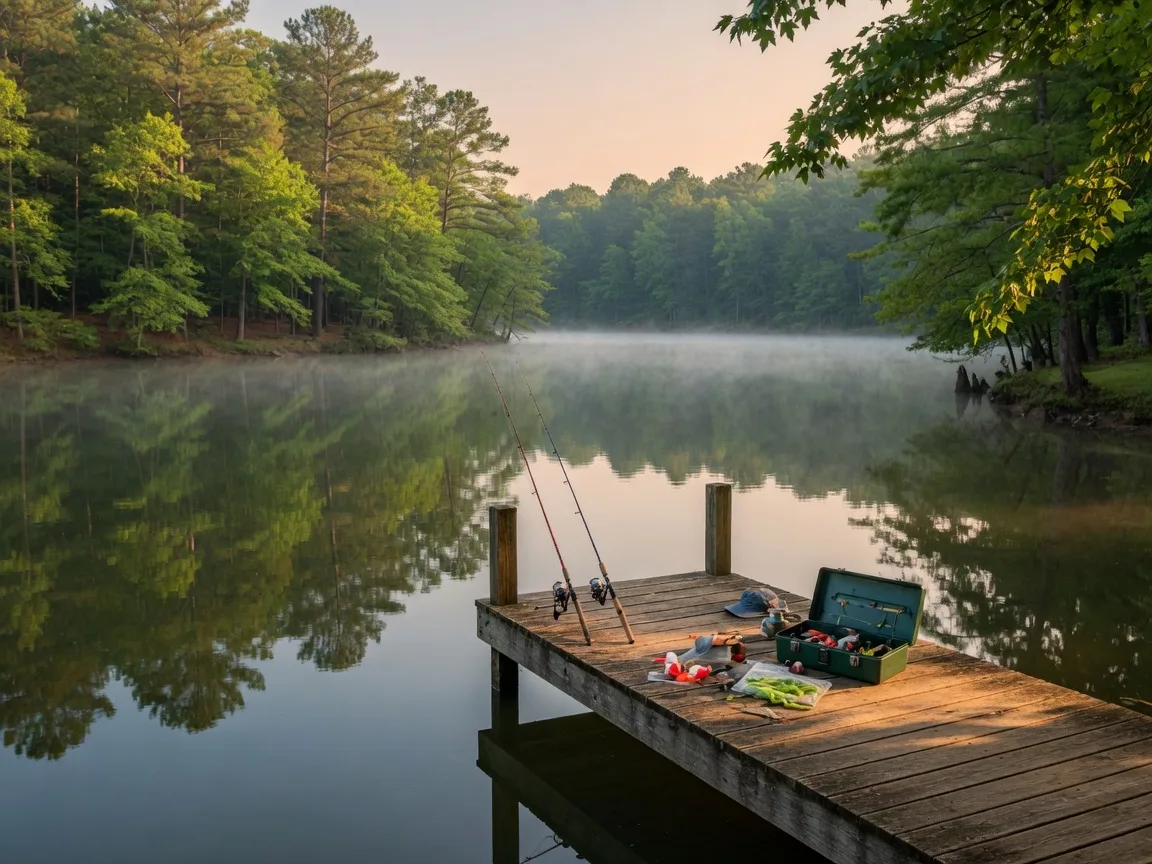
The alarm goes off at 5:30. Not because you have to be anywhere, but because the lake is best before the boats get on it. Coffee goes into a thermos. The rod leans against the porch column, tackle box already in the truck. By the time you reach the water, the mist is still hanging above the cove and the largemouth bass are moving shallow along the riprap near Methodist Park. You don't need a marina reservation. You don't need to launch a trailer. You just need to walk fifty steps from the porch.
Lake Hartwell: a fishery that doesn't need to try
Lake Hartwell is one of the premier fisheries in the Southeast — a 56,000-acre reservoir that consistently produces tournament-quality catches and recreational fishing that ranges from relaxed to world-class. The lake is home to largemouth bass, spotted bass, striped bass, hybrid striped bass, crappie, bluegill, channel catfish, and blue catfish. The combination of deep river channels, shallow creek arms, submerged timber, and rocky points creates habitat for every species and every technique.
What makes Lake Hartwell different from many southeastern reservoirs is its water clarity and its depth. The lake holds water well — even in drought years, the main channels stay deep enough to support year-round fishing. The water clarity is generally clear, with some stained areas in the upper creek arms after heavy rain. For bank fishermen, this clarity matters: you can often see structure and fish activity from shore, which makes the fishing more visual and more engaging.
For anyone considering a property like 257 Methodist Park Lane, the fishing isn't a hobby you'll do on weekends. It's a daily option — a 50-step walk from the porch to the water, with shoreline that gives you access to the kind of coves and points where fish hold year-round. The Corps-managed natural shoreline near Methodist Park stays undeveloped, which means the fish habitat remains intact and the fishing pressure stays lower than on developed stretches of the lake.
Spring (March–May): the spawn and the best fishing of the year
Spring is when Lake Hartwell fishing peaks. The water temperature climbs from the mid-50s into the low 70s, and the bass move shallow to spawn. This is the season when bank fishing is at its best — the fish are close, they're active, and they're feeding aggressively before and after the spawn.
Largemouth bass in the prespawn stage (water temps 55–65°F) stage on rocky points and in the ditches that run through creek arms. Soft plastics — shaky heads, Ned rigs, and small swimbaits — work well along these transition zones. During the spawn (65–75°F), largemouth move into the shallow coves and build beds in the sandy or gravel areas near visible structure. You can sight-fish for them from shore on clear days, casting weightless worms or creature baits past the bed and letting them drift into the strike zone.
Spotted bass on Lake Hartwell tend to hold deeper and more aggressively than largemouth. They school up on the main-lake points and rocky drop-offs, feeding on blueback herring. Small topwater lures, underspin baits, and drop-shots along the ledges produce well in spring. When you catch one spotted bass, there are usually more nearby — they feed in groups.
Crappie move shallow in March and April, holding near submerged brush piles and dock pilings in the creek arms. Small minnows under a float or tiny jigs tipped with minnows are the standard approach. The crappie fishing on Hartwell is consistently good, and the fish run larger than many anglers expect — 12- to 14-inch fish are common.
Striped bass and hybrids become active as the water warms, chasing baitfish on the main-lake points and along the dam. For bank fishermen, the best opportunities come early in the morning when stripers push bait to the surface — look for birds working the water and cast large swimbaits or bucktail jigs.
Summer (June–August): early mornings and deep structure
Summer fishing on Lake Hartwell shifts to the early morning and late evening. The water temperature climbs into the mid-80s, and the fish move to deeper structure during the heat of the day. But the mornings — from dawn until about 9 a.m. — remain excellent, especially for topwater strikes along the riprap and the shaded banks near Methodist Park.
Largemouth bass relate to the deeper docks, submerged brush piles, and the shaded sides of points during summer. Soft plastics — Texas-rigged worms, shaky heads, and Ned rigs — fished slowly along these structures produce consistent bites. The key is patience: summer bass aren't chasing, so finesse techniques outperform power fishing.
Spotted bass continue to school on the main-lake points throughout summer, feeding on blueback herring in the early morning. Small topwater poppers and walking baits produce explosive strikes when the fish are feeding on the surface. When they go deep, a drop-shot or small football jig dragged along the point structure works well.
Blue catfish become more active in summer, feeding in the deeper river channels and near the dam. For bank fishermen with access to deep water — like the shoreline near Methodist Park, where the channel runs close to the bank — cut shad fished on the bottom can produce fish in the 5- to 15-pound range. The lake's record blue catfish was over 53 pounds, and while that's a rare catch, the species is abundant and underfished.
Crappie go deep in summer, suspending near submerged timber and brush piles in 15 to 25 feet of water. Vertical fishing with small jigs is the technique, and it's more suited to a boat than to the bank — but the crappie will return to the shallows in fall, and the bank fishing picks up again.
Fall (September–November): the second peak
Fall is Lake Hartwell's second-best season for fishing — and for many experienced anglers, it's the most enjoyable. The water temperature drops from the 70s into the 50s, the bass become active again, and the lake empties of weekend traffic. The fishing improves as bass move back to the shallower structure, feeding aggressively before winter.
Largemouth bass in the fall relate to the creek channels and the transitions between deep and shallow water. Spinnerbaits, crankbaits, and jig-and-pig combos fished along the channel ledges produce well. The fall feeding frenzy — when bass gorge on shad before the water cools — can produce the best fishing of the year.
Spotted bass school aggressively in fall, chasing baitfish on the main-lake points and in the creek mouths. Topwater action can be spectacular — look for schools of bass breaking the surface and cast into the activity with small walking baits or poppers.
Crappie begin moving back toward the shallows in late October and November, setting up on the brush piles and dock pilings in the creek arms. The pre-winter crappie run is one of Lake Hartwell's most reliable fishing opportunities — and it's ideal for bank fishermen, since the fish are in accessible depths near the shore.
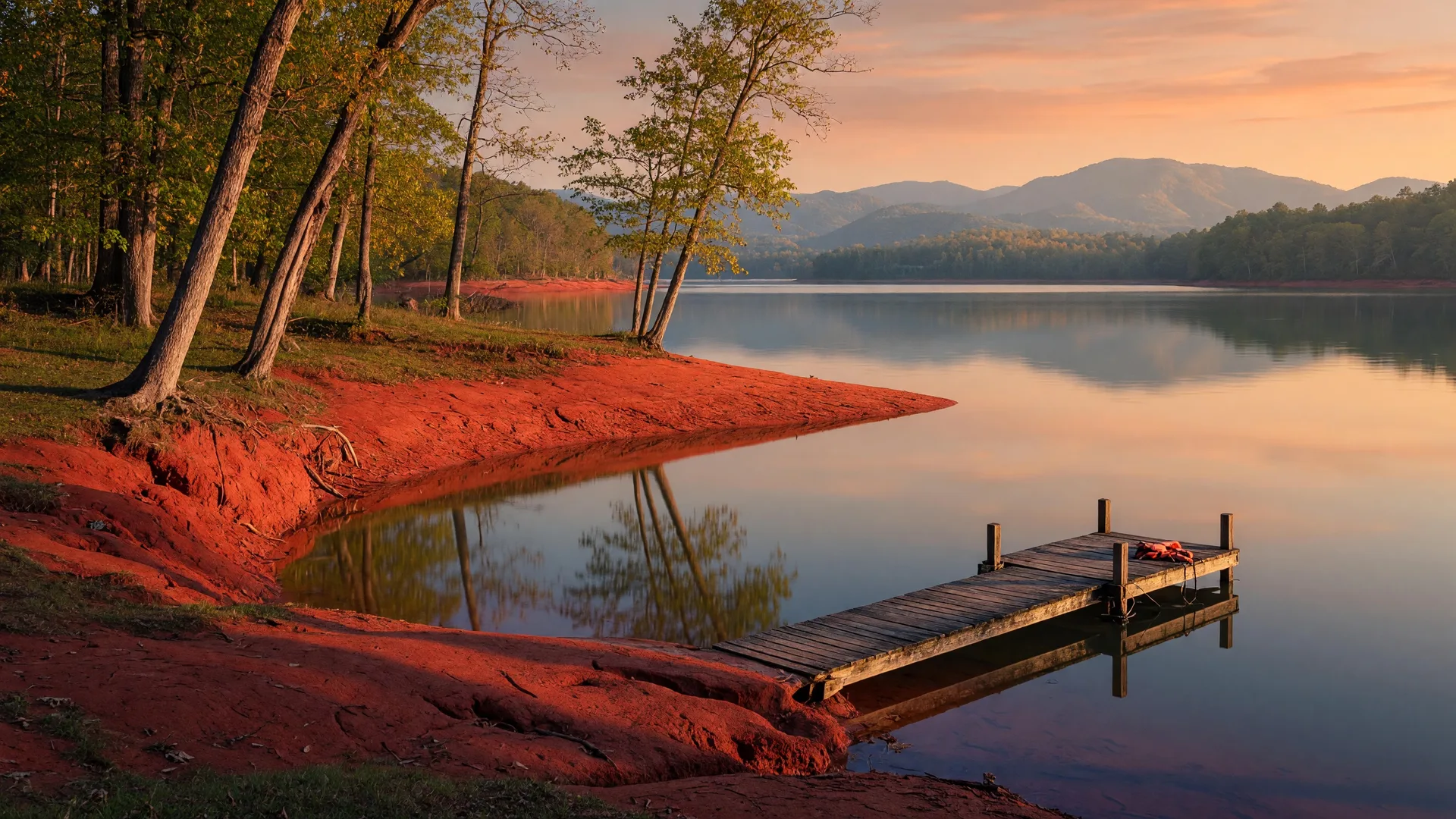
The fall foliage along the Lake Hartwell shoreline adds another dimension. The Appalachian foothills erupt in reds, oranges, and golds, and the lake becomes a mirror for the most photogenic season in northeast Georgia. Fishing at dawn with the fall colors reflected in the still water is one of those experiences that justifies the early alarm on its own.
Winter (December–February): the quiet season, the big fish
Winter fishing on Lake Hartwell is for the dedicated. The water temperature drops into the 40s and low 50s, the lake empties of boats, and the fish become lethargic. But the solitude is the appeal — and the fish that bite in winter are often the largest of the year.
Largemouth bass in winter hold on the deepest available structure — the river channel ledges, the main-lake points, and the submerged timber in 20 to 30 feet of water. Slow-fished jigs and soft plastics are the primary techniques, and the bites are subtle. It's a thinking person's game, and the rewards are big fish that other seasons don't produce.
Striped bass become the primary target for winter bank fishermen. Stripers are more cold-tolerant than bass and continue feeding actively through the winter months. Live bait — small white perch or shad — fished near the dam and along the deep river channels, produces the best results.
Channel catfish are year-round, but winter catfishing is underrated. The catfish move to the deeper holes and feed less aggressively, but a properly placed bait — cut shad, chicken liver, or stink bait — can produce fish throughout the cold months.
The spots near Methodist Park
Lake Hartwell's Georgia-side fishing near 257 Methodist Park Lane benefits from a few geographic features that make the area productive. The shoreline near Methodist Park and Elrod Ferry Landing is wooded and undeveloped, which means the fish habitat — submerged timber, riprap, and natural structure — remains intact. The Corps of Engineers maintains the banks without the clearing and development that degrades habitat on other parts of the lake.
Gum Log Creek, on the Georgia side, consistently ranks among the top spots for largemouth bass in Georgia DNR sampling. The creek's shallow coves, submerged brush, and stained water create ideal largemouth habitat — particularly during the spring spawn and the fall feeding period. Gum Log is accessible from the bank in several locations and is a short drive from the property.
The riprap near Methodist Park — the rock armoring along the shoreline — holds fish year-round. Largemouth and spotted bass relate to the rocks, using the crevices and shade as ambush points. Small creature baits and finesse worms fished slowly along the riprap produce consistent bites, particularly in spring and fall.
The coves between Elrod Ferry and Methodist Park offer protected water where crappie and bass hold near submerged structure. The Corps has maintained these areas in their natural state — wooded banks, standing timber, and clean water — which makes them some of the best bank-fishing spots on the Georgia side of the lake.
The fishing life: why it matters for this property
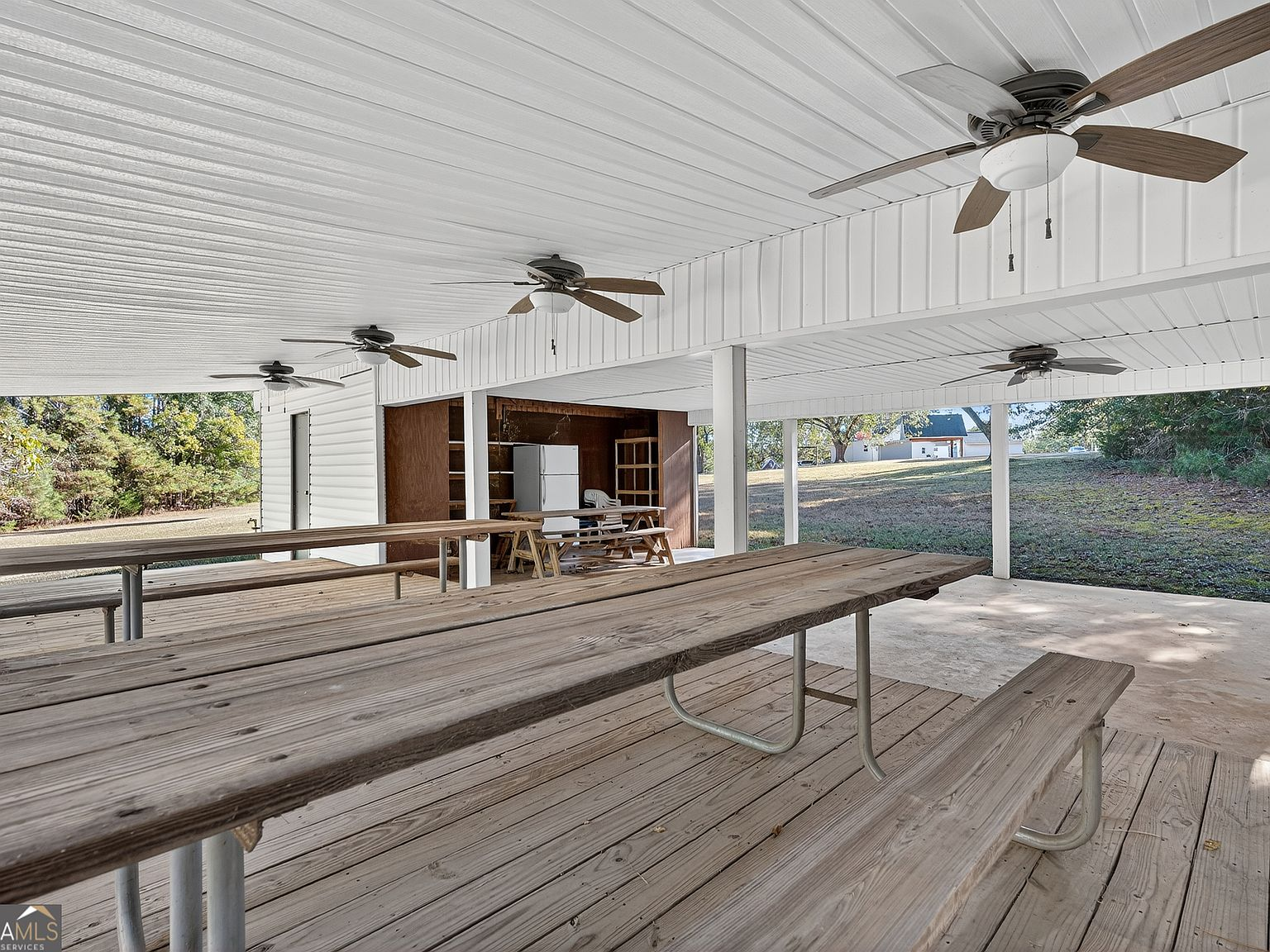
Fishing from the bank at 257 Methodist Park Lane isn't a substitute for boat fishing — it's a different experience entirely. It's the 5:30 morning walk to the water with a thermos and a rod. It's the hour before breakfast when the lake is still and the fish are feeding. It's the evening cast from the riprap as the sun drops behind the pecan trees. It's fishing as a daily rhythm, not a planned expedition.
For families, the bank-fishing access matters. Kids can fish from the shore without a boat, without a license (in Georgia, residents under 16 fish free), and without the logistics of launching and retrieving a vessel. The shoreline near the property is gentle, accessible, and safe — the kind of place where a child learns to cast without anyone worrying about deep water or heavy boat traffic.
For serious anglers, the property's position near Methodist Park and Elrod Ferry Landing puts you within minutes of some of the best fishing water on Lake Hartwell's Georgia side. The Corps-managed shoreline keeps the habitat intact, the undeveloped banks keep the pressure low, and the seasonal variety — bass, crappie, stripers, catfish — means there's always something worth casting for.
We've helped families find waterfront properties across Lake Norman, Charlotte, and Lake Wylie for years. We understand what a fishing lifestyle looks like on southeastern lakes. What Lake Hartwell offers — and what 257 Methodist Park Lane specifically offers — is fishing that's woven into the daily life of the property, not bolted on as an amenity. The water is there every morning. The fish are there every season. The rod is leaning against the porch column, waiting.