
Heritage
On the land when the water arrived: 1873 to today at 257 Methodist Park Lane
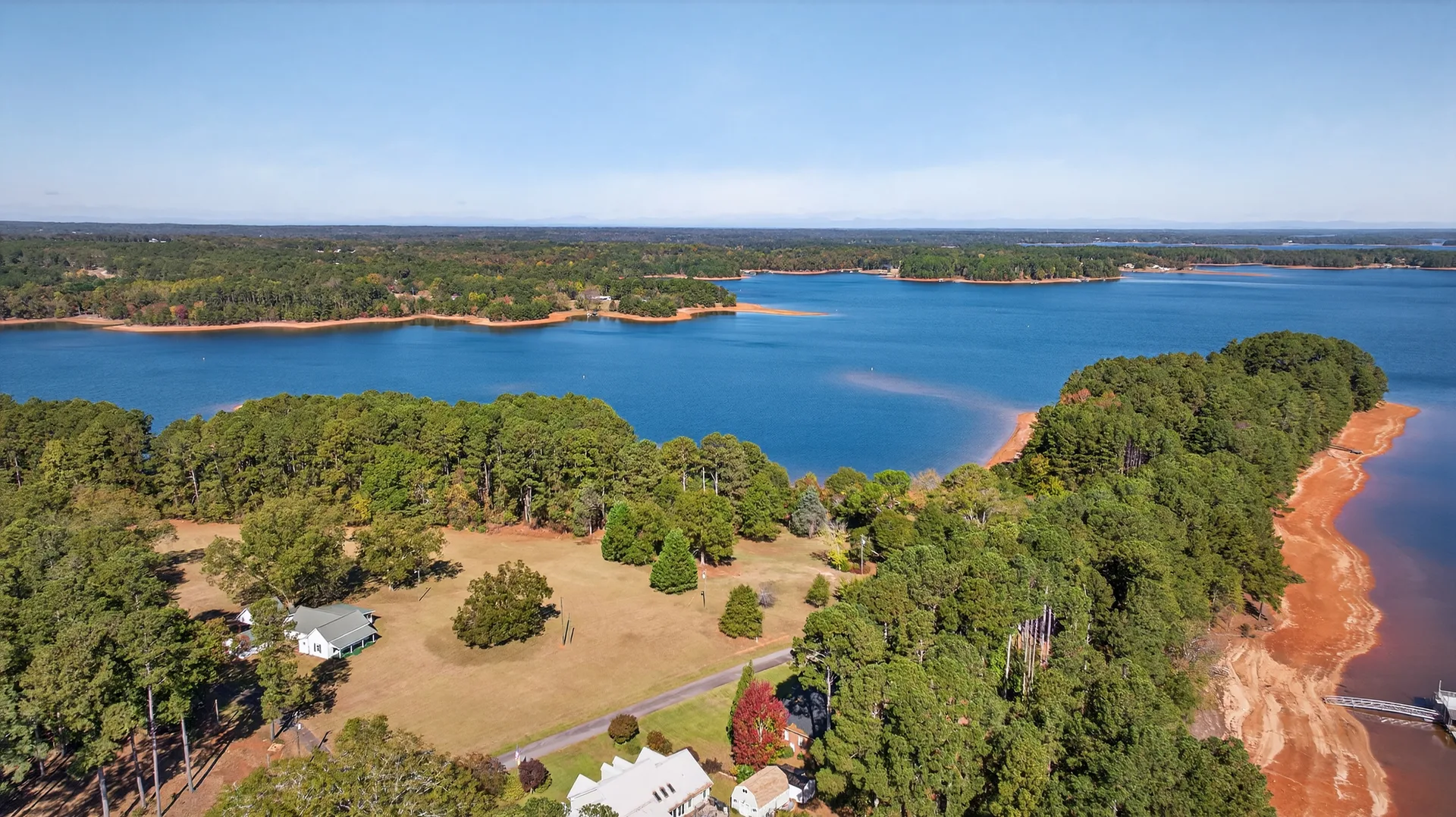
A client asked us recently what it must have been like to watch this lake being made. To stand on the same ground your great-grandparents farmed, your grandparents inherited, and your parents decided to keep, and to watch a river valley slowly fill into a 56,000-acre reservoir in front of your own eyes. There are very few places in America where a family can answer that question honestly. 257 Methodist Park Lane is one of them. The property has been held by one family since the 1800s, the farmhouse goes back to 1873, and the water out front is the youngest thing on the place by more than a century.
The river valley the family was born to
When the first generation raised this house in 1873, the view from the porch did not end at a lake. It ran across flat, rich bottomland toward the Savannah River, the working heart of the valley. The ground was chosen the way all good farm ground is chosen: flat enough to work, high enough to stay dry, close enough to the river for water and distance, thoughtful enough to survive a flood year. The family planted the pecan trees that still stand, worked the fields, drew life from the well, and held the property through the cotton economy, the boll weevil years, the depression, and two world wars. The river was the neighborhood. Everybody near the river understood it could flood and could change its mind.
Those early generations could not have imagined a lake. They were farmers, not waterfront owners. The river was transportation, water, and occasional disaster. But they chose the high shelf of the valley for their home place, and that one choice, made in the 1870s, is the reason the same family would still be on the same ground a hundred years later when the water came looking for them.
The Flood Control Act of 1950 and the years of the dam people
The legal beginning of Lake Hartwell was May 17, 1950, when Congress passed the Flood Control Act authorizing the Hartwell Dam and Reservoir as part of the Savannah River Basin development. Plans had been talked about for years, and now they were law. Construction on the dam began in 1955 downriver, where the Savannah and the Tugaloo converge below this valley. A workforce descended on the area, hundreds and then thousands of people, locals who called them simply "the dam people." Camps, crews, earth movers, and a mountain of concrete and steel took shape through the late 1950s while the valley watched itself change.
Up and down the river, nearly two thousand families would eventually be displaced as the pool rose. In the lower bottomland, whole towns, farmsteads, ferry landings, and cemeteries were surveyed first, and archaeological salvage teams worked the ground before the water moved in. But here in the county came a different kind of decision. The family at Methodist Park made it early, and they made it quietly: they were staying. Their ground was on the high flat shelf above the future pool line. They did not need to move, and they did not. While the lake came up to the very foot of their land in the early 1960s, they stayed in the house their great-great-grandparents built, and the water stopped exactly where they had always kept it.
The year the water came up
The reservoir began to fill in February 1961 and reached its normal pool in March 1962, and the project was dedicated and completed in 1963. Overnight by farm-time standards, the family gained a lake of over 56,000 acres with roughly a thousand miles of shoreline all around them, and a front-row seat to a transformation that most Americans at the time watched only in newsreels. The river they had fished and crossed became the lake their children would boat on. The low fields where they once raised crops slipped under the new waterline. The old ferry landings became boat ramps, and the valley floor became the blue horizon of a lake that holds at 660 feet when full.
For the generation living there, the change was neither all triumph nor all loss. They grieved the neighbors who had to leave. They saw the waterways where cousins once farmed now holding striped bass. And they quickly discovered that life on a Corps-managed lake is its own rhythm: the lake rises and draws with rain, the water temperature drives the fish, the summertime crowd comes and goes, and the high ground never flinches. The families who stayed, and this property is their testament, built the lake's most durable community while the pool was still finding its banks.
Today: the lifestyle the water made
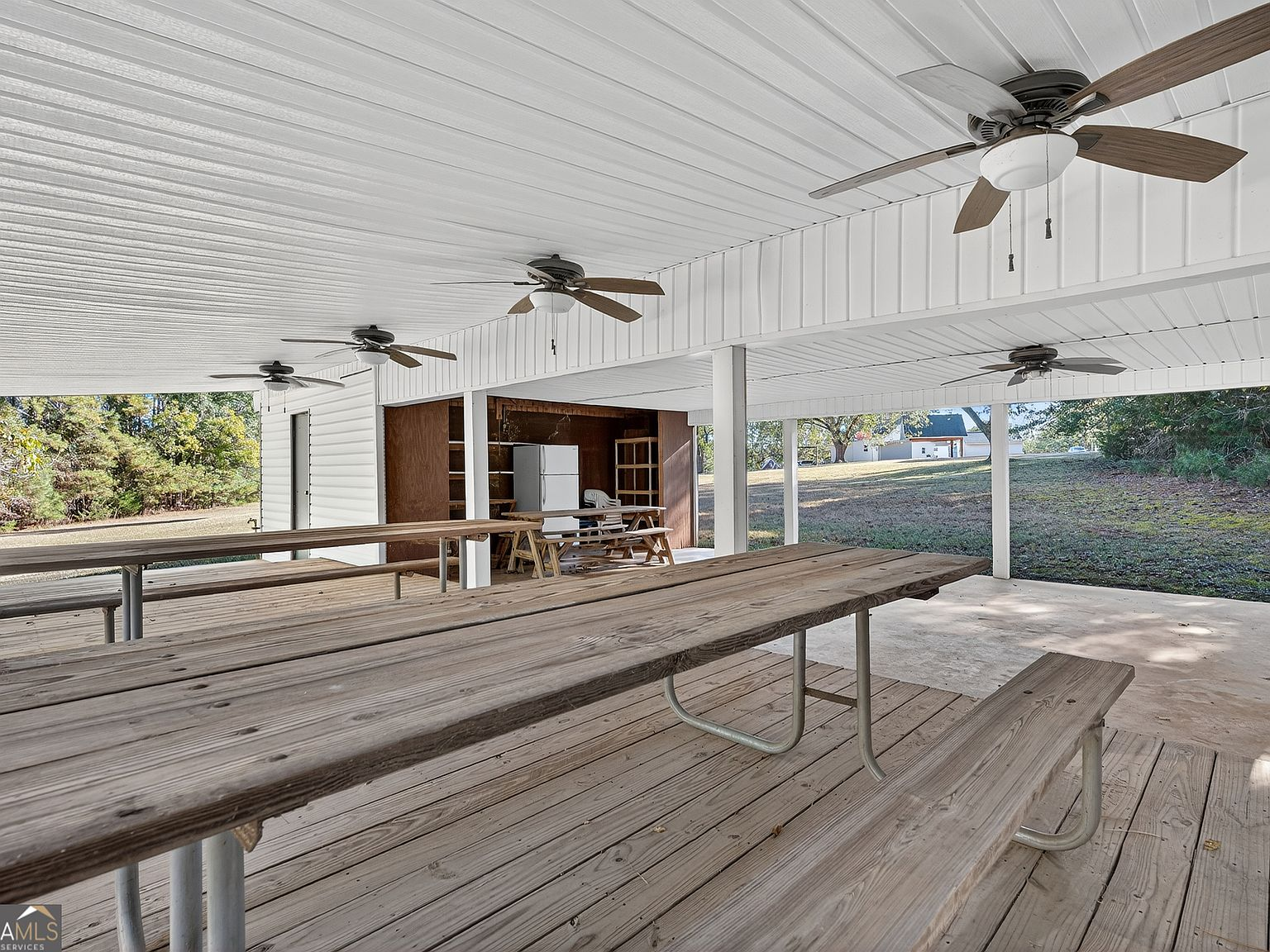
Stand on 4.546 acres of flat, private Georgia shore today and the entire history is underfoot. The mature pecan trees the family has tended for generations. The historic 1873 home with its two bedrooms and two and a half baths, the covered porch, the open-air deck, and the roomy patio that make indoor-outdoor living effortless. The lakeside pavilion with two full bathrooms built for entertaining, plus two generous exterior storage areas that serve life on and off the water. And minutes down the road, Elrod Ferry Landing and Methodist Park, the public anchors of this stretch of the Corps shoreline.
This is the lifestyle the lake created and the generations preserved. Long weekends with the family under the pavilion. Mornings on the flat lawn before the heat. Launches minutes away at Elrod Ferry Landing and Methodist Park. And the history, all of it, sitting in the ground itself: below your feet, the old river valley; on the horizon, the same water that was a river when the porch was new.
It is one of the last remaining large-acreage lakefront parcels on Lake Hartwell's Georgia Corps of Engineers shoreline, and it is the first time in generations that a stranger has been allowed to stand on it at all. You are not buying a lake house here. You are being offered the very long view, from the river to the reservoir to the next family with the will to stay.