
Heritage
The families who stayed: when the water rose and this land held its ground
Every story about Lake Hartwell begins with the water — 56,000 acres of reservoir stretching across the Georgia-South Carolina border, nearly 1,000 miles of shoreline, a landscape that draws more than 9 million visitors a year. But the story of 257 Methodist Park Lane begins with the people who were already here when the water came — and the ones who chose to stay.
The displacement
When the Flood Control Act of 1950 authorized the Hartwell Dam project, it set in motion one of the largest forced relocations in the history of the rural South. The U.S. Army Corps of Engineers needed land — the low-lying river valleys, the bottomland farms, the flood-prone banks of the Savannah, Seneca, and Tugaloo Rivers — to create what would become one of the largest man-made reservoirs in the Southeast.
Between the early 1950s and the lake's completion in 1963, nearly 2,000 families were displaced. Some received letters informing them of the government's intent to acquire their property. Others learned through neighbors, through rumors, through the slow realization that the land they'd farmed for generations was about to disappear beneath a rising lake. The federal government's appraisals rarely matched what the families knew their land was worth — not in dollars, but in generations of labor, memory, and community.
The displacement unfolded over years, not in a single moment. Families watched their neighbors pack up and leave. Homes were vacated, then demolished. Barns, bridges, churches, and family cemeteries were either relocated or abandoned to the water. Entire communities — Andersonville, South Carolina, Portersville, and dozens of unnamed homesteads along the river valleys — simply ceased to exist on the surface of the earth. The archaeological salvage teams from the University of Georgia recovered what they could, but most of the cultural landscape was lost.
Not everyone left
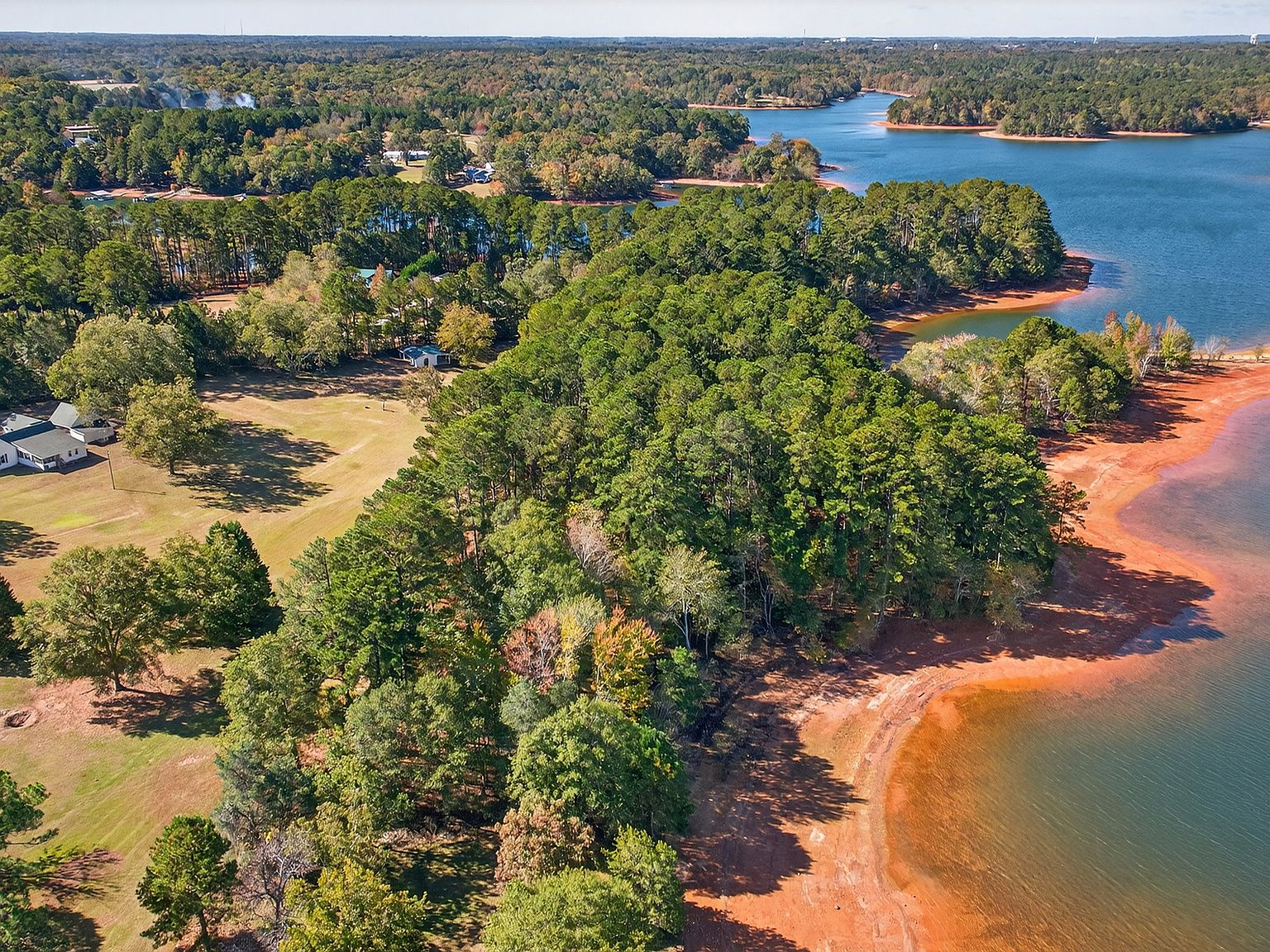
The Corps of Engineers acquired the land needed for the reservoir — the low-lying bottomland, the riverbanks, the flood zones that would be permanently submerged. But not every property fell within the inundation boundary. Parcels on higher ground — those with enough elevation to sit above the full-pool line of 660 feet above mean sea level — survived. Some were just above the waterline, their fields now ending at a shore instead of a riverbank. Others were far enough uphill that the lake was visible but not immediate.
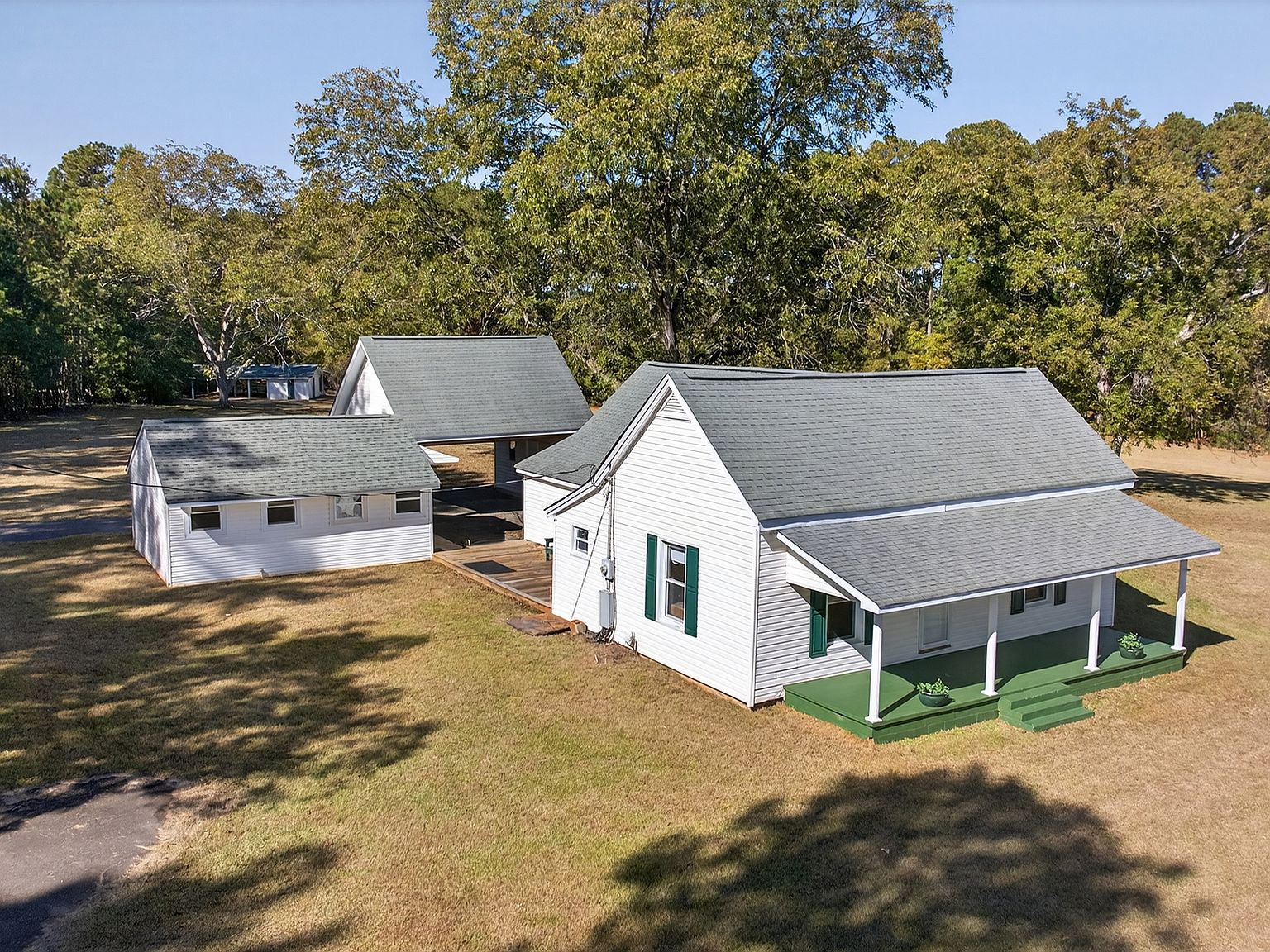
257 Methodist Park Lane was one of the survivors. The property sits on 4.546 acres of flat, well-drained land — high enough to have avoided the flood zone entirely. The home, built in 1873, was already 82 years old when the dam project began. The pecan trees, planted decades before the lake existed, stood on ground that would never be submerged. The family that had held this land since the 1800s watched the transformation from their porch — the river widening into a lake, the valley filling with water, the neighbors leaving one by one — and stayed.
The decision to stay was not passive. It was a choice made against the backdrop of profound change. The community that had formed along the river scattered. The church that served the valley was either relocated or lost. The roads were rerouted. The neighbors who had been a five-minute walk apart became a boat ride away — or disappeared entirely. The family at 257 Methodist Park Lane remained on their land, in their home, looking out at a landscape that was fundamentally different from the one they'd known.
What staying meant
There's a particular kind of resilience required to stay when everything around you is changing. The families who held their properties through the creation of Lake Hartwell didn't just survive a federal infrastructure project — they adapted to a world that had been remade without their consent. The river became a lake. The farming economy gave way to a tourism economy. The rhythms of planting and harvest were replaced by the rhythms of summer weekends and holiday crowds.
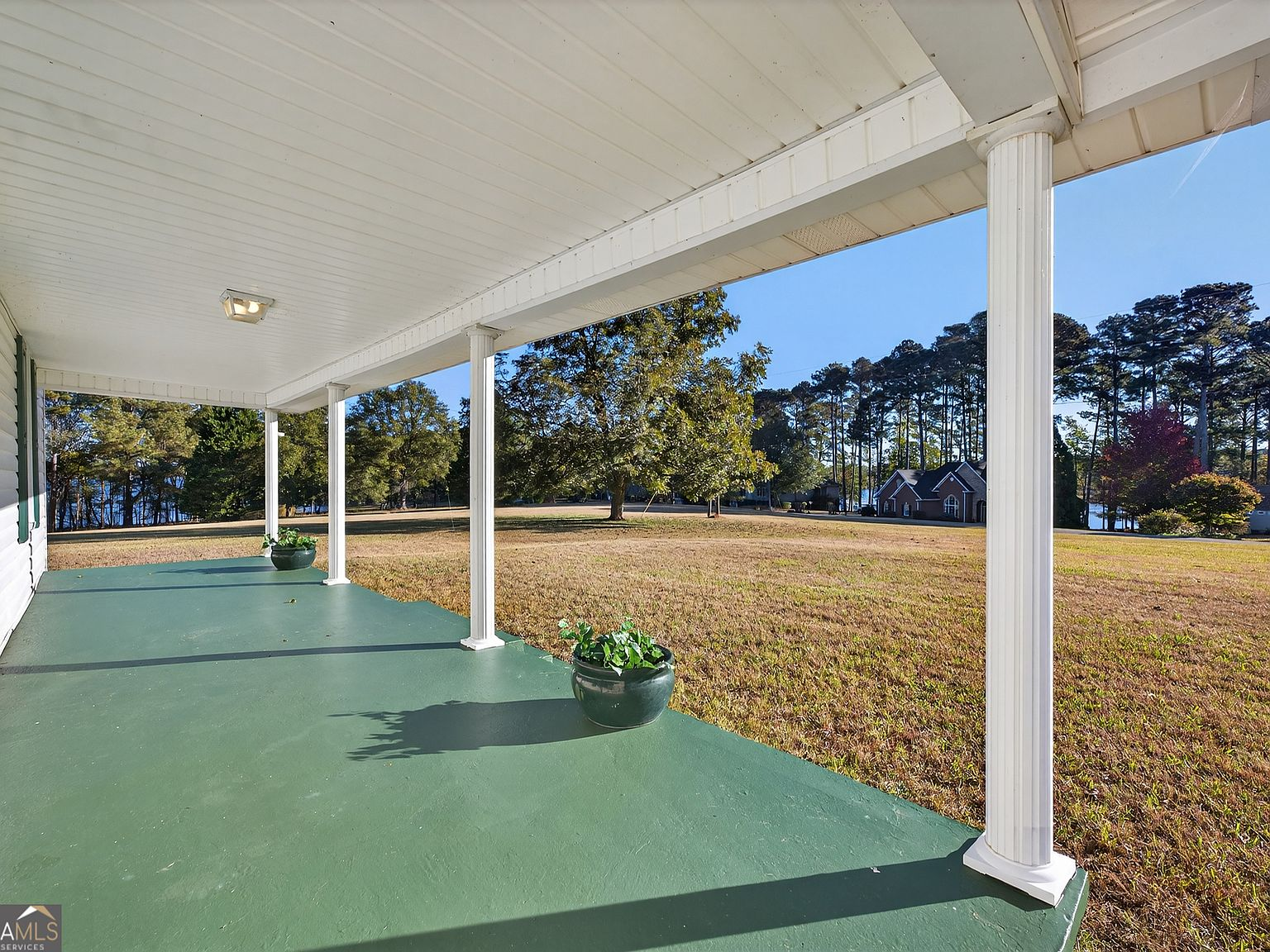
The family at 257 Methodist Park Lane adapted with the land. The porch, originally built to catch cross-breezes off the river valley, now caught breezes off the lake. The lawn, once oriented toward agricultural work, became the setting for outdoor gatherings. The pecan trees, planted for shade and food, matured into a grove that now defines the property's character. A lakeside pavilion was added — a modern structure with two full bathrooms, ceiling fans, and room for a crowd — designed for the kind of lakefront entertaining that the new landscape made possible.
But the bones didn't change. The foundation stayed. The orientation to the land stayed. The flat, private acreage — 4.546 acres of well-drained Georgia soil on the Corps of Engineers shoreline — stayed. The family adapted the property to the lake without abandoning what had made it worth holding in the first place.
The weight of being the survivor
When you own a property that survived the creation of a lake, you carry something that new construction doesn't. You carry the knowledge that nearly 2,000 families lost their homes so that this reservoir could exist — and that your property is one of the few that made it through. That isn't guilt. It's context. It's the understanding that this land, this home, this view across the water was not inevitable. It was preserved by a family that chose to stay, and by the accident of elevation that kept their ground above the flood line.
The properties that survived the dam's creation are the rarest on Lake Hartwell. Most of the Georgia Corps of Engineers shoreline is wooded, undeveloped, and unavailable for private ownership. The properties that sit above the full-pool line — the ones that were here before the lake and remain here now — are the ones that carry the deepest history and the strongest sense of permanence. They don't compete with new construction. They exist in a different category entirely.
At 257 Methodist Park Lane, that permanence is visible in every detail. The 1873 farmhouse has been expanded and maintained across generations — never speculative, always responsive to the land. The pecan grove has been producing for well over a century. The covered porch, the screened back porch, and the lakeside pavilion form an outdoor living complex that evolved slowly, each piece added when the family needed it, not when a market demanded it. The result is a property that feels inevitable — as though it could only exist in this exact form on this exact piece of ground.
What the survivors understood
The families who stayed understood something about land that the modern real estate market often forgets: property is not a product. It's a relationship. The family at 257 Methodist Park Lane didn't hold this land because the market told them to. They held it because the land was theirs, because the pecan trees were theirs, because the view from the porch was theirs, and because leaving would have meant abandoning something that couldn't be replaced.
That understanding — that some things are worth holding onto simply because they're yours — is the inheritance that comes with this property. You're not buying a transaction. You're joining a lineage. The family that built this home in 1873, the generations that maintained it through droughts and floods and the creation of a 56,000-acre reservoir, the decision to stay when everything changed — all of that becomes part of what you own.
In our years advising luxury waterfront families across Lake Norman, Charlotte, and Lake Wylie — and we understand major transitions personally, having completed 16 relocations during our military careers — we've learned that the most meaningful properties are the ones with stories that precede the transaction. 257 Methodist Park Lane has one of the deepest stories we've encountered. The families who stayed made it possible. The question for the next owner is what they'll do with that gift.
A property that earned its place
Lake Hartwell is one of the most celebrated waterfront destinations in the Southeast. The fishing is exceptional — largemouth bass, spotted bass, stripers, and the kind of blue catfish that set records. The community is genuine — families, retirees, and professionals who chose the lake as a way of life. The natural, undeveloped Georgia shoreline offers a kind of wilderness that's increasingly rare on southern reservoirs.
But most of what exists on the lake today was built after the water came. The marinas, the docks, the vacation homes, the resort developments — they all exist because the lake exists. 257 Methodist Park Lane is different. It exists because a family chose this ground in the 1800s, built a home in 1873, planted pecan trees for the future, and held on when the federal government turned their river valley into a reservoir. The property didn't adapt to the lake by accident. It survived the lake by design.
That distinction — between a property that exists because of the lake and a property that survived the lake — is what makes this one irreplaceable. The 4.546 acres, the 1873 farmhouse, the pecan grove, the covered porch, the lakeside pavilion — these are the physical expressions of a family that chose permanence over convenience, continuity over transaction, and land over everything else.
The families who stayed made this possible. The property is waiting for the next person to understand what they knew.