
Lake life
The 962-mile shoreline: how the Corps' natural banks became Lake Hartwell's quietest luxury
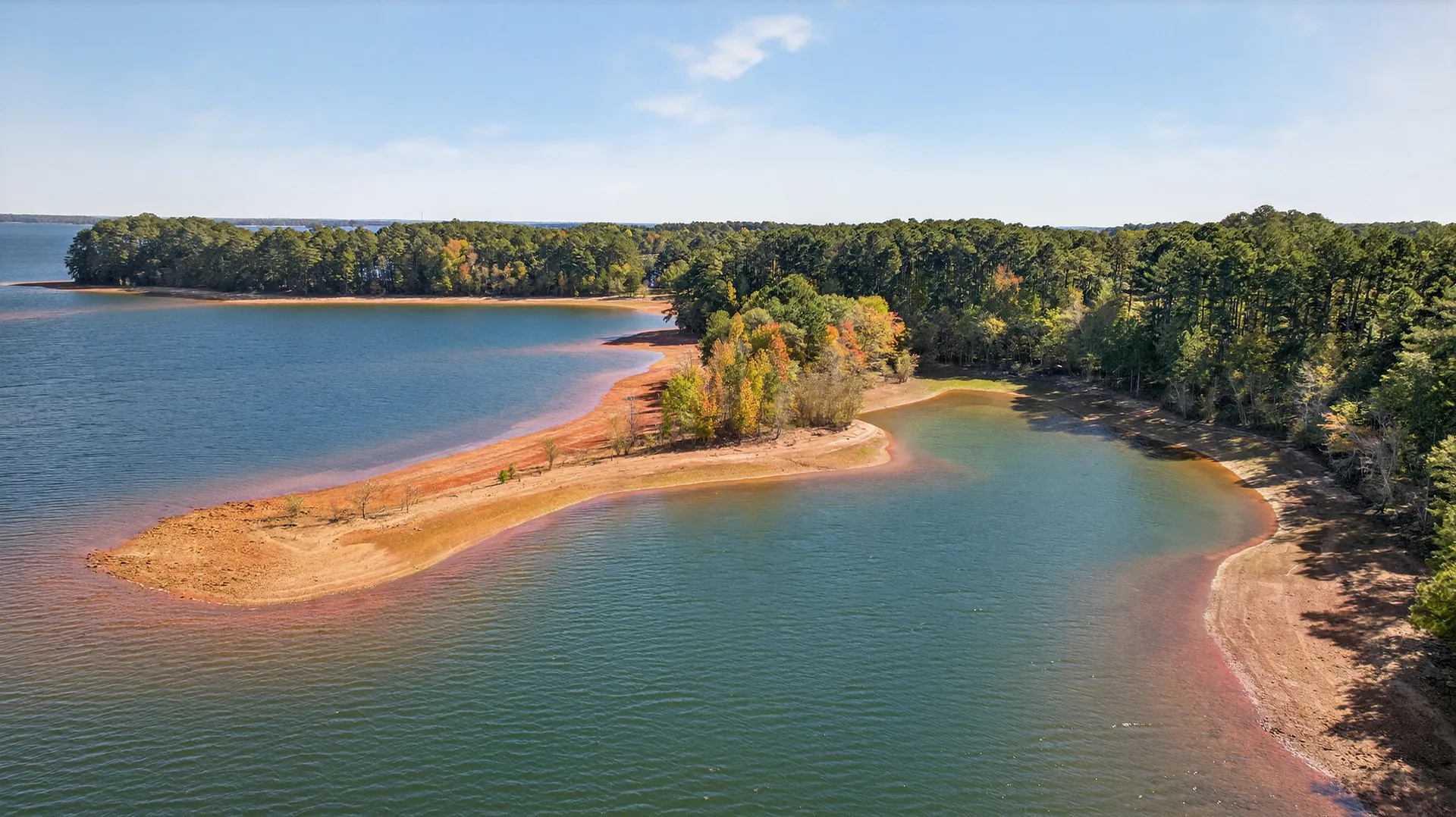
Lake Hartwell is one of the largest reservoirs in the Southeast, roughly 56,000 acres of water behind Hartwell Dam, and its shoreline runs to about 962 miles at full pool. Here is the quiet fact most visitors never notice: the vast majority of those miles belong to the U.S. Army Corps of Engineers, and the Corps has kept them natural. No houses marching to the water's edge, no seawalls wall to wall, no commercial strips along the banks. On a lake ringed by development on the private side of the line, that undeveloped public shoreline is the rarest luxury of all, and the property at 257 Methodist Park Lane sits on one of the last large private parcels along it.
The line the Corps drew
When the Corps built Hartwell Dam between 1955 and 1962, it acquired the land the reservoir would cover plus a margin around it, the federal take line that still defines the shoreline today. Private land above that line stayed in private hands; land at or below it became the public project, managed by the Corps of Engineers. The result is a lake where the water's edge itself is mostly public and natural, held for flood control, recreation, fish and wildlife, and water quality, while the upland beyond it carries the homes.
That arrangement is exactly what keeps the lake from becoming a wall of docks and lawns. On Corps shoreline, the trees come down to the water, the banks stay vegetated, and development cannot creep past the line. Boaters get public access through Corps ramps and parks, and property owners get a guarantee that the view across the water will never be filled in by a neighbor's expansion. It is a trade every lake family learns to love: you may not own the waterline, but no one else can build on it either.
What the natural bank gives a family
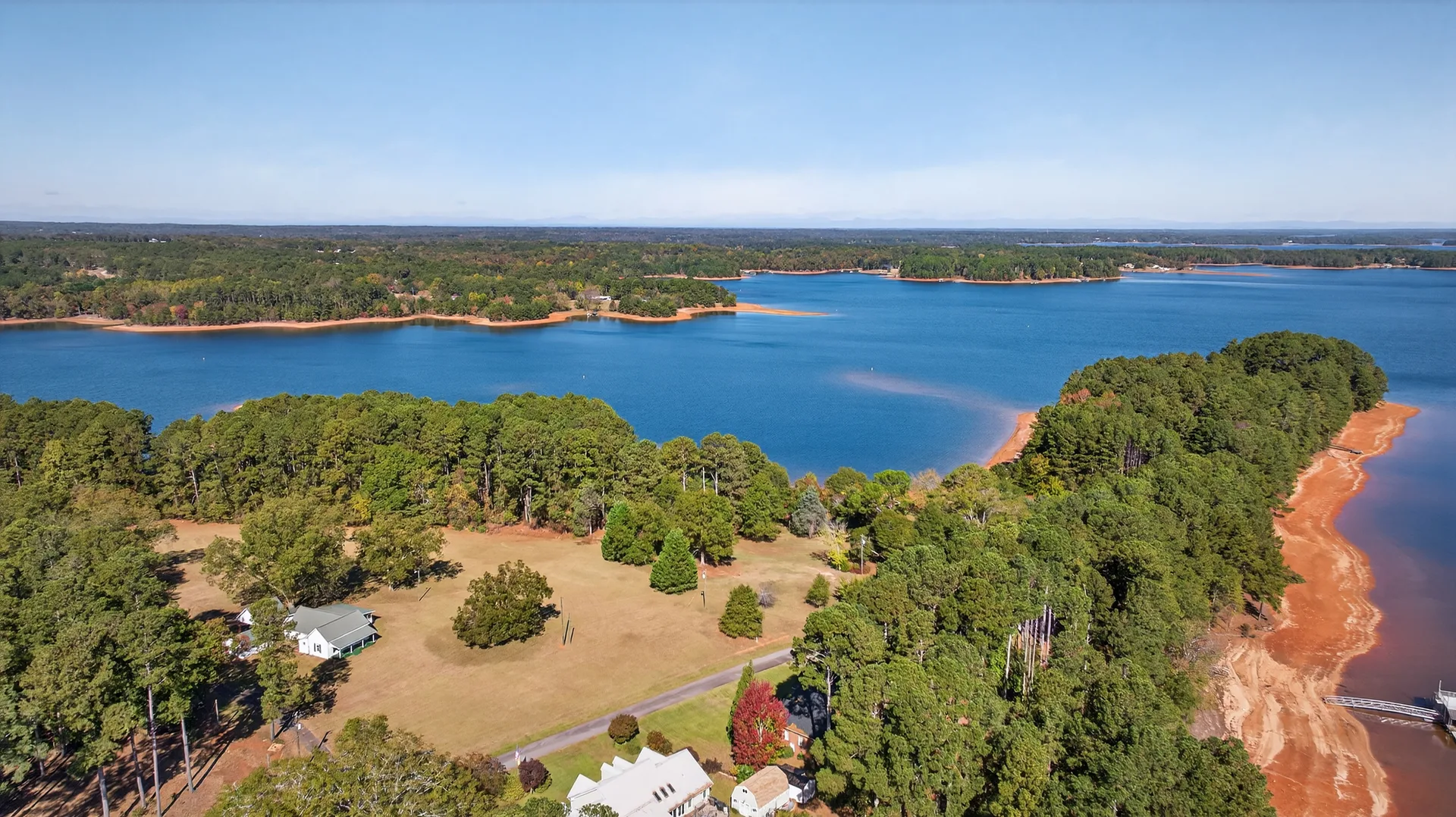
For the property at 257 Methodist Park Lane, the Corps shoreline is not a limitation; it is the reason the setting has survived intact. The 4.546 flat acres end at a natural, vegetated bank, the cove in front of the estate stays quiet because the shoreline around it is undeveloped, and the wildlife that lives in the trees and the shallows has never been pushed out by a row of boathouses. On a fall morning, with the low winter pool exposing the red-clay bench, you can stand on the lawn and see the same layered view the family has seen since 1962: open water, wooded banks, and not a single structure breaking the line of the trees.
The same policy shapes the everyday lake life. Fishing is better where the banks stay vegetated, because the cover holds the baitfish and the bass. Water stays cleaner where the runoff runs through trees and roots instead of lawns and pavement. And the quiet of the coves, the thing guests always mention first, is a direct product of shoreline that no one is allowed to crowd. The Corps has managed this bank for more than sixty years, and it shows in every measure that makes a lake home feel like a retreat.
Why large private parcels are the rare part
The shoreline may be public, but the ground above it is not, and that is where the scarcity lives. Most of the private land along Lake Hartwell's Georgia side has been subdivided over the decades into smaller lake lots. Large-acreage parcels that touch the water, stay above the take line, and offer flat usable ground are increasingly rare, which is why this estate is described as one of the last remaining large parcels on the Corps shoreline. Four and a half acres of private lawn ending at the natural bank, with the water beyond it, is the combination buyers search for and rarely find.
That is the real estate story underneath the scenery. The lake's 962 miles of shoreline are mostly locked in as natural, which is a gift to everyone who lives on it. But the land where a family can actually put down roots, keep a lawn, host a gathering under a pavilion, and walk to the water's edge is the finite part, and parcels like this one do not come to market often. The first family chose this ground in 1873 for flatness and elevation, before there was any lake to measure. A century and a half later, those same two qualities are the rarest thing on the water.