
Lake life
Life on Lake Hartwell today
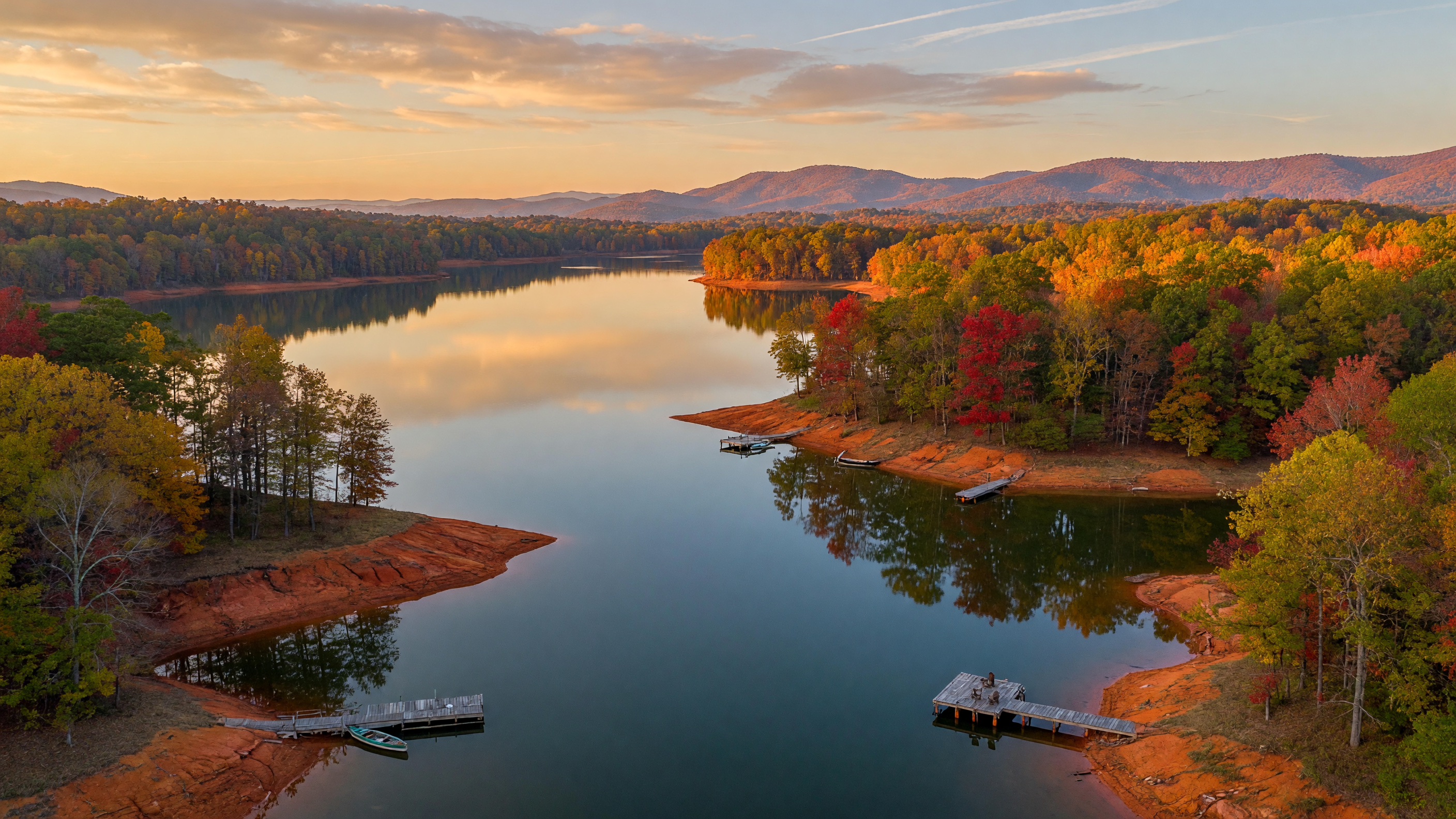
The alarm goes off at 5:45 a.m. — not because you have to be anywhere, but because the lake is best before the boats get on it. Coffee goes into a thermos, not a mug. The dock is fifty steps from the porch. By 6:15, the trolling motor is in the water and the largemouth bass are biting along the riprap at Methodist Park.
What Lake Hartwell offers today
Lake Hartwell is one of the largest man-made reservoirs in the Southeast — 56,000 acres of water with nearly 1,000 miles of shoreline straddling the Georgia-South Carolina border. The lake was created by the U.S. Army Corps of Engineers between 1955 and 1963, but the life that has grown up around it feels nothing like a government project. It feels like a community that discovered the water and built everything around it.
In 2026, the Lake Hartwell lifestyle centers on a few constants: fishing, boating, swimming, and the kind of weekend gatherings that start at the pavilion and end at sunset. The lake is warm enough for swimming from late May through September. The fishing — largemouth bass, spotted bass, stripers, crappie, and catfish — is productive year-round, with spring and fall being the prime seasons for serious anglers.
The Georgia Corps of Engineers shoreline near 257 Methodist Park Lane stays natural and undeveloped — wooded banks, clean water, the kind of cove where you can tie up a pontoon and disappear for the afternoon. Elrod Ferry Landing and Methodist Park are minutes from the property, providing easy public access to the water for guests and family who don't arrive by boat.
The rhythm of the seasons
Spring (March–May) is when the lake wakes up. The bass move shallow to spawn, the dogwoods bloom along the shoreline, and the first pontoon boats of the season appear on weekends. The Lake Hartwell Boating Club organizes raft-ups and social events that mark the unofficial start of lake season. Hart State Park, 15 minutes from the property, opens its camping and hiking trails for the season.
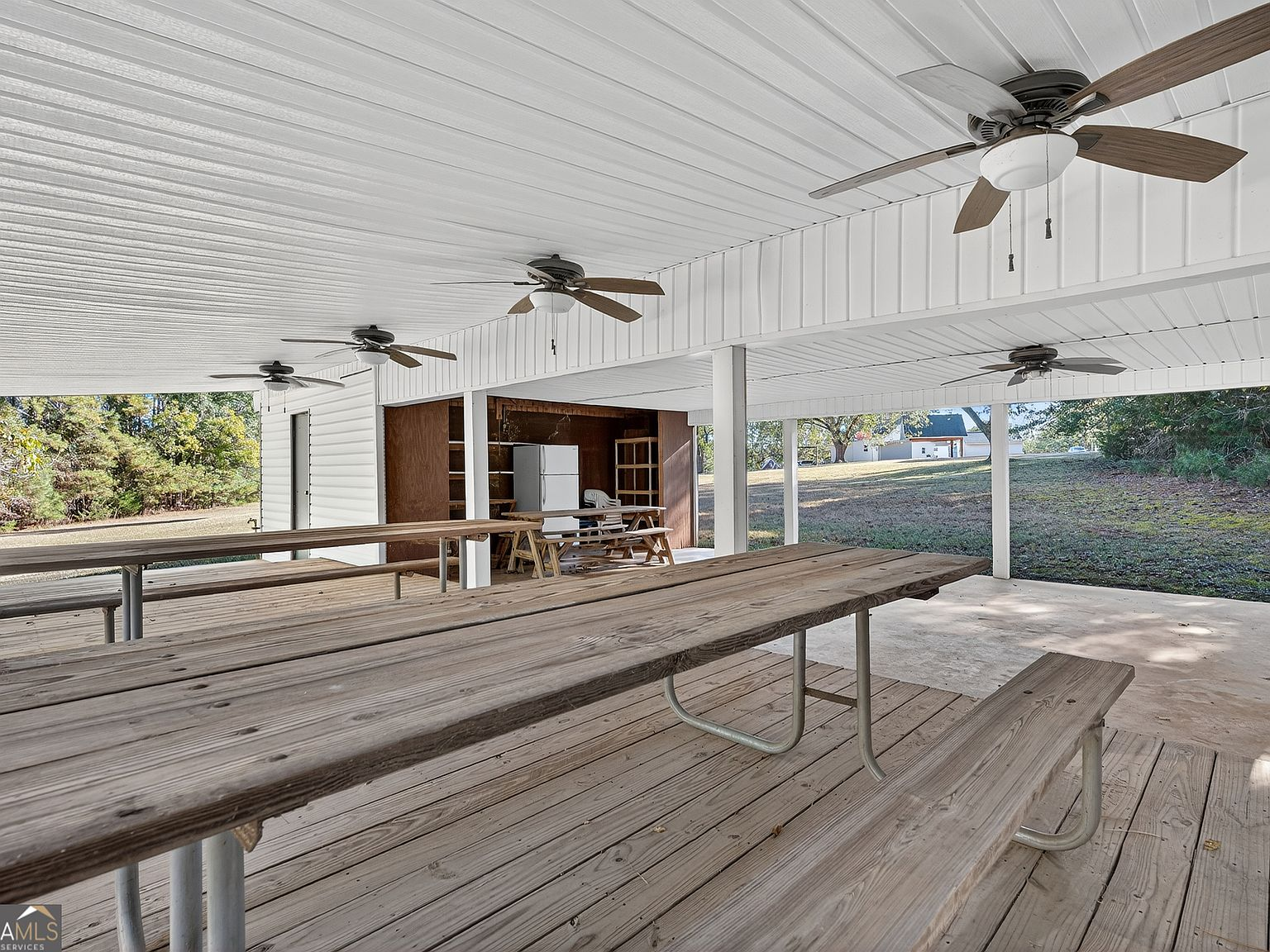
Summer (June–August) is the main season. The water temperature climbs into the mid-80s, the swimming is excellent, and the lake fills with families on pontoons, kids on inner tubes, and fishermen chasing stripers in the early morning. The pavilion at 257 Methodist Park Lane becomes the default gathering spot — covered, fan-cooled, with two full bathrooms and room for a crowd. Fourth of July fireworks over the lake draw the whole community, and the annual Lake Hartwell Dam Run brings runners from across the region.
Fall (September–November) is when the Appalachian foothills earn their reputation. The hardwood forests along the shoreline turn — reds, oranges, golds — and the lake becomes a mirror for the most photogenic season in northeast Georgia. The fishing improves as bass move back to deeper structure, and the weekend crowds thin enough to make the water feel private again. The Northeast Georgia Ag Expo in nearby Hartwell celebrates the agricultural roots of the region.
Winter (December–February) is quiet. The lake empties of boats but not of beauty. The 1873 farmhouse's thick walls, wood floors, and wood-burning fireplace make the cold months feel sheltered. The dock is still there for anyone willing to brave a January morning with a cup of coffee and a fishing rod. Lake Hartwell State Park offers year-round camping for visitors who want to experience the lake in its most peaceful season.
The community around the water
What makes Lake Hartwell different from other large southeastern lakes is the community. This isn't a resort destination that happens to have water — it's a network of families, retirees, and professionals who chose the lake as a way of life. The Lake Hartwell Boating Club organizes social events, raft-ups, and the kind of impromptu dock-side gatherings where someone always brings too much food and nobody minds.
Downtown Hartwell, 10 minutes from the property, has maintained its character as a working county seat while quietly evolving. Southern Hart Brewing Company on East Howell Street has become the unofficial after-work gathering spot — craft beer, a relaxed taproom, and a parking lot that fills early on Friday evenings. Boathouse Grill at Hartwell Marina catches the dinner crowd with waterfront seating and lake-breeze dining. Common Ground on Carolina Street serves as the morning gathering spot — good coffee, quiet tables, and the pace where you can read a book without someone asking for the table.
The town hosts community events throughout the year, including the annual Northeast Georgia Ag Expo in August, the "Splash Away the Trash" lake cleanup in September, and various local festivals organized through the Hart County Chamber of Commerce. The community spirit is genuine — these are people who chose to live on the lake and invest in the community around it.
Getting here and getting around
Hartwell sits at the intersection of U.S. Route 29 and Georgia Route 51, with easy access to I-85 via Athens or Anderson, SC. Athens — home to the University of Georgia — is 45 minutes west. Greenville, SC, with its revitalized downtown and GSP International Airport, is about an hour northeast. Atlanta is roughly 90 minutes south via I-85.
For families considering the area, Hart County operates a charter school system with small class sizes and community-oriented administration. The proximity to Athens and Greenville expands the range of private school options and cultural amenities considerably.
What the lake gives back
We've spent decades helping families find the right property — on Lake Norman, in Charlotte, along Lake Wylie. We understand waterfront luxury at every level. But what Lake Hartwell offers is something different from the polished amenity packages of newer developments. It offers authenticity. The fishing is real, not stocked for Instagram. The community is established, not manufactured for marketing. The lake is large enough to feel wild and close enough to town to feel connected.
For a property like 257 Methodist Park Lane — a historic estate on 4.546 acres of private waterfront — the lifestyle isn't something you buy into. It's something you step into. The pavilion is ready. The porch faces the right direction. The pecan trees have been providing shade for over a century. The lake is there, waiting for the next morning's coffee, the next weekend's gathering, the next generation's story.