
Generations
The water rose slowly, and the family stayed: 1873 to today at 257 Methodist Park Lane
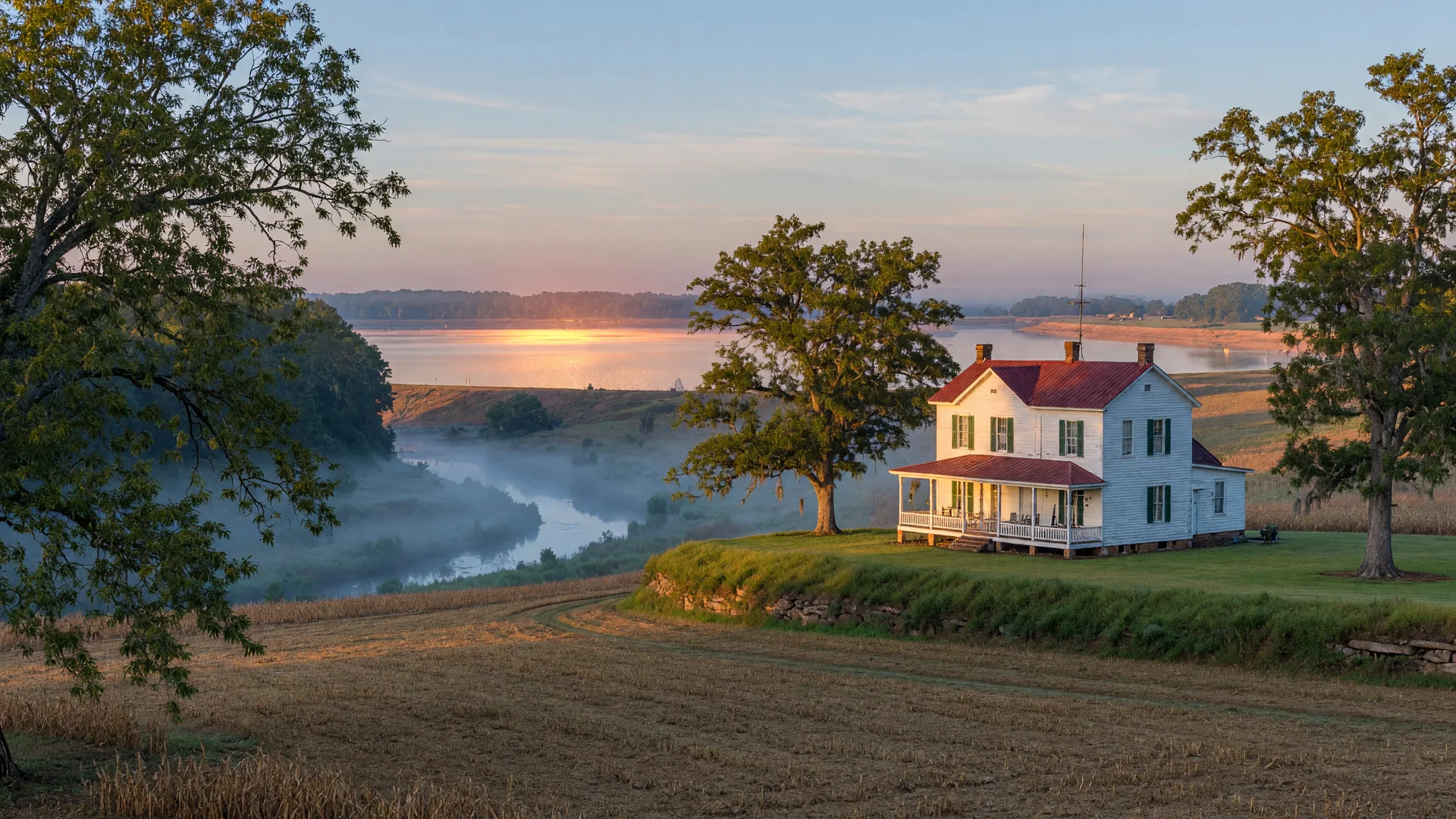
Try to hold the whole span of it in your mind at once. A family builds a house on this flat, elevated ground in 1873, choosing a spot where the river flood never reaches. Six generations come and go on the same soil. Then, in the 1950s, the government authorizes a dam on the Savannah River, a reservoir slowly swallows the valley below, and the water climbs until it stops just short of the lawn that has always been there. The house the first generation built is the same house that stands here in 2026. That is the story of 257 Methodist Park Lane: a place that was lived in before the lake, watched the lake come, and still fronts the water today.
A century of farming the river valley
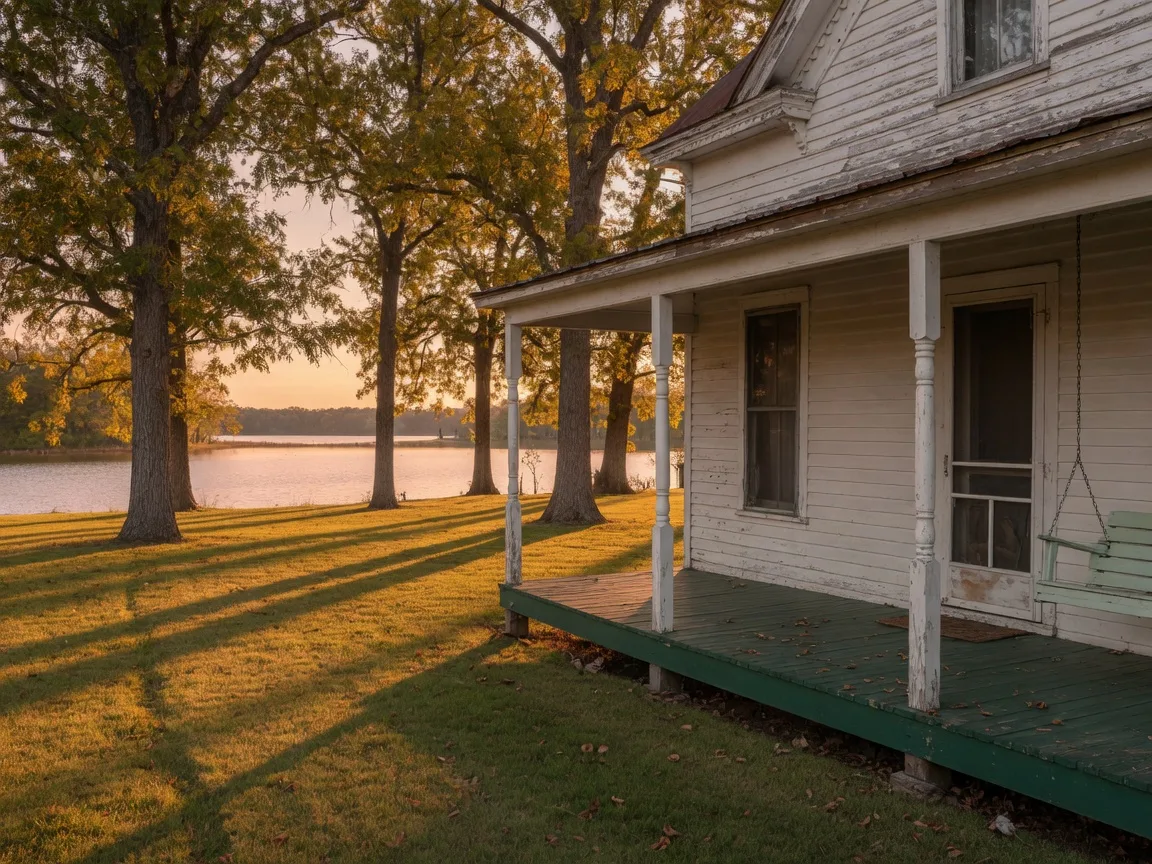
For the better part of a century, the family at Methodist Park Lane lived with the Savannah River as a neighbor and nothing more. The flat terrace they built on held its soil when the hillsides washed away, drained well, and gave them room for a house, a barn, outbuildings, and fields. The river offered catfish, bream, and redbreast to anyone willing to sit with a cane pole, and it carried cotton and timber downstream to Augusta before the railroad arrived. It also flooded in wet springs, which is exactly why the first generation built high. The porch they put on the house was the same porch generations would later sit on to watch the lake catch the last light.
The pecan trees, planted in the 1870s, were the quiet anchors of the place. A mature pecan tree needs no annual planting and no fussing; it simply produces. Fifty to a hundred pounds of nuts a year from each tree, eaten by the family, traded with neighbors, or sold for cash that stored well through the winter. They were, in a very real sense, money growing on the high ground, and they carried the farm through lean cotton years.
The dam that changed the valley
The Flood Control Act of 1950 authorized Hartwell Dam as part of a plan to hold back the Savannah River, generate power, and protect communities downstream from flooding. The U.S. Army Corps of Engineers began construction in 1955, and for the better part of a decade the valley below Methodist Park Lane became a vast construction site. Families who had farmed the bottomland for generations were paid for their property and asked to leave. Roads, bridges, orchards, and whole communities went under the water, and hundreds of graves were moved to higher ground, many to cemeteries that were themselves relocated.
Impoundment, the actual filling of the reservoir, began in February 1961. The water did not arrive all at once; it rose gradually, day by day, week by week, through the winter and spring. By March 12, 1962, the lake had reached its full pool elevation of 660 feet, and roughly 56,000 acres of the Savannah and Tugaloo river valleys lay beneath it.
The family at Methodist Park Lane watched all of this from the same porch their great-great-grandparents had built. The water climbed the valley floor, crept up toward the bottom of their fields, and then stopped, because the people who chose this spot in 1873 had chosen it well. They had built on the one kind of ground that would never worry about a flood, and that foresight, unpaid for and unplanned, turned a farm into a lakefront property overnight.
What the family gained, and what they kept
For many families along the river, the dam meant loss: the end of a farm, the submersion of a home, a forced move to unfamiliar ground. For the family who held this high ground, the transformation worked differently. They kept their house, their pecan trees, their porch, and their land, and they gained a shoreline. The valley that had been a working floodplain became a 56,000-acre lake, and the flat lawn that had always drained toward the river now fell gently to the water's edge.
The generations that followed grew up with a different relationship to the land than their ancestors. They still tended the pecan trees and the house, but now the water was a front yard. Fishing from the banks continued, only the quarry and the depths were new. Boats replaced flatboats. Weekends brought family and guests down to a lakeside pavilion with two full bathrooms, built for the outdoor gatherings that the flat, private acreage had always been good at. A covered porch, an open-air deck, and a spacious patio made the house a place for hosting that the first generation could hardly have imagined.
The lifestyle the land offers today
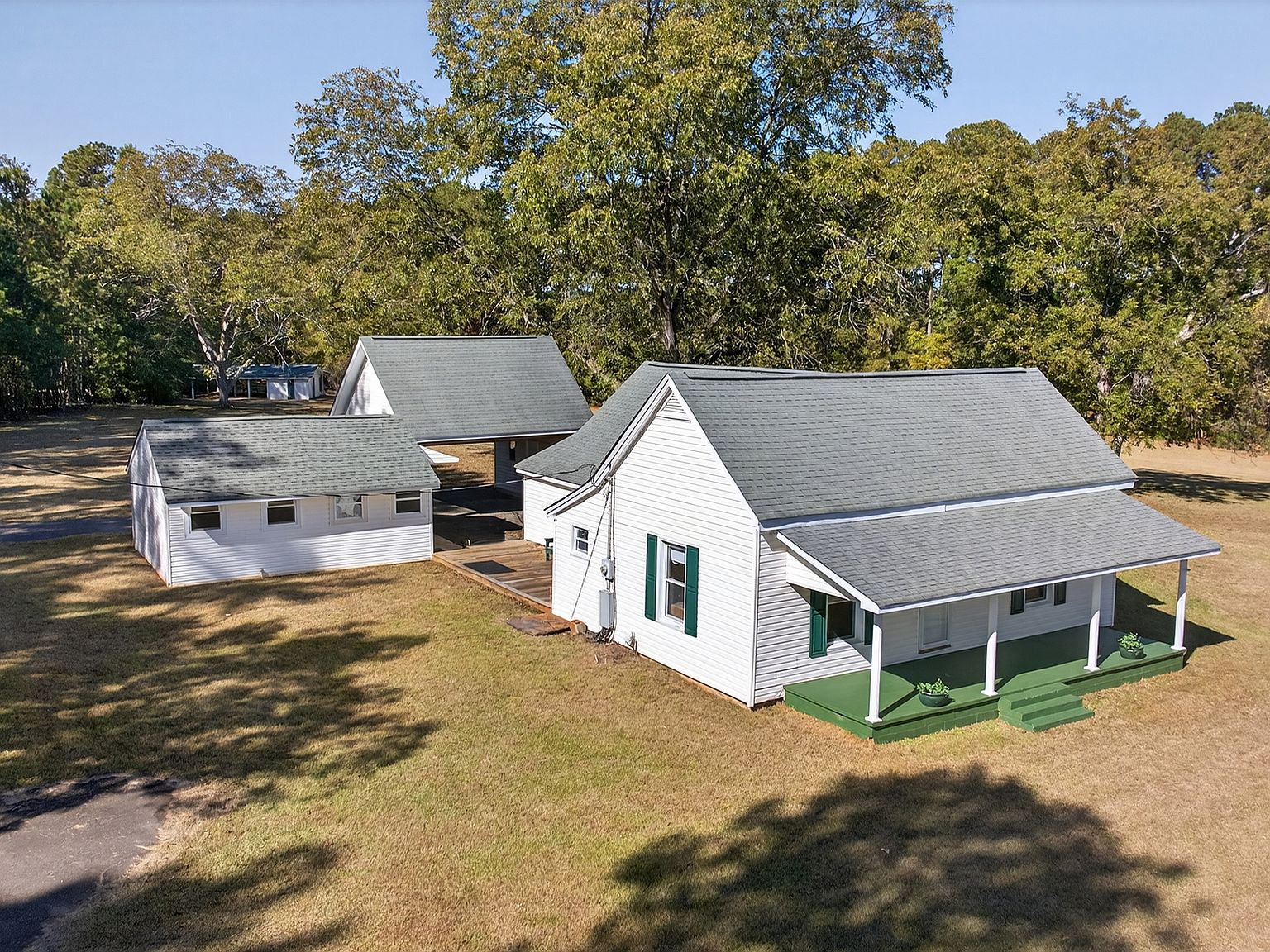
Today, 257 Methodist Park Lane sits minutes from Elrod Ferry Landing and Methodist Park, two of the most storied public access points on Lake Hartwell's Georgia shoreline. It is one of the last remaining large-acreage lakefront parcels on the lake's Georgia Corps of Engineers shoreline, and it still carries the two-bedroom, two-and-a-half-bath 1873 farmhouse at its center, ringed by mature pecan trees and expansive lawns.
What the family learned across 150 years is that this land is two things at once: a piece of living history and a fully modern lakefront property. The pavilion, the porch, the deck, and the patio host the gatherings that lake life is built around, while the elevated, flat ground never flinches at the waterline. That is the gift of the choice made in 1873, compounded across six generations: the high ground that kept the family dry before the lake, in the lake, and for as long as anyone can see ahead.