
Heritage
What the farmhouse heard before the lake: the sound of a river homestead, 1873 to 1961
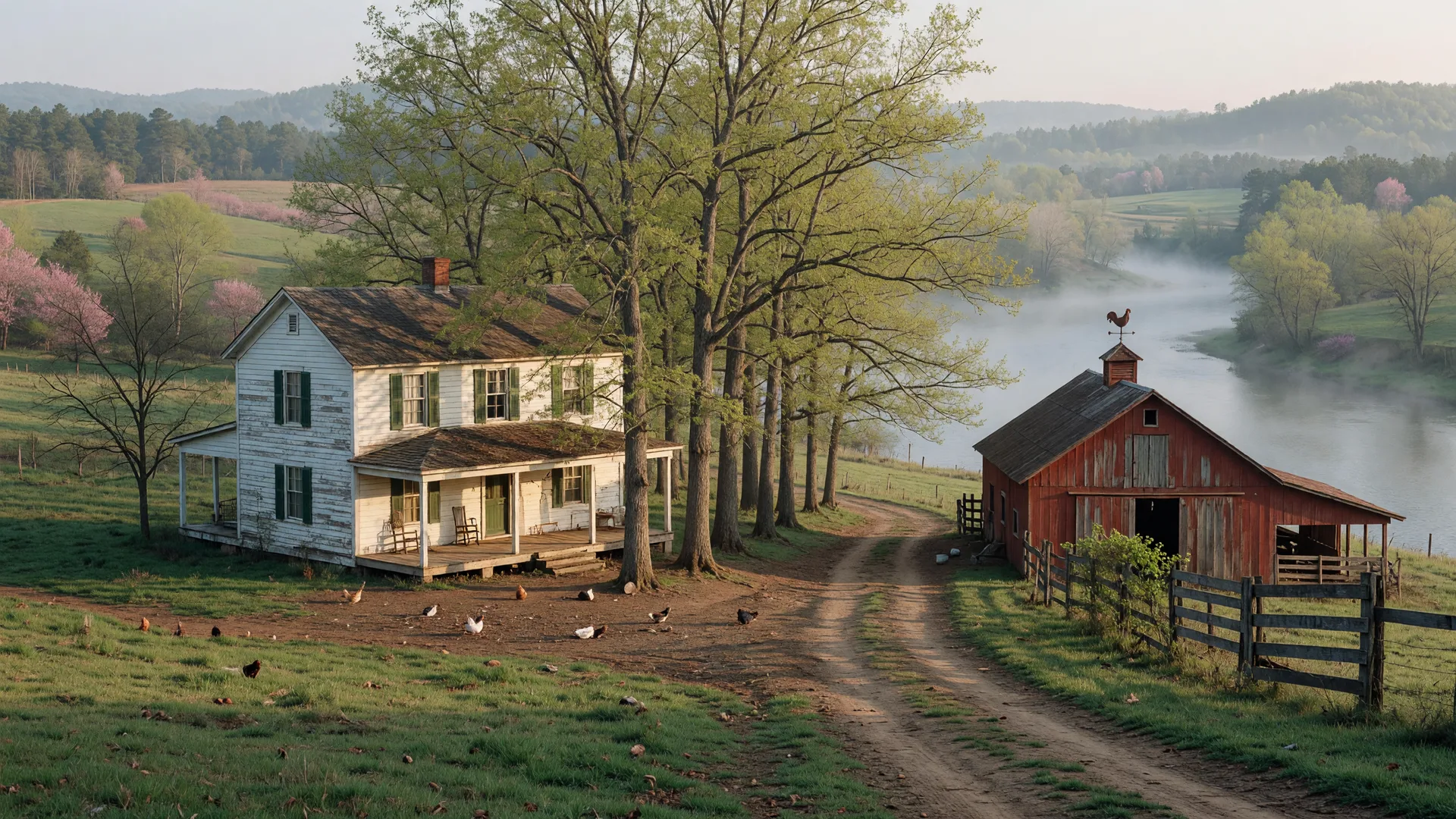
Close your eyes on the porch at 257 Methodist Park Lane and the present sounds obvious: water lapping, an outboard idling somewhere down the cove, geese crossing in the fall. Now subtract the water. What the same porch heard for the first eighty-eight years of its life was a river homestead's working day, and it is one of the quietest things this property has to tell you about why the family stayed.
A house built to hear the day
In 1873 there was no clock on the wall that anyone trusted, and no telephone anywhere near. The household kept time by sound. The first sound of a morning was the rooster, then the creak of the porch boards as someone stepped out, then the windlass of the hand-dug well as the first bucket came up. Chickens answered the gate. A cow lowed from the lot. Farther down the lane, if the wind was right, came the church bell, because the Methodist congregation on this road had organized back in 1854 and would raise its brick sanctuary in 1897, close enough that the people at the end of the lane could hear Sunday morning carry across the fields.
Dinnertime was a bell of its own, rung from the back porch, loud enough to reach the field hands and the children playing along the river. The family ate and worked by those signals, and in the evening the sounds softened in a particular order: the kitchen fire crackling down, the last dipper of water, the latch on the door, and then a quiet that a lake household today cannot quite reconstruct, because there was no outboard, no highway, and no neighbor's air conditioner to fill it.
The farm in the working hours
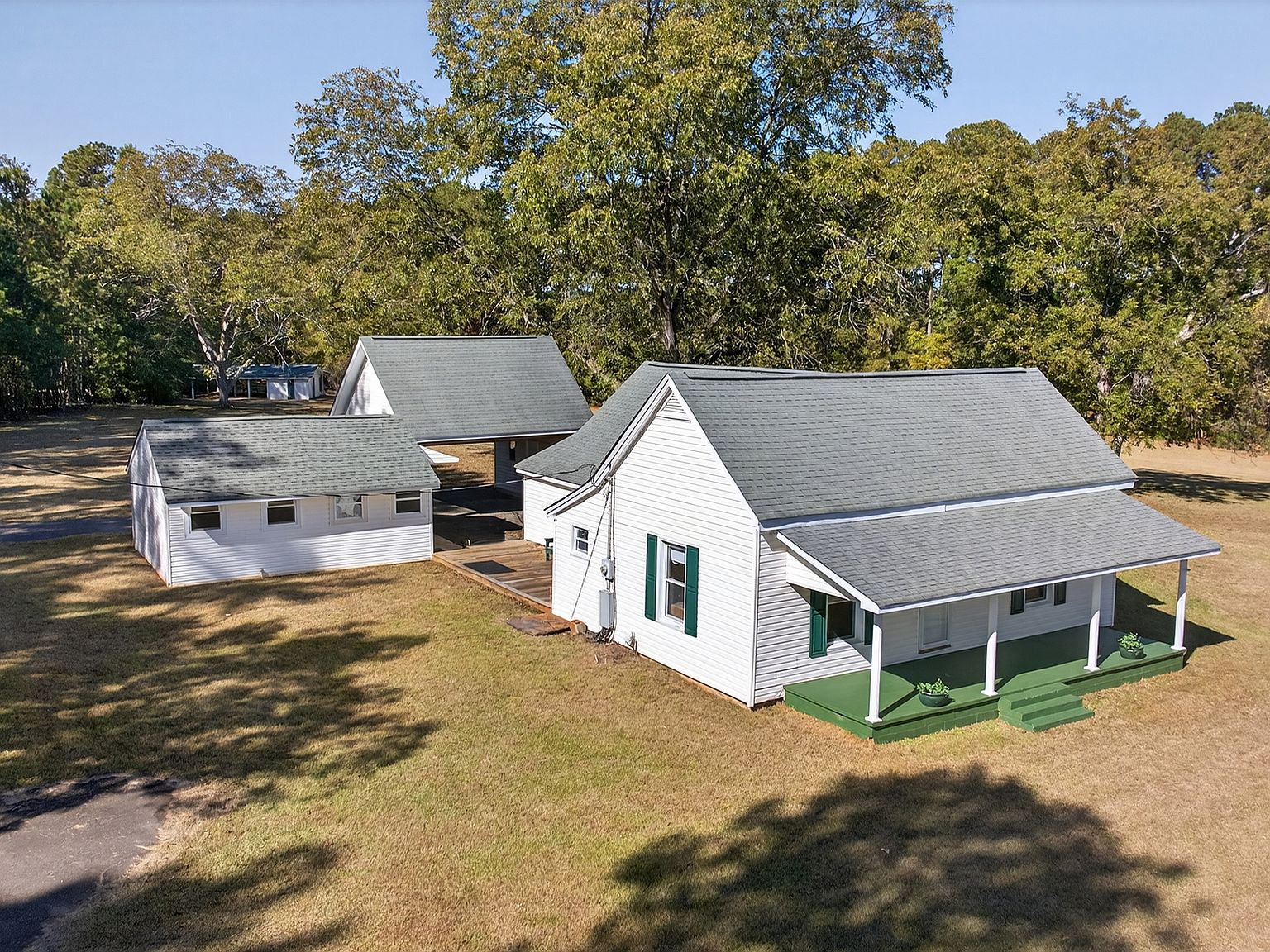
Half the year, the soundtrack of the daylight hours was wood and iron. The axe splitting stovewood, the saw at the lumber pile, the hammer on a fence rail, the harness jingle and the scrape of the plow turning red clay in the field rows. In the pecan grove in the fall came a rhythm of limbs rattled with poles and hulls drumming on the ground, and the flat lawn the orchard stands on was swept and raked the way a yard was kept then, by hand. Between those sounds ran the ordinary voice of a busy place: screen doors, dogs, the wheel of a wagon turning onto Methodist Park Lane, a neighbor hallooing from the fence line.
The river itself was part of it. The Savannah ran through the bottomlands below the rise, and in high water it could be heard from the porch as a low steady presence, a sound the family had chosen the high ground to be near without being in. In summer, children brought back the river in their voices, and in winter the valley went quiet under frost and the house sounds grew louder. Read one season of that working farm and you have read the first eighty years of this land's family life.
When the valley began to change
The first motor sounds arrived before the dam did. A Model T coughing up the lane in the 1920s, a truck in the 1930s, the tractor that replaced the mule. The old sounds stepped aside one at a time. Then in 1950 the Flood Control Act authorized the Hartwell project, and beginning around 1955 the valley below the rise began to fill with a different kind of noise: survey crews calling across the bottomlands, chainsaws opening the future pool line, graders and bulldozers, and long lines of trucks carrying earth and rock toward the dam works on the river.
The people at 257 Methodist Park Lane heard the future coming for the better part of a decade. The government was buying out whole communities, moving homes and cemeteries, counting the farms that would go under. The family on this high ground was not one of them. Their elevation put them above the Corps' pool line, on the flat, dry land their ancestors had picked for the same reason a dam engineer would have respected: it was the ground the water could not reach. So they heard the construction from a distance, and they stayed for the quiet that followed.
The last winter, then the water
The reservoir behind Hartwell Dam began to fill in February 1961 and reached full pool at 660 feet on March 12, 1962. In that year the bottomlands stopped being fields and became water, and the porch's soundscape changed in ways no one could have rehearsed. The river's voice, which the family had heard all their lives, went quiet as its channel drowned. In its place came the first lake sounds: water working at the new shoreline, and before long the first outboards, the first skiers, the first laughter of a summer that had not existed twelve months earlier.
The pecan trees on the rise had known the valley as farmland and would live to see it as a reservoir. The farmhouse that was built for a river homestead found itself a lakefront estate without moving an inch. That is the whole story of what it means to hold this ground across generations: the family kept the one thing that could not be rebuilt, the high flat land, and let everything around it change.
What the sound of a place teaches
Generations learn their land by ear. The first generation listened for the dinner bell and the river in flood; a later generation listened for the first boat of the season; the next will listen for whatever comes in its turn. Standing on this porch, it is worth hearing all of them at once, because the property still carries the evidence: the flat ground that was chosen for a working farm, the elevation that beat the flood pool, the grove that fed the family, and the water that arrived and made it all a destination.
For 153 years the same high ground has done the listening, from a quiet farmstead above the Savannah to a waterfront estate on Lake Hartwell. A property like that does not come to market often. It has been a century and a half in the making, and the sound of the next chapter starts with whoever stands on the porch next.