
Lake life
The winter birds are arriving: waterfowl, loons, and the November flyway over Lake Hartwell
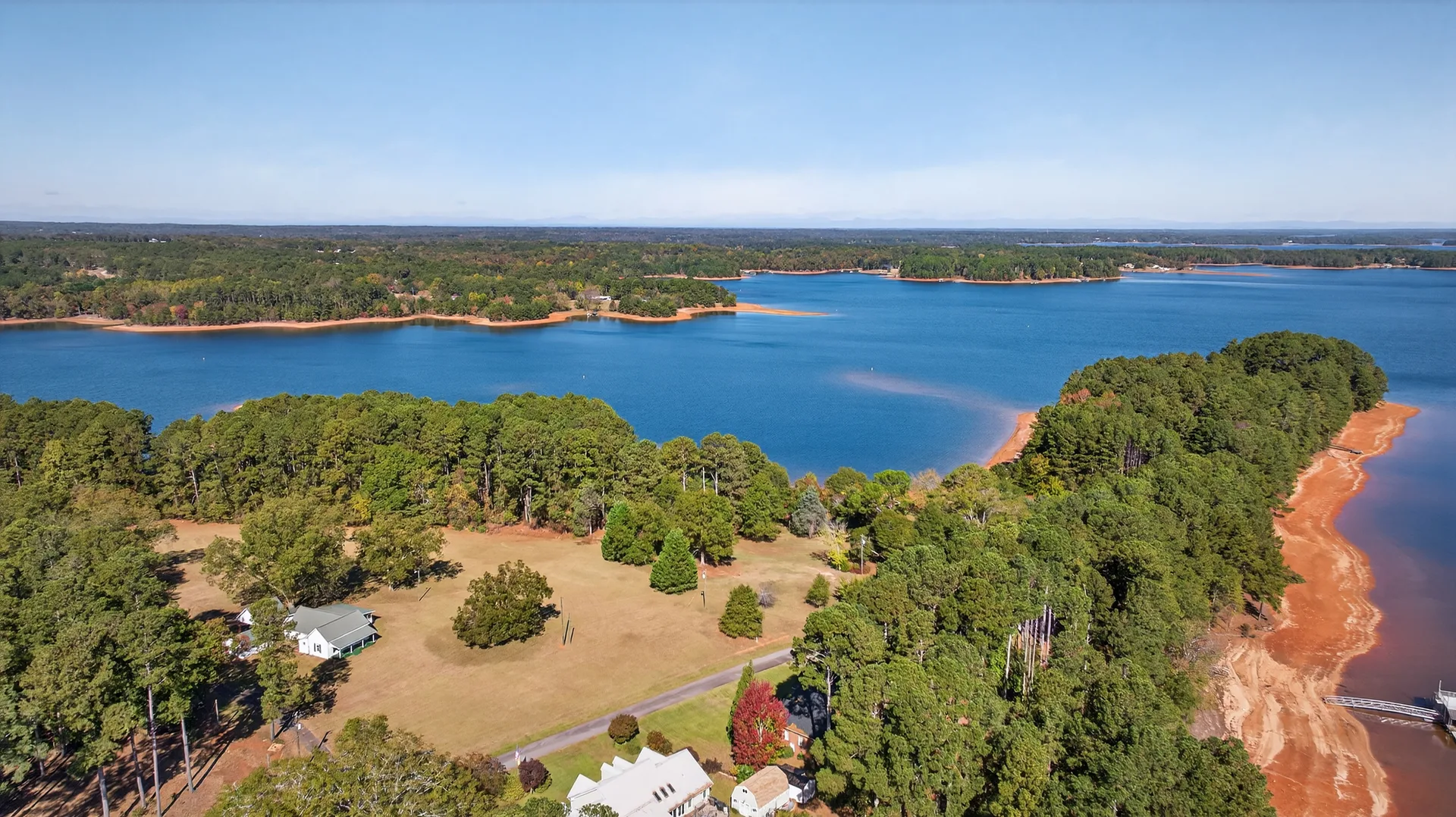
November is when the flyway settles in over Lake Hartwell. The common loons come in their gray winter plumage, the mergansers and goldeneye take the open water, long-tailed ducks and scoters work the deeper stretches, and the Canada geese move across the coves in their morning lines, joined some years by snow geese and white-fronted geese that overshoot the usual route. Around the dam and the undeveloped shore, birders' checklists for the winter months run past a hundred species. For us, the winter arrivals have always been one of the quietest and most dependable gifts of lake living, and they have been coming to this water, in one form or another, since long before the lake existed. This is the story of the November flyway over Lake Hartwell, and of the shoreline at 257 Methodist Park Lane that has held it for generations.
What November brings to the water
The bird count around Lake Hartwell in winter is genuinely remarkable. The eBird hotspots at Hartwell Dam and the surrounding shoreline have recorded between 118 and 147 species across the seasons, and the local winter checklists read like a field guide's deep-cut pages: red-throated and Pacific loons, common loons, red-necked and eared grebes, common mergansers, common goldeneye, long-tailed ducks, and surf, black, and white-winged scoters, alongside the Canada geese and the less common cackling, greater white-fronted, Ross's, and snow geese. Franklin County's lake-and-foothills terrain alone is noted for more than 250 regularly observed species, from wild turkey and geese to bald eagles and peregrine falcons. On a still November morning, the water at the foot of the lawn can hold a dozen of these in a single glance: a raft of loons offshore, a line of mergansers crossing a point, geese lifting off a cove all at once.
Why the shoreline matters
Waterfowl and loons need a particular kind of shoreline, and Lake Hartwell has it in abundance because the U.S. Army Corps of Engineers manages the banks as natural, undeveloped ground. Where the shoreline stays wooded and the coves stay quiet, the birds have somewhere to rest between feeding, and the eagles have the tall trees they need for nesting. The bald eagles are resident here, and they return to their territories in the fall, with egg-laying running from November through March and peaking in December, right as the waterfowl numbers build. Around the estate at 257 Methodist Park Lane, the protected shoreline a few minutes down the road is part of the same connected habitat, which is why the eagles work the cove, the herons hold the shallows, and the geese cross the property at dawn. A developed shoreline loses that; a Corps-managed one keeps it.
The same flights before the lake
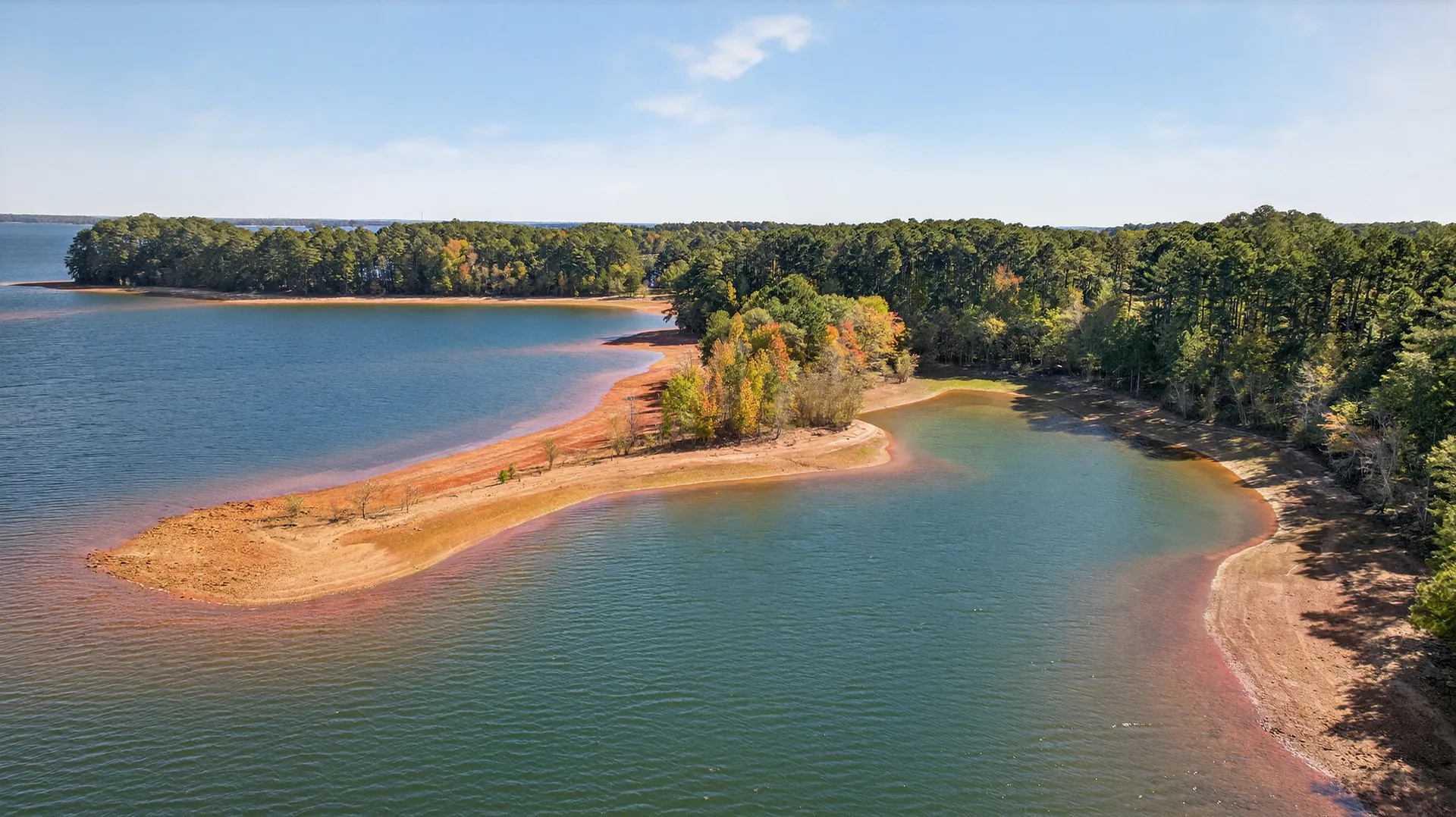
Before the reservoir filled in the early 1960s, this valley was a river bottomland, and the Savannah and Tugaloo rivers were already a migration route. The geese and ducks that rest on the lake today followed the same valleys when the water below was a river, stopping on the shallows and the sandbars instead of a 56,000-acre reservoir. The families farming the high ground at 257 Methodist Park Lane would have known the season the way a family knows its own calendar: the flights passing over in late autumn, the geese holding in the bottomlands, the sound of wings and calling crossing the lane in the dark. When the dam went in, the birds did not lose their route. They gained a much bigger water to rest on, and the protected woods along the new shoreline gave them the cover the riverbanks had always provided.
Watching from the porch
There is no better season for watching the lake from the high ground than the weeks after the boats leave. The water quiets, the light goes low and golden in the late afternoon, and the birds take over. From the porch at 257 Methodist Park Lane, a November morning means a raft of loons working the deep water offshore, a bald eagle cutting across the cove, and the geese coming over at first light in their unhurried V. The etiquette is simple: keep the distance, let them feed and rest, and the same birds will hold the same coves all winter. It is the quietest kind of wildlife spectacle, and it has been playing out on this stretch of water, in one form or another, since before the dam was built. For the family who owns this estate next, the November flyway will arrive the same way it always has, on the long wooded shore at the bottom of the lawn. Written by Amy Petrenko of The Petrenko Group.