
Lake life
The cove, the landing, and the park: Elrod Ferry, Methodist Park, and this stretch of Lake Hartwell's Georgia shoreline
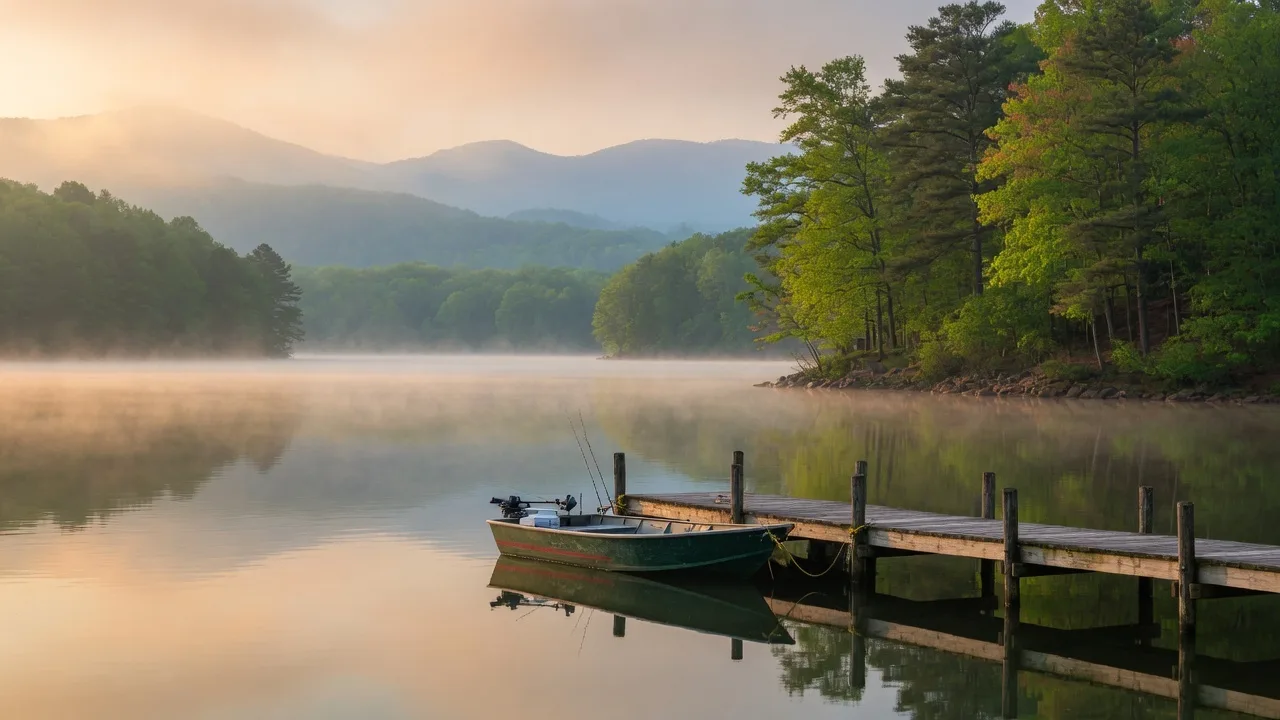
When the buyers who will eventually own 257 Methodist Park Lane look at a map of Lake Hartwell, their eyes will go to the same place ours do: the Georgia shoreline near the Hartwell Dam, where the Corps of Engineers manages a stretch of undeveloped banks, clean water, and public access points that define this part of the lake. Two names anchor that geography — Elrod Ferry Landing and Methodist Park — and understanding them is the key to understanding why this property exists on this spot.
Elrod Ferry Landing: a crossing that became a launch
Before the dam, before the lake, Elrod Ferry was exactly what its name suggests: a ferry crossing on the Savannah River, connecting Georgia to South Carolina at one of the narrow points of the river valley. The Elrod family operated the crossing for generations, carrying farmers, livestock, and goods across the river that divided two states. It was the kind of essential infrastructure that rural communities depended on — a lifeline between markets, families, and the economies on both sides of the water.
When the Corps of Engineers created Lake Hartwell between 1955 and 1963, the ferry crossing was submerged beneath the rising water. But the name survived. Today, Elrod Ferry Landing is one of the primary public access points on this stretch of Lake Hartwell's Georgia shoreline — a maintained boat ramp, parking area, and day-use facility managed by the Corps. It is minutes from 257 Methodist Park Lane, providing the property with direct access to the lake for guests, service providers, and anyone arriving by trailer.
The boat ramp at Elrod Ferry is a two-lane concrete launch with a courtesy dock — substantial enough to handle the Memorial Day weekend traffic, quiet enough that on a weekday morning you might be the only one there. The parking area accommodates vehicles with trailers, and the surrounding shoreline is managed under the Corps' natural resource policy, which means the banks stay wooded and undeveloped. There are no condos overlooking the ramp, no rental cabins crowding the access road. Elrod Ferry is a public resource, not a commercial development, and the quality of the experience reflects that distinction.
Methodist Park: the private access that shares the name
The property's address — Methodist Park Lane — takes its name from Methodist Park, a nearby recreation area that serves the same stretch of shoreline. Methodist Park offers boat access, a swimming area, and the kind of Corps-managed public space that makes the lake feel like a community asset rather than a privatized resource.
For the owners of 257 Methodist Park Lane, the proximity to Methodist Park is a practical advantage. Guests who arrive without a boat can launch at the public ramp. Families who want a sandy beach for an afternoon can walk to the park. The public access points absorb the pressure that would otherwise concentrate on private docks, keeping the shoreline around the property quiet while providing all the amenities that lake living requires.
The Corps of Engineers manages the shoreline on this stretch of Lake Hartwell under a policy that prioritizes natural resource conservation. No seawalls. No bulkheads. No private docks that encroach on the public water. The banks stay wooded, the water stays clean, and the experience of being on the lake remains closer to wilderness than to a developed resort. For a property like 257 Methodist Park Lane — one of the last remaining large-acreage parcels on this shoreline — the Corps management policy is not a restriction. It is a protection. It ensures that what the owners see from their porch will not be replaced by a condominium complex.
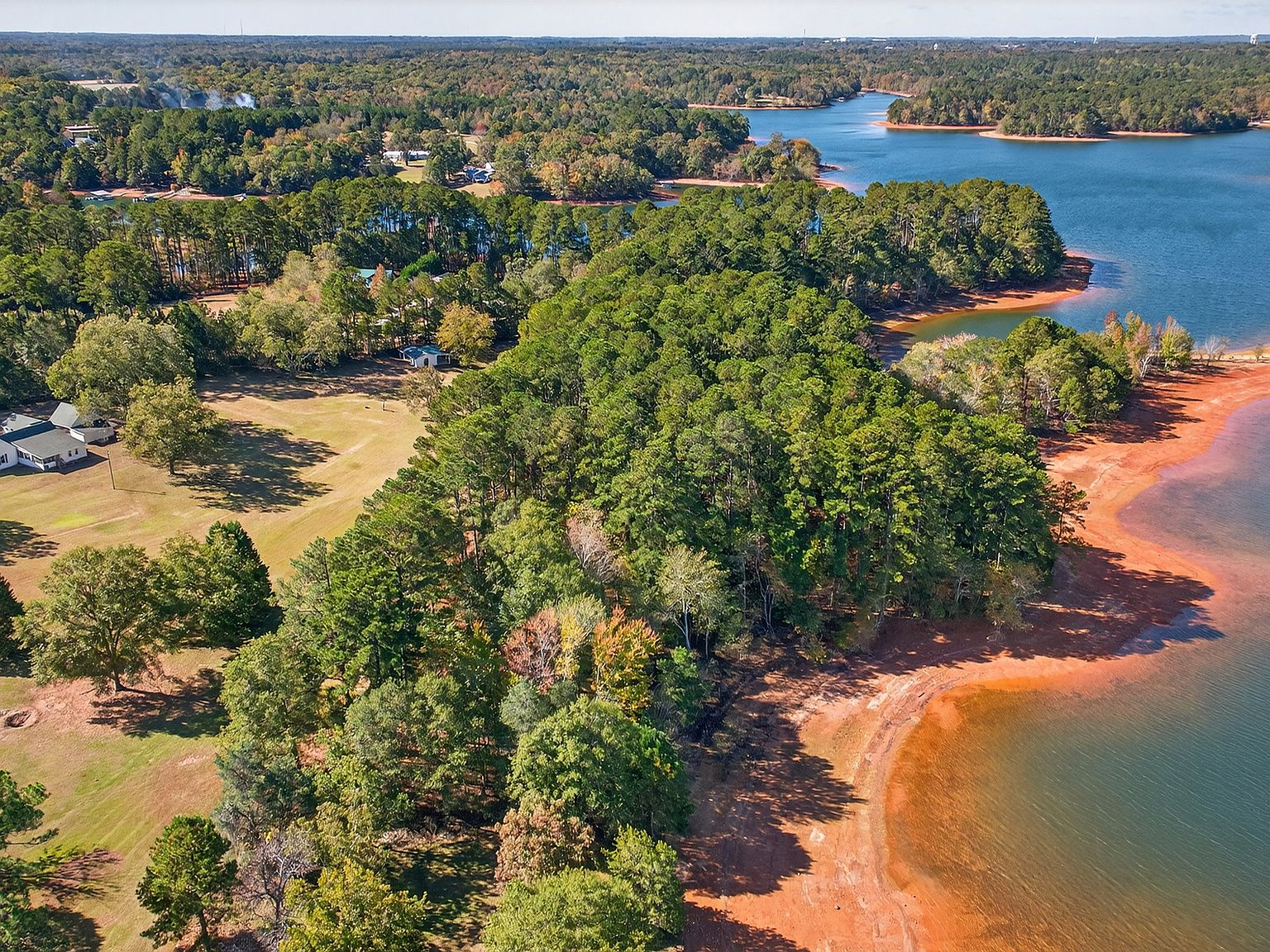
The cove that holds the property
The 4.546 acres of 257 Methodist Park Lane sit on a gentle rise above the lake, with the property's shoreline fronting a cove that opens toward the main channel of Lake Hartwell. The cove is protected from the main lake traffic — boats heading to and from the dam pass at a distance, leaving the cove quiet for swimming, fishing, and the kind of idle floating that defines a summer afternoon on the water.
A cove property on Lake Hartwell offers distinct advantages over a main-channel lot. The water stays calmer. The boat traffic stays lighter. The swimming is safer for children. The fishing — particularly for bass and crappie — is often better in the coves, where the structure and cover that fish prefer are concentrated. And the view, framed by wooded banks on both sides rather than open water to the horizon, feels more intimate and more settled.
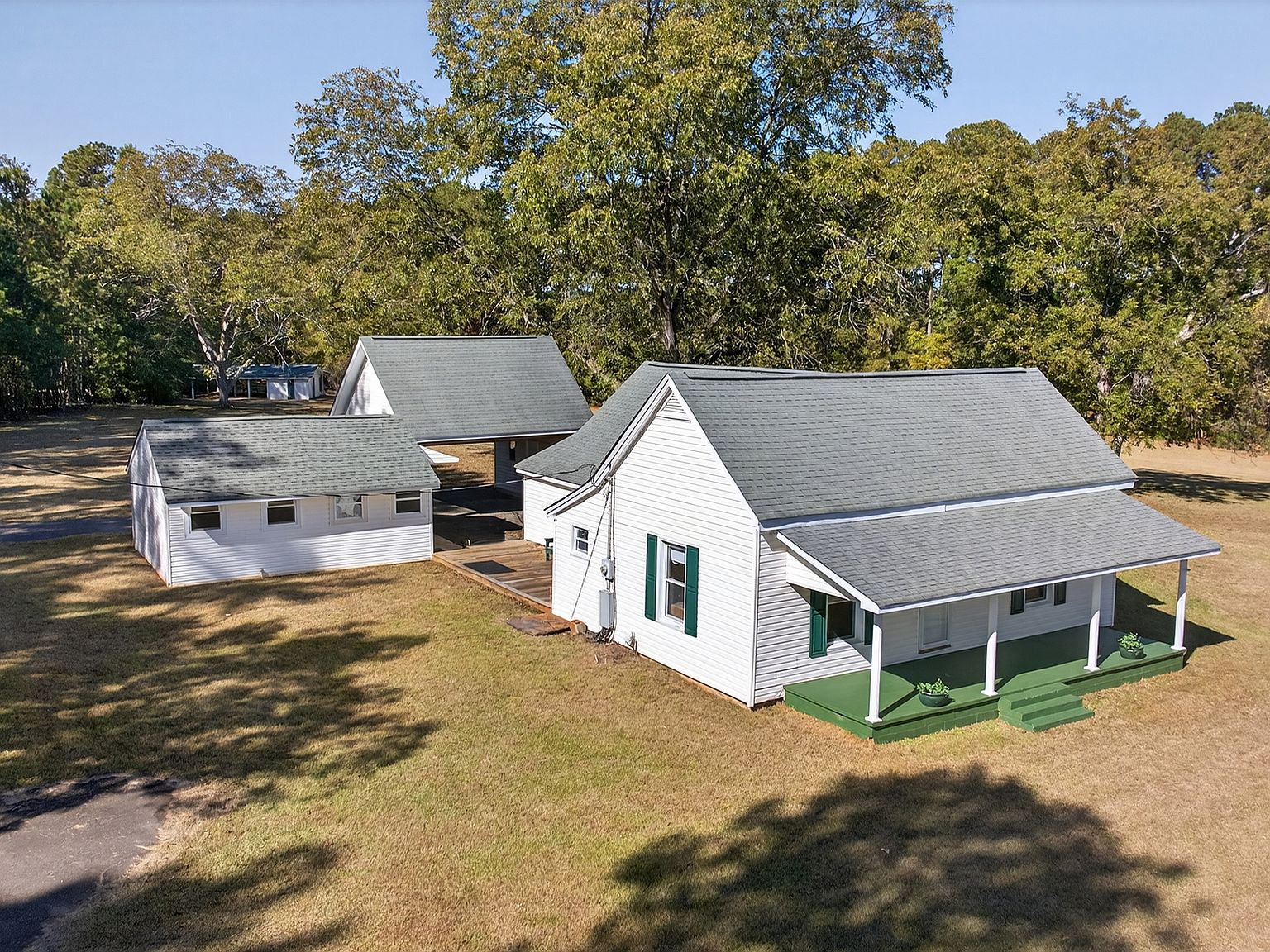
The property's elevation is another critical feature. At 257 Methodist Park Lane, the 1873 farmhouse sits well above the full-pool line of 660 feet above sea level — the same elevation that saved it from the Corps' acquisition in the 1950s. The flat lawn, the pecan grove, the covered porch, and the screened back porch all sit on ground that was never in danger of being submerged. In a drought year like 2026, when the lake has dropped several feet below full pool, that elevation matters: the dock remains accessible, the shoreline remains usable, and the value of being on high ground becomes visible to anyone paying attention.
What the geography means for daily life
When you wake up at 257 Methodist Park Lane, the geography of the lake determines the shape of your day. If the wind is from the north, the cove stays flat and the morning is for fishing or paddleboarding. If the wind is from the south, the main channel gets choppy but the cove remains sheltered — still good for swimming, still good for the kayak. The orientation of the property, the shape of the shoreline, and the position of the cove relative to the main lake give the owner options that a straight-on main-channel lot does not provide.
The public access points — Elrod Ferry Landing and Methodist Park — shape the social life of the lake. On a summer weekend, the ramp at Elrod Ferry sees steady traffic from sunrise to mid-morning. Families launch their pontoons. Fishermen back their bass boats into the water. By the time the afternoon crowd arrives, the early risers are already on the lake, and the cycle repeats. Living on the same stretch of shoreline as these public access points means you are part of the lake community by default. The people launching at Elrod Ferry are your neighbors. The boats idling at Methodist Park are your weekend visitors.
For the family that owns 257 Methodist Park Lane, the private dock provides the launch point for daily life. The public ramps provide overflow capacity for guests and service access. The cove provides the protected water that makes the lake usable in every wind condition. The Corps-managed shoreline provides the assurance that the view will not change. The geography of this specific stretch of Lake Hartwell's Georgia shoreline is not incidental to the property's value. It is the property's value.
A piece of geography that cannot be replicated
Large-acreage parcels on Lake Hartwell's Georgia Corps of Engineers shoreline are rare for a reason. The Corps acquired the land surrounding the reservoir during the dam's construction in the 1950s and 1960s, and most of that land remains under federal management. The parcels that sit above the full-pool line — the ones that were privately held before the dam and remained private after it — are the exceptions. Properties of this size, with this elevation, on this stretch of shoreline, are the survivors of a federal infrastructure project that reshaped the entire region.
That scarcity is not a marketing angle. It is a structural reality. The Georgia shoreline of Lake Hartwell is not going to see a wave of new development. The Corps is not selling its land. The available parcels are the ones that were here before the lake, and there are only so many of them.
At The Petrenko Group, we have represented luxury waterfront properties across Lake Norman, Charlotte, and Lake Wylie for years. We understand what makes a property rare in a competitive market. 257 Methodist Park Lane is rare in a category of its own — a 153-year-old historic estate on 4.546 acres of flat, private land, on a protected cove, near Elrod Ferry and Methodist Park, on one of the last remaining large parcels on Lake Hartwell's Georgia shoreline. The cove, the landing, and the park are not just landmarks on a map. They are the geography that defines what it means to own this land.