
Lake life
A day at 257 Methodist Park Lane: from morning mist to evening stars
Real estate listings describe properties in terms of rooms, square footage, and acreage. That's accurate, but it misses the point. What you actually buy when you buy a property like 257 Methodist Park Lane is a series of days — thousands of them, strung together across seasons and years, each one shaped by the land, the water, and the particular quality of light that falls across 4.5 acres of Lake Hartwell waterfront. This is what one of those days looks like.
5:45 a.m. — The porch
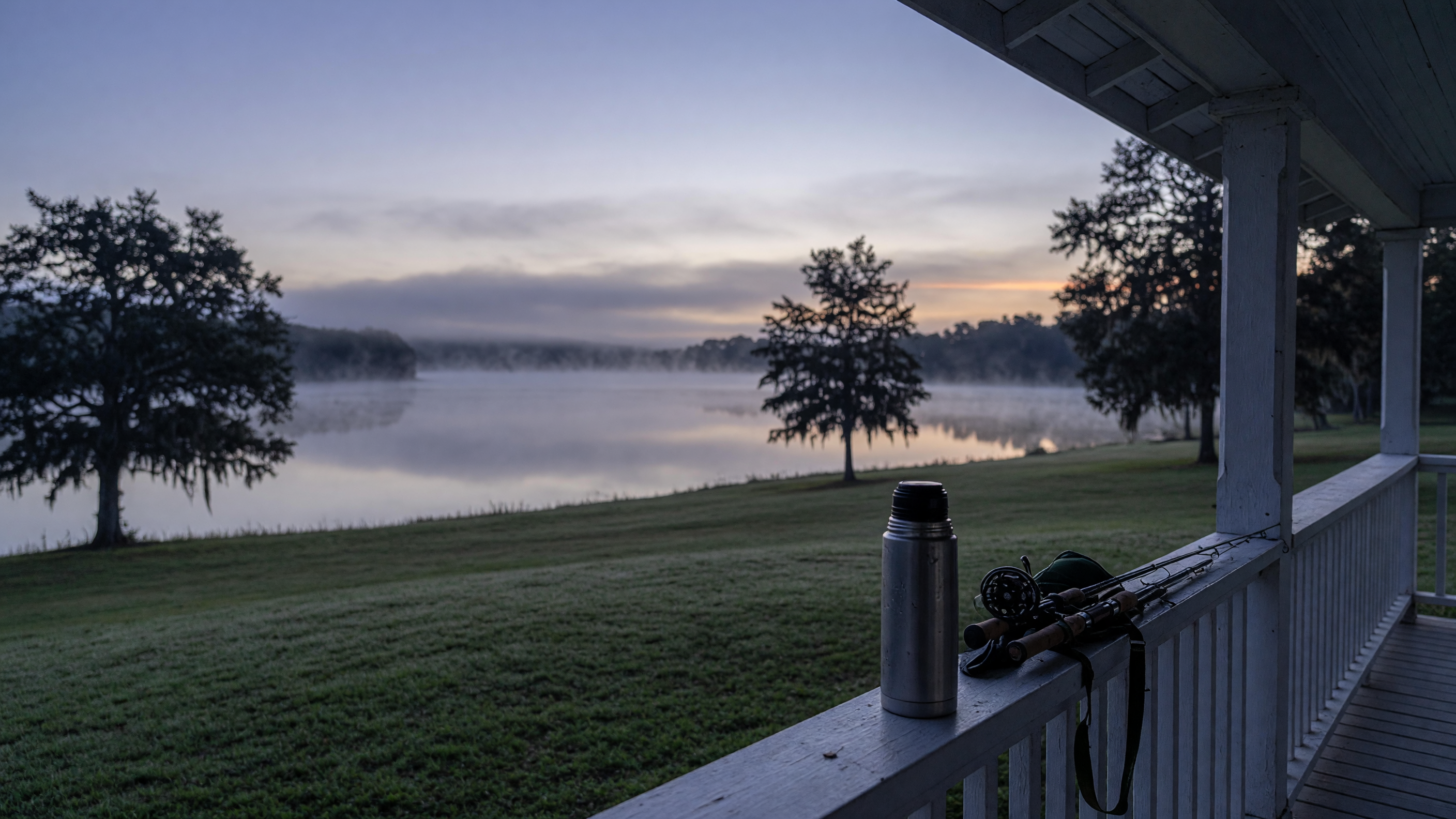
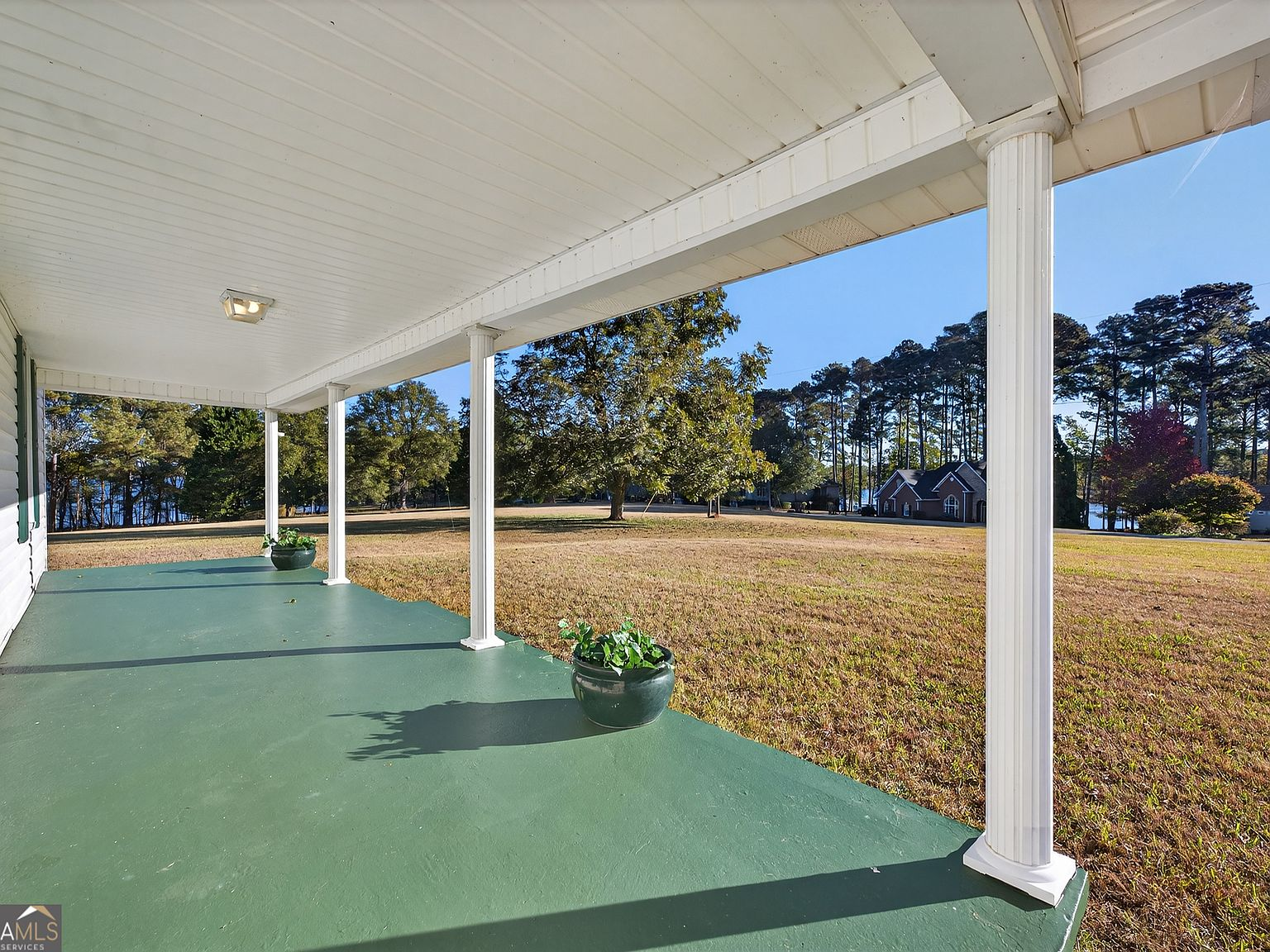
The alarm doesn't wake you — the light does. In June, the sun rises over the eastern tree line at about 6:15, but the sky begins to lighten at 5:45, and the covered porch at 257 Methodist Park Lane faces exactly the right direction to catch it. The white columns frame a view that hasn't changed in a century: flat green lawn, mature pecan trees, and beyond them, the still surface of Lake Hartwell catching the first color of the day.
The mist is what gets you. On mornings when the air temperature and the water temperature differ by ten degrees or more, a low fog sits on the lake's surface — not thick enough to obscure the far shore, but thick enough to soften it. The lake looks like a painting of itself. You stand on the porch with coffee, and the world is reduced to the sounds of birds, the occasional splash of a fish breaking the surface, and the creak of the porch boards beneath your feet.
This is the moment that justifies the early wake-up. Not productivity. Not exercise. Just the particular pleasure of watching a lake wake up before anyone else is on it.
6:30 a.m. — The water
The dock is fifty steps from the porch. By 6:30, the trolling motor is in the water and you're casting into the riprap along the shoreline near Methodist Park. Lake Hartwell's largemouth bass follow a reliable spring and early summer pattern — they move shallow to spawn in March and April, relate to cover and structure through May, and by June are transitioning to deeper water for the summer. But the early morning hours still find them in the shallows, feeding aggressively before the sun climbs and the water temperature rises.
The fishing on Lake Hartwell is real — not stocked-for-Instagram real, but genuinely productive year-round. The lake supports 21 species of fish, including largemouth bass, spotted bass, striped bass, crappie, and catfish. In November 2025, angler Robert Jason Bailey landed a 53.5-pound blue catfish — the lake's official record — proving that the fishery is still producing trophy-caliber fish. For someone who fishes from their own shore, the experience is different from launching at a public ramp: there's no drive, no wait, no crowd. The water is there when you wake up, and it's still there when you go to sleep.
9:00 a.m. — The lawn
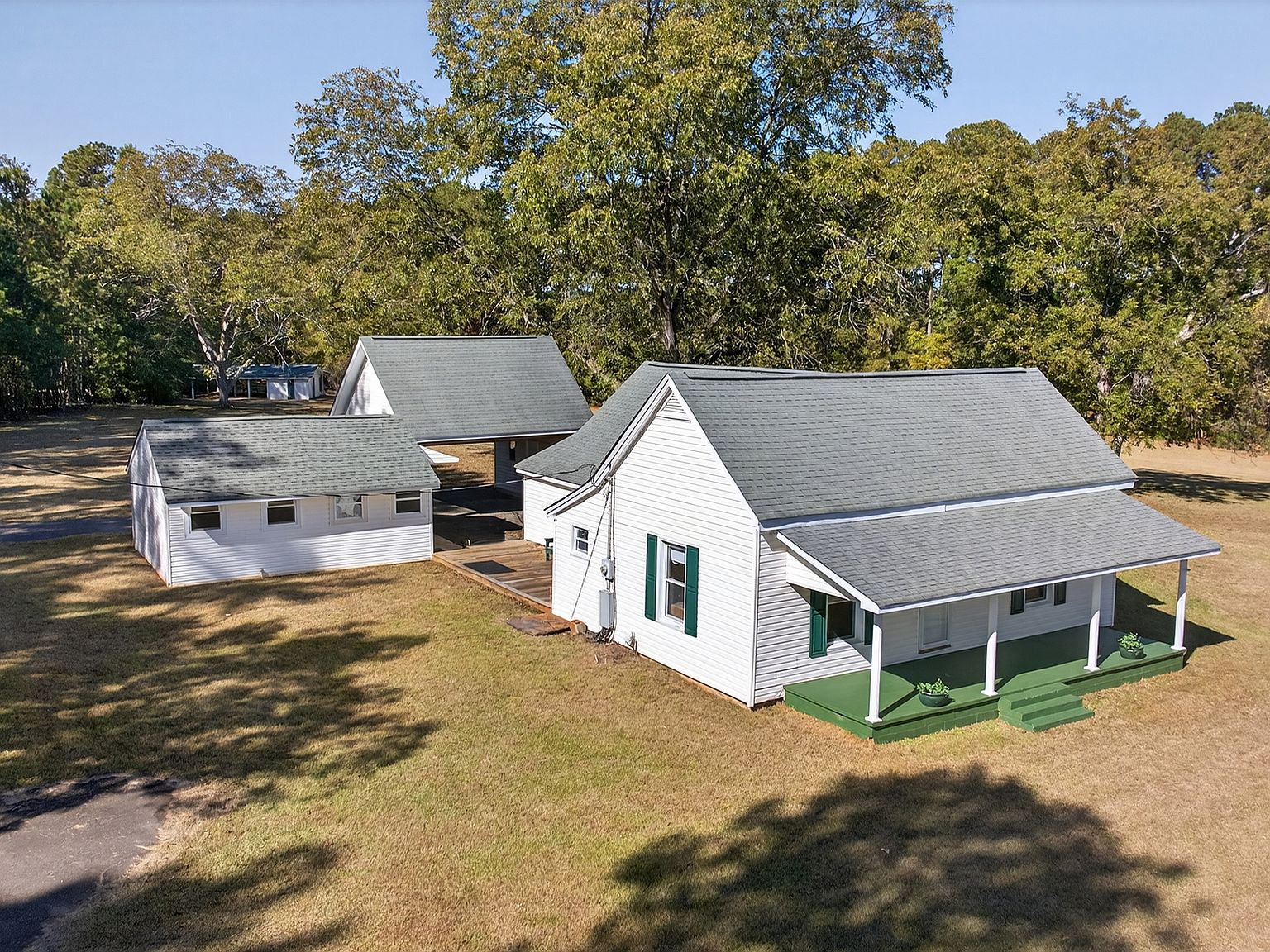
By nine, the mist has burned off and the lawn is in full sun. The pecan trees cast broad shadows across the grass — a canopy of green that drops the temperature ten to fifteen degrees beneath it. If it's a weekend with guests, this is when the lawn games come out: cornhole, bocce, the kind of low-intensity outdoor activity that pairs naturally with a lakeside morning.
The lawn at 257 Methodist Park Lane is one of the property's defining features — not because of its size (though 4.546 acres of flat, private waterfront is rare on Lake Hartwell), but because of its quality. It's been continuously maintained for over 150 years. The soil is settled, the grading is natural, and the mature pecan trees provide the kind of shade structure that no landscape architect could design and no budget could replicate. You can't buy a hundred-year-old pecan grove. You can only inherit one.
11:00 a.m. — Into town
Downtown Hartwell is a ten-minute drive from the property — close enough to be convenient, far enough to preserve the sense of being on a private estate. The town, founded in 1854 and named for Revolutionary War heroine Nancy Hart, has maintained its twelve-block historic downtown with a Georgia Exceptional Main Street designation that reflects genuine community investment, not a marketing badge.
The morning errand run in Hartwell follows its own rhythm. Common Ground on Carolina Street for a second coffee — good espresso, quiet tables, the kind of pace where reading a book isn't a social faux pas. The antique shops along West Franklin Street open at 10:00, and the selection rotates weekly — estate sales, farm clearances, and the occasional piece of Hart County history that surfaces from a family that's been cleaning out an attic. Twelve South Artisan Market carries work from local artists and craftspeople. Southern G's Traditions for gifts that aren't from Amazon.
If it's a Saturday during the growing season, the Hartwell Farmers Market fills a section of downtown with local produce, baked goods, and the kind of face-to-face commerce that reminds you why people choose small towns. The market isn't large — it's Hartwell, not Atlanta — but it's real, and the vendors know their customers by name.
1:00 p.m. — The pavilion
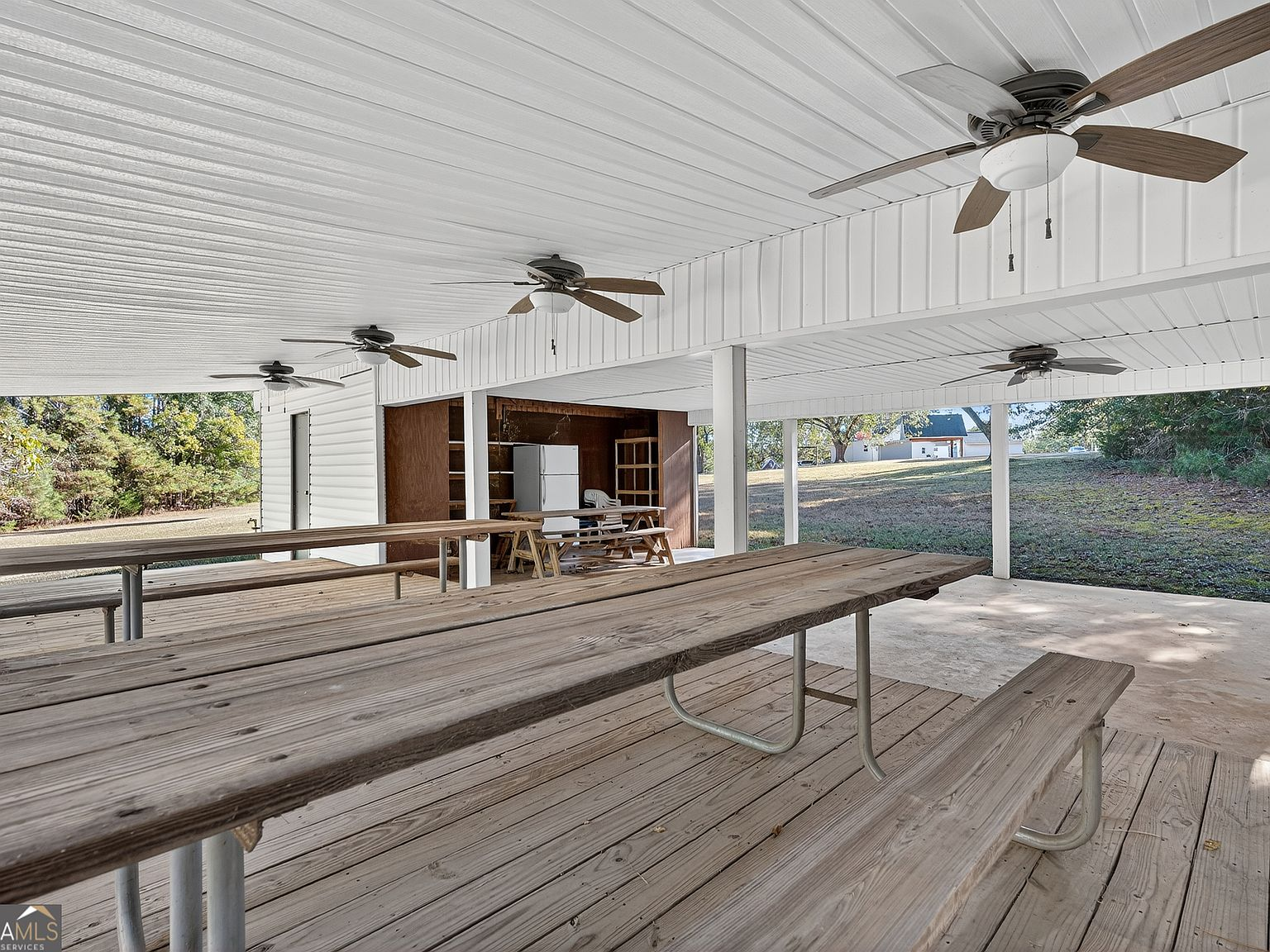
Lunch at the property happens at the pavilion. The covered lakeside structure — with its concrete floor, white metal ceiling, and two full bathrooms — was built for exactly this kind of use. A grill, a cooler, a folding table for the plates, and the sound of the lake twenty yards away. There's no restaurant in Hartwell that offers a better view, and none that charges less.
The pavilion is the reason weekend gatherings work at 257 Methodist Park Lane. It's large enough to host a crowd — multiple picnic tables, ceiling fans, standing room for twenty or more — but intimate enough that a family of four feels comfortable eating lunch under its cover. It sits between the house and the water, functioning as the transition zone between the domestic life of the farmhouse and the recreational life of the lake. It's where the food happens, where the stories get told, and where the afternoon's plans get made.
3:00 p.m. — On the lake
After lunch, the water. Elrod Ferry Landing and Methodist Park are minutes from the property — the two primary public access points on this stretch of Lake Hartwell's Georgia shoreline. If you've brought a boat, the launch is easy and the water is immediate. If you haven't, the shoreline near the property offers swimming, kayaking, and the kind of idle wading that passes an afternoon without anyone noticing the time.
Lake Hartwell in summer is 56,000 acres of warm water — mid-80s by July — with nearly 1,000 miles of shoreline winding through the Appalachian foothills. The Georgia Corps of Engineers shoreline near 257 Methodist Park Lane stays natural and undeveloped: wooded banks, clean water, the kind of cove where you can tie up a boat and not see another person for an hour. The ecological health of this stretch is maintained by the Corps' management policy — no development, no seawalls, no disruption to the natural shoreline buffer.
By three in the afternoon, the sun is high enough to warm the water to swimming temperature, the breeze has picked up enough to keep the pavilion comfortable, and the lake has filled with the midday traffic of families on pontoons, kids on tubes, and fishermen working the deeper structure. It's busy enough to feel alive and quiet enough to feel private.
6:00 p.m. — The golden hour
The best hour on Lake Hartwell is the one that real estate photographers call "golden hour" — the period from about 6:00 to 7:30 p.m. in summer when the sun drops low enough to paint the water in amber and the shadows of the pecan trees stretch across the lawn like sundials. The lake quiets. The boat traffic thins. The light does something to the shoreline that no filter can replicate.
This is when the covered porch at 257 Methodist Park Lane earns its place as the most valuable room on the property. You sit in a chair, face the water, and watch the day end. The view is the same one that the family who built this house in 1873 would have seen — minus the lake, plus the river valley — and the quality of the light hasn't changed in 153 years. It's the kind of moment that makes you understand why someone would hold this property for six generations.
8:30 p.m. — Evening under the pecans
After dinner — grilled on the pavilion, eaten at the long table, dishes left for the morning — the evening moves under the pecan canopy. A fire pit, a few chairs, the sound of the lake settling into its nighttime rhythm. The stars over Lake Hartwell are better than you'd expect for a property that's ninety minutes from Atlanta. The lack of light pollution on the Georgia shoreline — the undeveloped, wooded banks maintained by the Corps — means the sky opens up in a way that suburban lots can't offer.
The conversation slows. The fire burns down to coals. Somewhere across the lake, a boat's navigation light moves slowly through a cove. A great blue heron, roosting in a shoreline tree, lets out a single croak that carries across the water. The pecan leaves, heavy with summer growth, create a canopy that filters the starlight into dappled patterns on the ground.
This is the moment that no listing photograph captures and no square-footage calculation can quantify. It's the moment when the property stops being a real estate asset and becomes a home — not because of the rooms inside, but because of the quality of the life that happens outside them.
10:00 p.m. — The house
The 1873 farmhouse closes the day. The thick walls — original construction, built when materials were local and builders didn't cut corners — hold the day's warmth in winter and release it in summer. The wood floors creak in the hallway, a sound that modern construction eliminated but that anyone who's lived in an old house recognizes as the building settling into itself, the way it has for 153 years.
The bedrooms are on the second floor, with windows that face the lawn and the lake. The view at night is different from the daytime view — no color, no detail, just the dark mass of the water and the faint reflection of whatever light the moon provides. On clear nights, the Milky Way is visible from the bedroom window. On cloudy nights, the fog sits on the lake and the world ends at the tree line.
You sleep in a house that was built before the telephone, before the automobile, before the lake. The pecan trees outside the window were already producing when this home was constructed. The land beneath the foundation has been continuously occupied since the 1870s. And tomorrow, the day will start again — with the light, the coffee, the porch, and the particular pleasure of waking up on a property that has been doing this for a hundred and fifty-three years and shows no intention of stopping.