
Community
Hartwell's lake economy: what 9 million visitors a year mean for a Georgia lake town
There are two ways to understand Lake Hartwell. One is as a body of water — 56,000 acres of reservoir stretching across the Georgia-South Carolina border, created by the U.S. Army Corps of Engineers between 1955 and 1963. The other is as an economic engine: more than 9 million visitors a year, $57.4 million in annual tourism revenue for Hart County, and a community whose identity and prosperity are inseparable from the lake that defines it. For anyone considering a property on Lake Hartwell, understanding the second version is as important as appreciating the first.
The numbers behind the lake
Lake Hartwell's 9 million annual visitors make it one of the most heavily used recreation areas managed by the U.S. Army Corps of Engineers in the Southeast. The figure encompasses boaters, fishermen, campers, day-trippers, weekenders, and the kind of repeat visitors who come so often they practically qualify as residents — families who've been renting the same lake house every July for fifteen years and know the dock better than their own garage.
The tourism revenue flows through Hart County's economy in ways both obvious and subtle. Obvious: marinas, bait shops, restaurants, lodging, boat dealerships, and the gas stations that fill up pontoon tanks on Friday afternoons. Subtle: the property tax base that funds Hart County's schools, the retail traffic that keeps downtown Hartwell's shops viable, the demand for services — landscaping, dock maintenance, construction, property management — that supports a year-round workforce.
The Hart County Chamber of Commerce and the local tourism authority track these metrics closely, because they know that the lake economy isn't automatic. It requires maintenance — of the water quality, of the infrastructure, of the community character that makes people want to return year after year.
How the lake economy shapes daily life
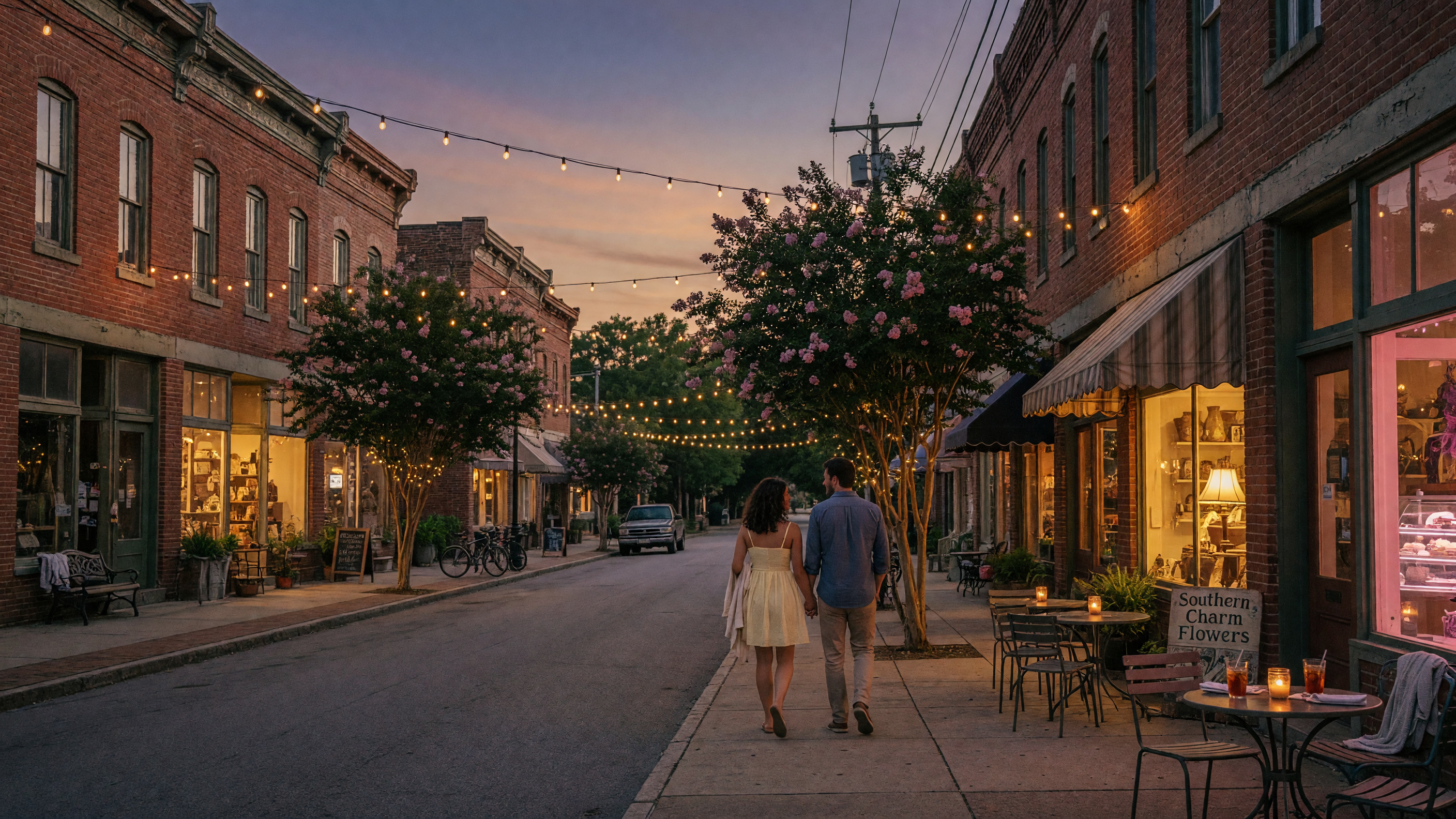
For residents of Hartwell and the surrounding communities, the lake economy isn't an abstraction — it's the texture of daily life. The restaurant that stays open because weekend boaters fill the patio on Friday and Saturday nights. The craft brewery that opened on East Howell Street because the post-lake crowd needed somewhere to gather. The antique shops downtown that thrive on the foot traffic generated by events like the Pre-4th Arts & Crafts Festival and the annual Cars & Guitars Festival.
Southern Hart Brewing Company is a case study in lake-economy adjacency. The taproom on East Howell Street has become the unofficial Friday evening gathering spot for the lake community — craft beer in a relaxed setting, with a parking lot that fills early and a crowd that includes full-time residents, weekend visitors, and the kind of seasonal renters who've been coming to Hartwell for a decade. The brewery doesn't succeed because of its beer alone (though the beer is good). It succeeds because the lake creates the social density that supports a gathering place.
The Boathouse Grill at Hartwell Marina takes a different approach — waterfront dining that catches the dinner crowd off the water. On summer evenings, boats tie up at the marina and their occupants walk directly to the restaurant. It's the kind of amenity that makes lake living feel like a lifestyle rather than a location — the water is your commute, and the view is included.
The tournament effect
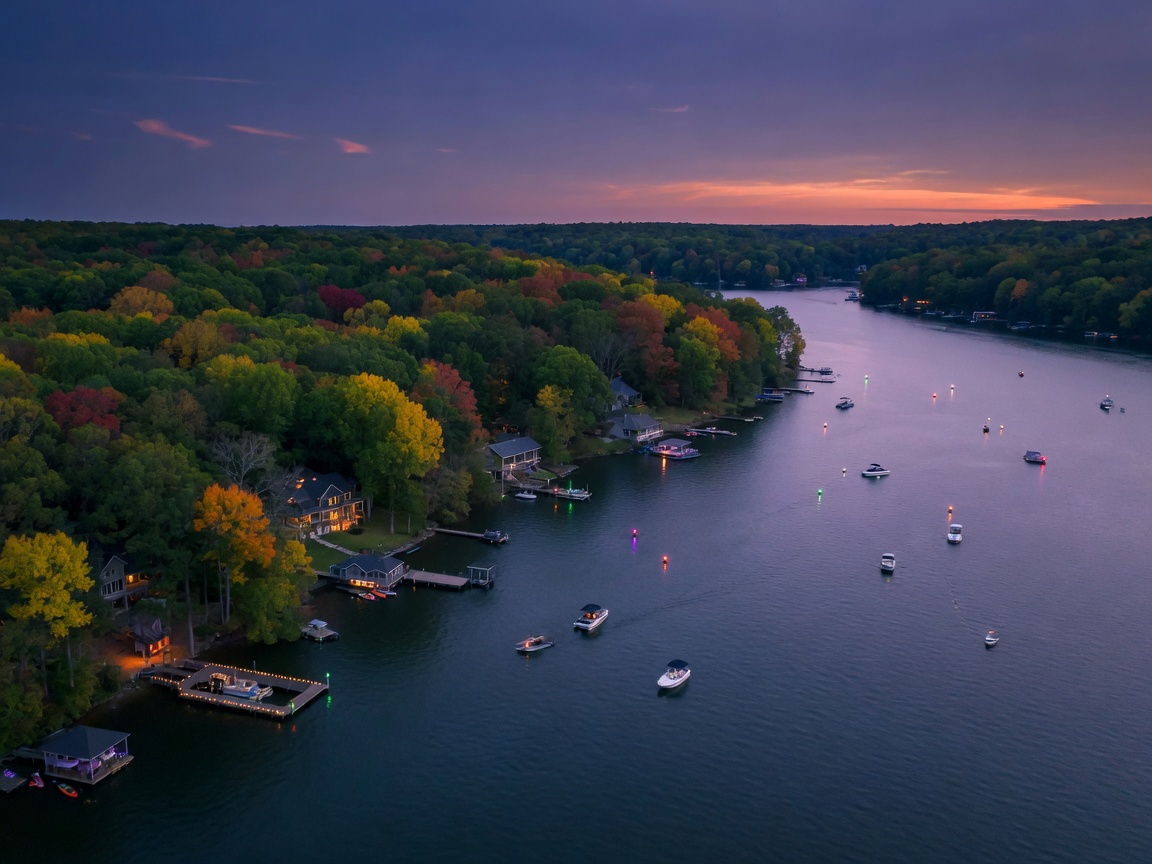
The single largest economic event in Lake Hartwell's annual calendar is the Bassmaster Classic — when the lake hosts it. In 2022, the Classic drew approximately 154,932 fans and generated an estimated $25.5 million in economic impact across the Hartwell-Anderson-Greenville corridor. Hotels filled for weeks. Restaurants overflowed. Marina traffic spiked. The ripple extended to tackle shops, gas stations, lodging operators, and retail businesses across a fifty-mile radius.
In February 2026, B.A.S.S. announced that Lake Hartwell would host the 2027 Bassmaster Classic — a record-setting fifth time the lake has been chosen for the event. No fishery in the country has hosted the Classic five times. The announcement validated what the fishing community already knew: Lake Hartwell is one of the premier bass fisheries in the Southeast, with a track record of competitive drama that no other lake can match.
For waterfront property owners, the tournament effect goes beyond the immediate economic impact. Each Classic appearance generates national media exposure — weeks of television airtime, social media reach into millions of fishing households, and the kind of brand recognition that drives demand for lakefront property. When B.A.S.S. keeps choosing the same lake, it sends a signal to the market that no marketing budget can replicate.
Beyond the Classic, Lake Hartwell's 2026 tournament calendar includes the Bassmaster Elite Series, the Phoenix Bass Fishing League, the Mercury B.A.S.S. Nation Championship (November 18–21, 2026), and the Bassmaster Team Championship (December 4–7, 2026). Each event reinforces the lake's reputation and keeps it in the national conversation.
What the economy means for property values
The relationship between the lake economy and property values on Lake Hartwell is direct and measurable. A lake that attracts 9 million visitors a year is a lake with a demand floor — a baseline of interest that supports property values regardless of broader market conditions. A lake that hosts the Bassmaster Classic is a lake with a demand ceiling that rises every time the event is held. And a lake with a $57.4 million tourism economy is a lake with the commercial infrastructure — restaurants, marinas, services, retail — that makes year-round living practical.
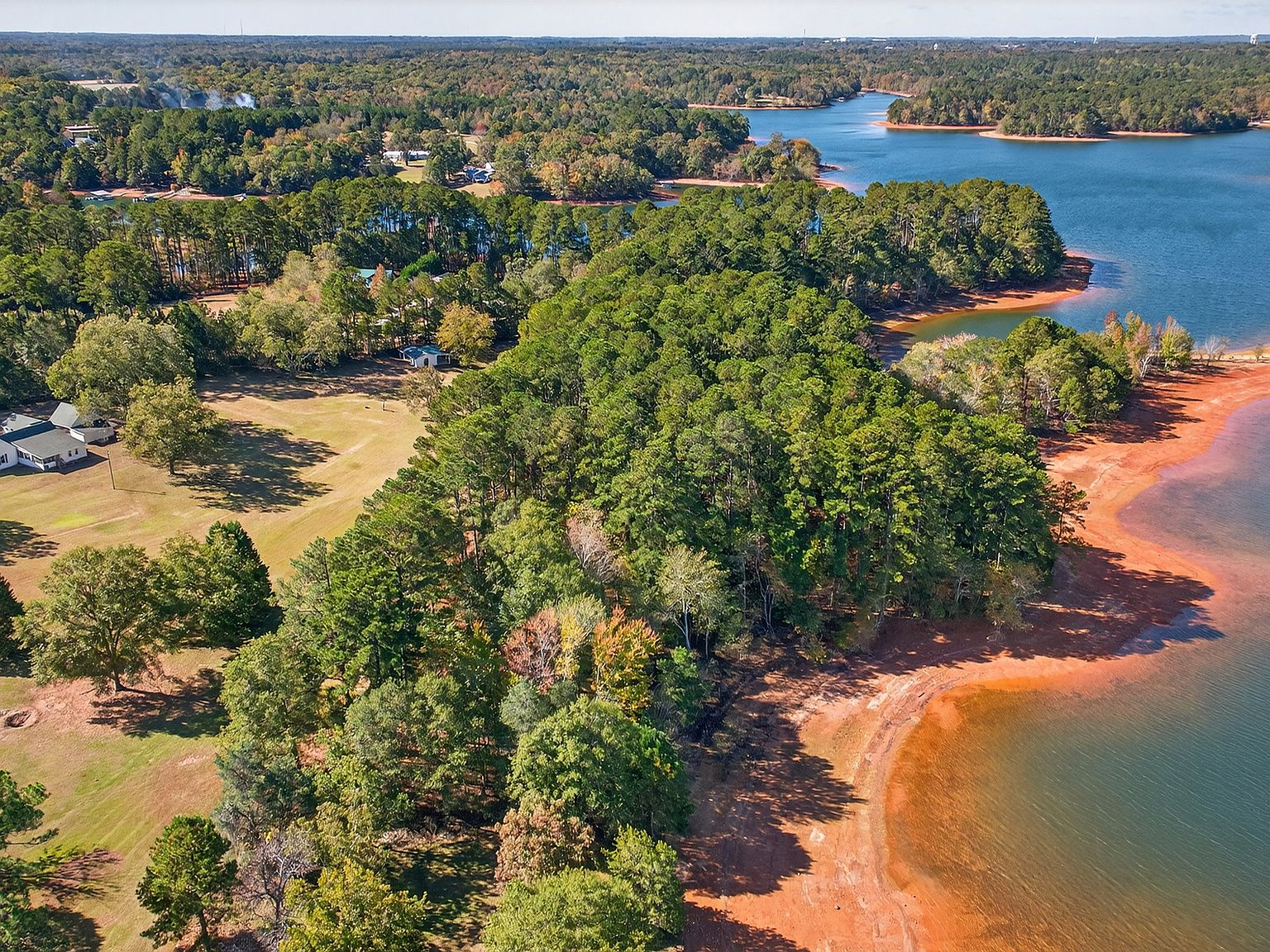
For a property like 257 Methodist Park Lane — 4.546 acres of flat, private waterfront on Lake Hartwell's Georgia Corps of Engineers shoreline — the economic context is particularly favorable. The property sits on one of the last remaining large-acreage parcels on the Georgia shoreline, in a corridor where the Corps maintains natural, undeveloped shoreline. As the surrounding area develops — new construction, expanded infrastructure, growing tourism — the scarcity of large, undeveloped parcels increases. The property's value is protected not just by its physical attributes but by the economic dynamics of a lake that the national fishing community keeps choosing as its proving ground.
The restaurants, the breweries, and the infrastructure of lake life
The lake economy's most visible expression is the hospitality infrastructure that has grown up around the water. For residents and visitors alike, the quality of that infrastructure determines whether Lake Hartwell is a place you visit or a place you live.
Dining on the water
The Boathouse Grill at Hartwell Marina offers waterfront seating with direct lake access. Blazers of Hartwell on East Franklin Street serves upscale Southern fare. Market 50 provides a farm-to-table option that reflects the region's agricultural roots. For casual fare, Backstreet BBQ and Mary's Kitchen deliver the kind of reliable, unpretentious Southern cooking that makes a lake town feel like home.
The craft scene
Southern Hart Brewing Company on East Howell Street has become the community's social hub — a craft brewery with outdoor seating, regular events, and the kind of relaxed atmosphere that works for families and post-lake gatherings alike. The brewery represents a broader trend: Hartwell is developing the amenities that attract younger residents and remote workers who want lake living without sacrificing the social infrastructure they're accustomed to.
Shopping and services
Downtown Hartwell's retail core — Twelve South Artisan Market, Winnie J's, Provision, Porch and Home, and the antique shops along West Franklin Street — provides the kind of curated, locally owned shopping that chain retail abandoned decades ago. The Arts Center of Hartwell offers exhibitions, classes, and community events that reinforce the town's cultural depth.
Community investment: the economic engine that runs on character
What makes Hartwell's lake economy sustainable isn't just the volume of visitors — it's the character of the community that receives them. Hartwell has been designated a Georgia Exceptional Main Street and a Preserve America Community — designations that reflect genuine investment in downtown preservation, historic architecture, and community identity. The twelve-block historic downtown, with buildings dating to 1879, has survived by adapting rather than demolishing.
The city's 2025 Comprehensive Plan, developed with significant public input, addresses the balance between growth and character — acknowledging that development is necessary while insisting that it be managed in a way that preserves the qualities that make Hartwell distinct. The plan includes provisions for infrastructure improvement, downtown preservation, and managed growth that reflect a community that is growing intentionally.
This matters for property owners because the lake economy depends on the town's character. A lake without a functioning downtown is a vacation destination. A lake with a Georgia Exceptional Main Street, an active arts center, a craft brewery, and a year-round calendar of community events is a place where people choose to live — and keep living. The economic multiplier of that distinction is significant, and it compounds over time.
What the numbers tell you about 257 Methodist Park Lane
When we represent a property at The Petrenko Group, we look at the physical asset and the economic context. At 257 Methodist Park Lane, the physical asset is clear: 4.546 acres of flat, private waterfront, a historic 1873 farmhouse, a lakeside pavilion with two full bathrooms, mature pecan trees, and one of the last remaining large parcels on Lake Hartwell's Georgia Corps of Engineers shoreline.
The economic context is equally clear. The lake attracts 9 million visitors annually. The Bassmaster Classic will return in 2027. The tourism economy generates $57.4 million for Hart County. The downtown is designated a Georgia Exceptional Main Street. The community invests in its character. The Corps of Engineers protects the shoreline adjacent to the property. And the scarcity of large-acreage, undeveloped waterfront parcels on the Georgia shoreline is a structural advantage that becomes more pronounced as the area develops.
We spend our careers helping families find the right property on the lakes and in the communities we know. Lake Hartwell's economy isn't just a number — it's a signal that this community has the infrastructure, the character, and the economic foundation to sustain property values across generations. For a property that has already outlasted six or seven generations of ownership, that foundation matters.