
Generations
November on this land: the harvest yard before the lake and the gathering season at 257 Methodist Park Lane
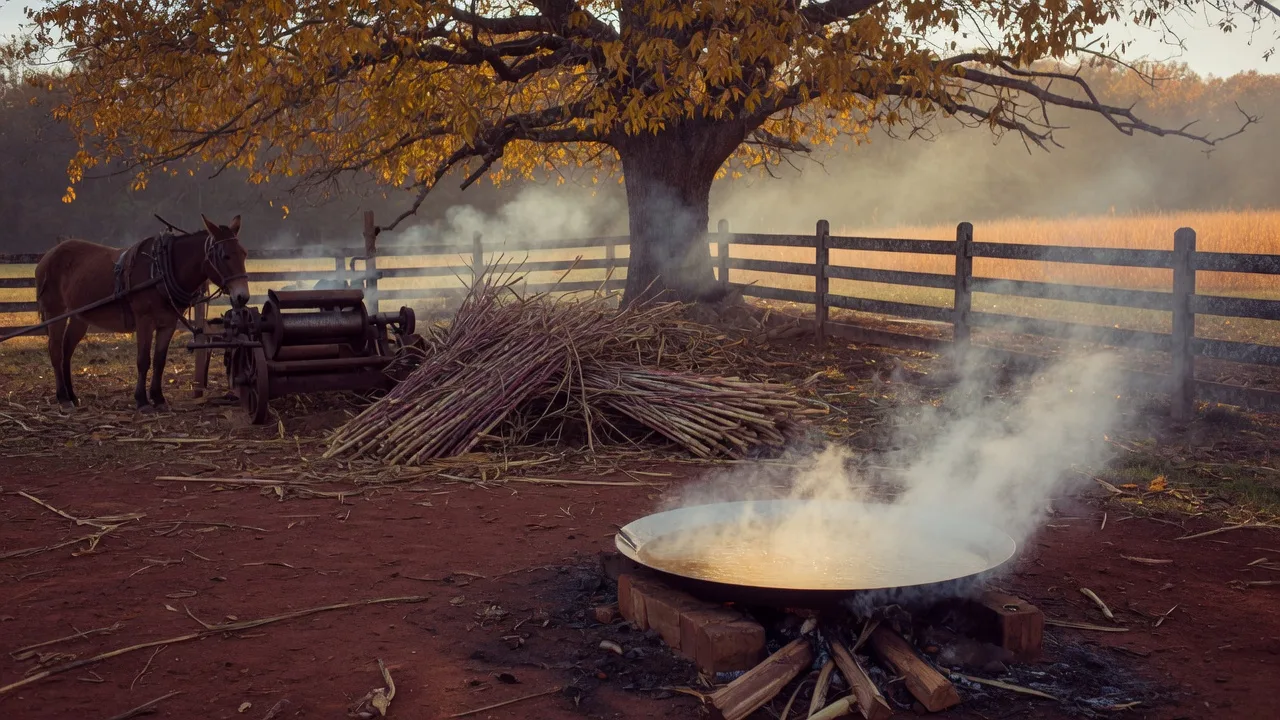
November has always been a month of preparation on this land. Before the lake existed, the farm families of Hart County, a county created in 1853 from Elbert and Franklin, spent the cold weeks after the first frost getting ready for winter: butchering hogs, grinding cane for syrup, shelling pecans, and canning the last of the garden, work that was as social as it was hard. Today November on Lake Hartwell is the quiet season, the season of settling, when the waterfowl arrive, the tournament circuit winds down, and the town begins the long build toward Christmas. The two Novembers, the harvest and the gathering, are not as different as they sound. Both are about the same thing: a community feeding itself and then sitting down together.
Hog-killing time
The old November on the Piedmont farms pivoted on hog-killing time. Families waited for the weather to turn genuinely cold, usually in late October or November, and then worked quickly, because the meat had to be handled while the temperature held. It was neighborhood work: families butchered in turn, and the neighbors came to help, the way they helped with barn raisings and harvests, knowing their own day would come next. Nothing was wasted, a fact people summarized with the old saying that they used everything but the squeal. The hams and shoulders went into the smokehouse to cure under oak and hickory smoke, the ribs and sausage and lard went into the pantry, and by the time the first real cold spell settled in, the family at 257 Methodist Park Lane had its winter meat hanging in the smokehouse, paid for by the season's labor.
That work was hard, but it was also a festival. The butchering day brought the neighborhood together around a shared task, with fires going, kettles boiling, and the year's standing debts of help and favors being squared. Children earned their keep hauling wood and water, and the day ended with fresh sausage on the table and the knowledge that the cold months were spoken for. In a land where the river valley below the high ground was farmed in cotton and corn, November was the month when the farm turned inward and got ready to feed itself.
The syrup shed and the cane mill
Alongside the butchering came cane grinding. The ribbon cane, or sorghum, was stripped of its leaves and fed through a mill turned by a mule or horse walking a circle, its juice collected and boiled down in a long shallow pan over a wood-fired furnace in the syrup shed. The arithmetic was honest: it took about ten gallons of cane juice to make one gallon of syrup. The grinding and boiling drew the neighborhood the way the butchering did. People came to watch, to help, to buy a jug of fresh syrup, and to stand in the smoke and the steam and talk, because in late autumn the talk was the harvest, the weather, and the winter ahead. Iron roller mills had been working in northeast Georgia since the late 1860s, and the sweet smell of cane boiling was the signature scent of a Georgia November.
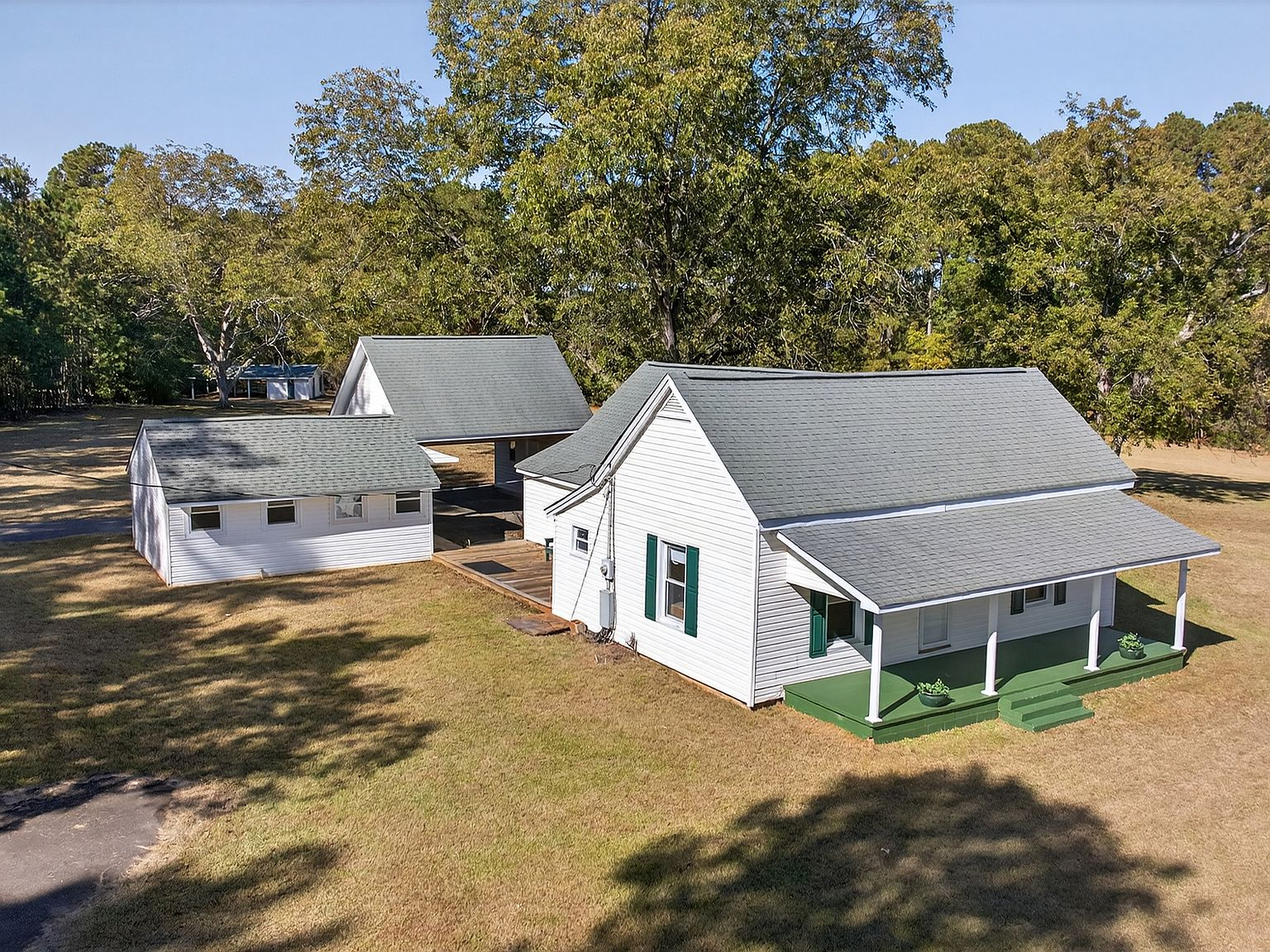
On the property now at 257 Methodist Park Lane, the old November would have shared elements with any farm in the county: the smokehouse, the syrup kettle, the cellar shelves filling with canned beans and tomatoes, peaches and apples, and the pecan grove dropping its harvest onto the flat lawn. The family gathered pecans each November, the way their neighbors did, the way the trees still do today, and the grove became a kind of natural pantry. November was the month the land took its last full breath before resting, and the family took its share of that breath and stored it away.
November on the lake now
The November at 257 Methodist Park Lane now is a different November, though it sits on the same ground. The smokehouse is gone and the boats are lifted, and the month has become the pivot between the lake's loud season and its quiet one. The waterfowl are arriving, common loons and mergansers settling onto a reservoir whose undeveloped shoreline has held migrating birds since before the dam. The bass circuit is winding toward its finale, the Bassmaster Team Championship coming to Green Pond Landing in early December. Hunters walk the Corps shoreline under the 2026-27 season openings. The town calendar fills: the oyster roast on Boyce Lawn, the Parade of Trees at the Depot, the courthouse square tree lighting on November 23, and the long build toward the Christmas parade down Franklin Street on December 13.
And at the end of Methodist Park Lane, the estate's November is a gathering season. The flat lawn shrinks a little under fallen pecans. The screened porch and the covered porch stay in use because Georgia Novembers allow it. The lakeside pavilion with its two full bathrooms, built for exactly this kind of gathering, hosts the Thanksgiving table, and the family and friends who come to the lake for the holiday find the same ground the first generation found in 1873: flat, private, high above the water, ready to hold people. The harvest the old family stored in the smokehouse and the cellar has become a different kind of provision, the capacity to gather, and the property still provides it effortlessly.
The old work and the new gatherings
The thread that runs from hog-killing time to the holiday calendar is not nostalgia. It is the simple fact that November in this part of Georgia has always been the month the community stores up and sits down. Then it stored meat and syrup; now it stores memories and plans. Then the gathering was around the cane furnace; now it is around the pavilion and the marina and the parade route. The forms changed, the ground did not. The family who held this high ground from 1873 through the dam years and into the lake years carried the old November forward, adapting it harvest by harvest, and the estate carries the new November the same way, one gathering at a time.
When we walk buyers through 257 Methodist Park Lane, we often talk about the land in seasons. In spring the lawn is green to the waterline. In summer the cove fills with boats. In fall the pecan trees drop their harvest. And in November, the property shows what it was built for: holding people in the quiet season, above the water, on ground the family has kept for 153 years. It is one of the last remaining large-acreage parcels on Lake Hartwell's Georgia Corps of Engineers shoreline, and it is ready for the family who wants to start their November on it now, and keep it for the Novembers to come.
We would be honored to show you the land that has kept November for 153 years, and to help you gather your own first one here. Written by Amy Petrenko of The Petrenko Group.