
Lake life
Peak color on the high ground: October's leaf season on Lake Hartwell and the trees that have turned since 1873
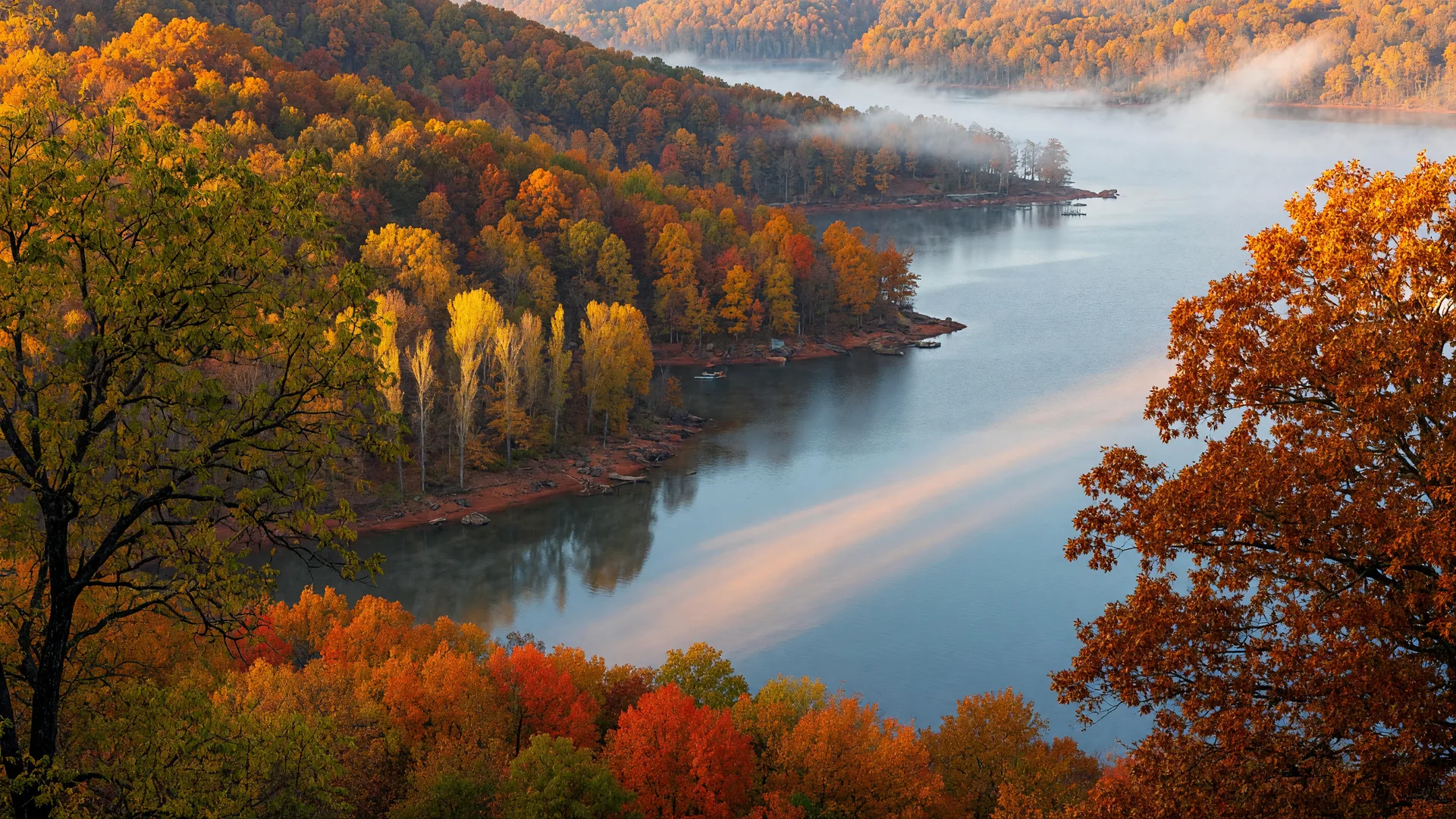
Every October, the same thing happens on the high ground at 257 Methodist Park Lane, and it has happened every October since the house was built in 1873. The hardwoods on the Georgia shoreline of Lake Hartwell turn. The ridges go gold and amber and burnt orange. The pecan trees hold their green a little longer, then let it go. And the covered porch, which has faced the same view since before the water was ever here, watches the color come again. This is what the fall season looks like from a property that has kept it for six generations.
The color that comes on schedule
Lake Hartwell sits in the Appalachian foothills, where the Piedmont meets the mountains, and that geography gives the fall color its particular quality. The oaks, hickories, maples, and sweetgums along the Georgia Corps shoreline turn on a dependable schedule, usually reaching their peak in the middle weeks of October. The color is not the flamboyant spectacle of the high Smokies, but it is quieter and more honest: a warm, layered gold that spreads across the ridges and reflects off the water in the late afternoon.
For a property like 257 Methodist Park Lane, the timing matters. The lake cools from the seventies into the sixties as the month wears on. The bass boats thin out. The waterfowl begin to arrive. And the leaf color arrives right on schedule, as if the land itself keeps a calendar it has followed since long before anyone built a dam across the Savannah River.
The pecan trees that outlasted the valley
The pecan trees at 257 Methodist Park Lane are the property's quietest landmarks. Mature pecans can live well past a century, and these were already producing when the farmhouse was new in the 1870s. Pecans do not turn the bright colors of the maples and oaks. Their leaves fade to a soft, dusty gold and fall gradually, and the harvest comes in the same weeks as the color, when the nuts drop and the lawn takes on that particular late-October sound of pecans hitting the grass.
There is a generational rhythm to a pecan tree that a real estate listing never captures. The tree does not care who owns the land. It has outlasted the river valley, the dam years, and every pool level since. When the family who first planted it was alive, the lake did not exist. Now their great-grandchildren swim in the water where the bottomlands used to be, and the same pecan trees drop the same harvest every fall. You cannot buy a hundred-year-old pecan grove. You can only inherit one, and then hand it on to the next generation that will gather under it.
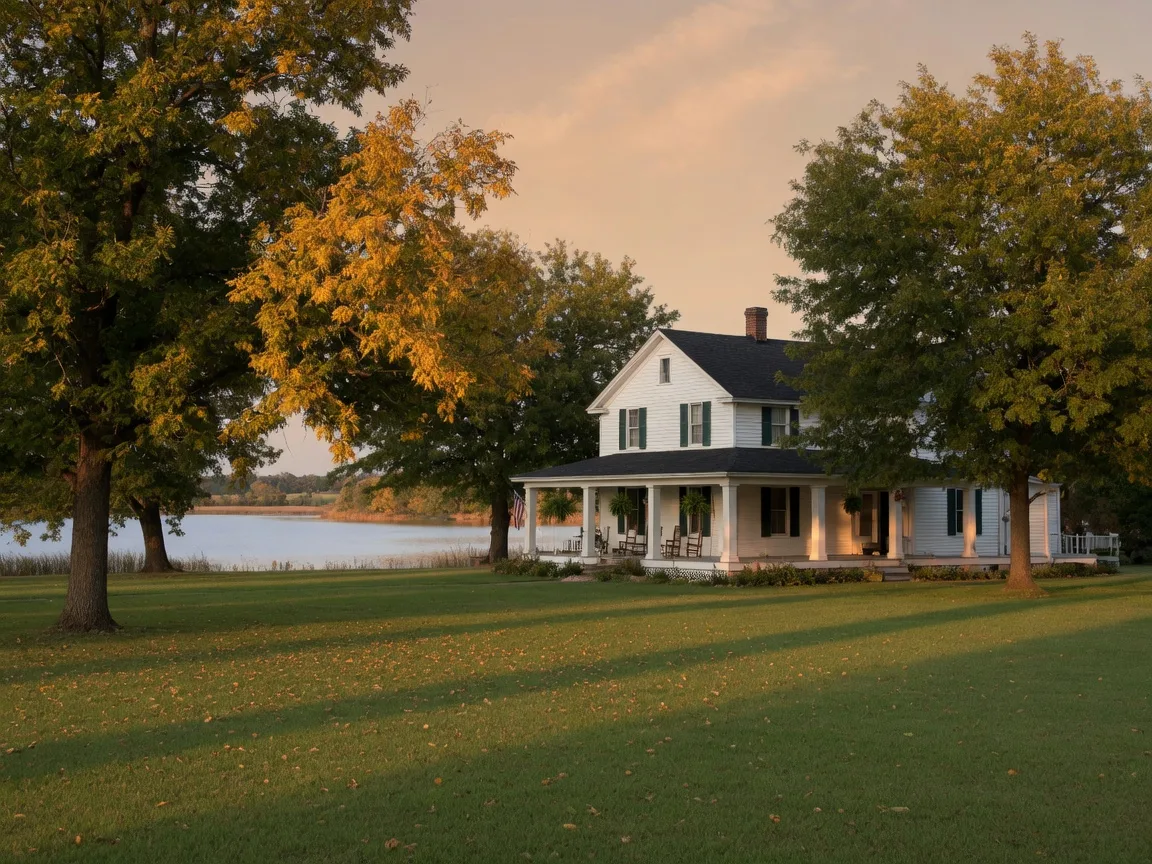
The porch in the middle of October
The covered porch at 257 Methodist Park Lane faces the water, and in October it becomes the best seat on the property. The morning coffee comes with a view of the color on the far shore and a thin layer of fog sitting on the cooler water. The afternoon brings a light breeze that carries the smell of drying leaves. By evening, the low sun turns the whole valley amber, and the color reflects off the lake in a way that no photograph quite manages.
This is the season the lake community calls the quiet months. The summer crowds have gone. The water is still warm enough for a swim in the first weeks of October, but the pace has slowed. It is the season when people who own lakefront property remember why they bought it, and when the estate at 257 feels less like a summer place and more like a permanent home that simply happens to sit on water.
A season of gatherings before the quiet
October on Lake Hartwell is not only about the color. It is a month of gatherings, and the high ground at 257 has hosted them for generations. The lakeside pavilion, with its two full bathrooms and open sides facing the water, is built for exactly this season: a cooler of drinks, a grill, a long table, and the sound of the lake twenty yards away. In a few weeks the weather will turn, and the gatherings will move indoors to the farmhouse, which has been welcoming guests through the holidays since 1873.
Around the lake, the calendar fills with the same rhythm. The astronomy night at Lake Hartwell State Park in late October draws families out under the clearest skies of the year. The fall festivals in downtown Hartwell mark the change of season. And then the color fades, the leaves fall, and the land settles into the quiet months, the way it has done every year since the first generation planted the pecans and built the house on the high ground.
What the color means for a property held for generations
There is a particular kind of continuity in watching the same ridges turn the same colors from the same porch, year after year, generation after generation. The lake is a young feature of this land, not yet sixty-five years old. But the fall color is not young. The oaks and hickories and pecans were turning on this high ground before the dam was imagined, and they will keep turning long after the current generation is gone.
For whoever holds 257 Methodist Park Lane next, October will arrive the same way it has for a century and a half. The color will come on schedule. The pecans will drop. The porch will face the water. And the land, which has kept this season longer than anyone alive can remember, will keep it again. That is the quiet promise of a property that has been held, and loved, and handed on, for six generations.