
Heritage
The builders' decade: how the dam that made Lake Hartwell rose between 1955 and 1962
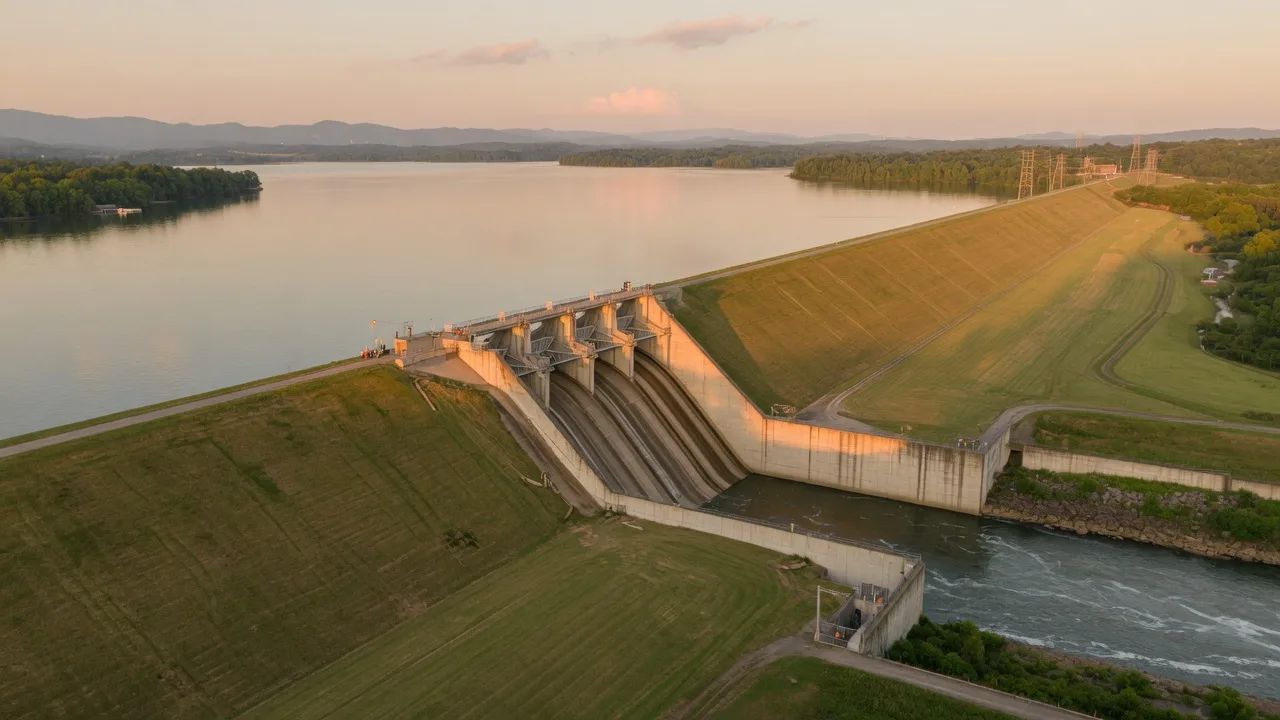
Between 1955 and 1962, the U.S. Army Corps of Engineers built the dam that turned the Savannah River valley into Lake Hartwell, a project authorized by the Flood Control Act of May 17, 1950 and finished at a cost of about $89 million. The dam runs 12,400 feet across the river with a 1,900-foot concrete section and a nearly 3.5-mile earthen embankment, and it created the 56,000-acre reservoir with roughly 962 miles of shoreline that defines life here today. This is the story of that builders' decade, told from the high ground at 257 Methodist Park Lane, where the family who held this land watched the dam rise and now enjoys the lake it made.
A river valley chosen for a dam
The decision to build Hartwell Dam did not begin with a bulldozer. It began with an act of Congress. The Flood Control Act of May 17, 1950 authorized the dam as the second unit in the comprehensive development of the Savannah River Basin, a federal plan to tame the river's floods, generate power, and manage the water that ran through two states. For the families farming the valley, the authorization was the first sign that the ground beneath them was about to become something else.
What followed was years of surveying. Engineers walked the valley, drove stakes into the red clay, measured the floodplain, and mapped the land that would be bought, cleared, and eventually covered. The river that had carried the valley's history for generations, the same river the family at 257 Methodist Park Lane had lived above since 1873, was being measured for the last time as a river.
The numbers behind the builders' decade
The scale of the work is easiest to hold in numbers. Construction ran from 1955 to 1962, roughly seven years of clearing, grading, pouring, and compacting. The finished dam stretches 12,400 feet overall, about three miles, with a concrete section spanning 1,900 feet and an earthen embankment running nearly 3.5 miles. The project used in the neighborhood of 880,000 cubic yards of concrete and more than three million pounds of reinforcing steel, and accounts from the era describe thousands of workers and engineers moving through the valley over those years.
The reservoir those workers created is just as large. Lake Hartwell covers about 56,000 acres and traces roughly 962 miles of shoreline along the Georgia and South Carolina border. When the gates finally closed and the water began to rise in February 1961, it took until March 12, 1962 to reach full pool at 660 feet. A river valley that had farmed for generations became, in thirteen months, one of the Southeast's great lakes.
Watching from the high ground
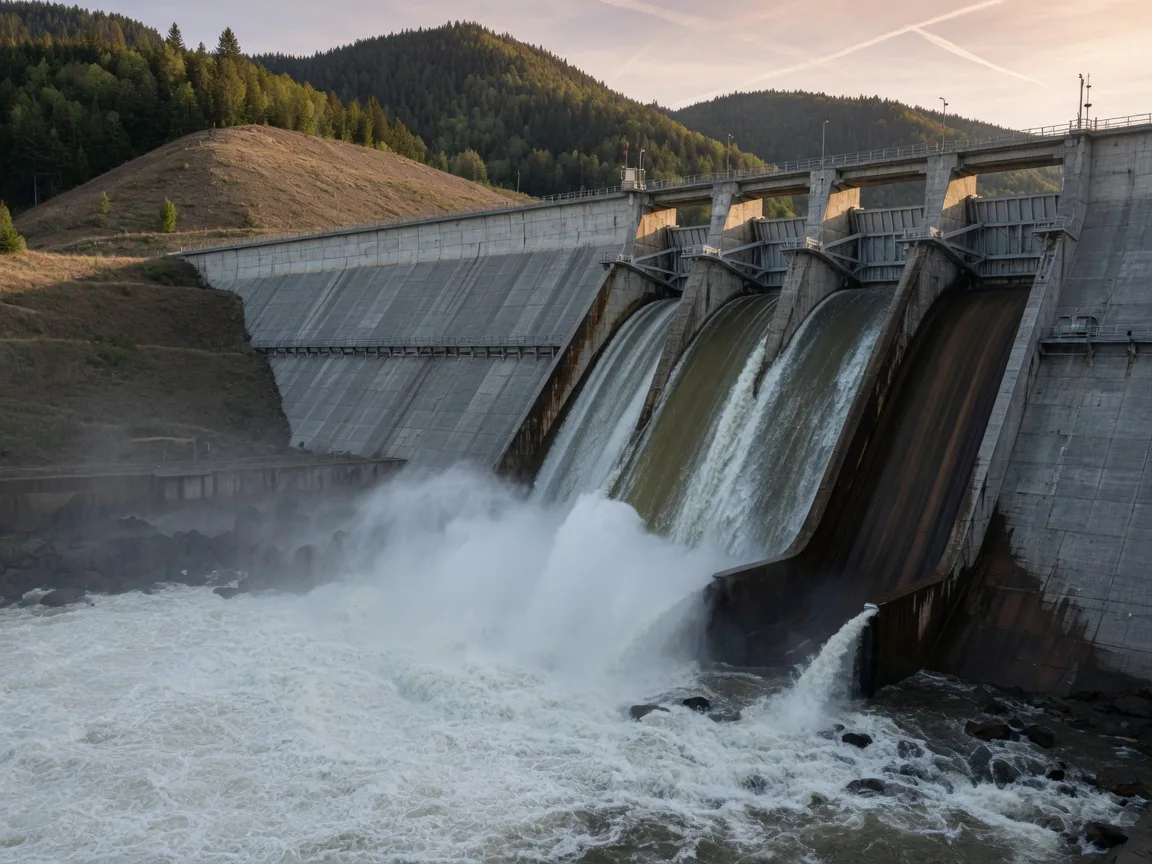
Through all of it, the family at 257 Methodist Park Lane stayed. Their farmhouse had stood on this land since 1873, on flat, private ground that sat above the river and above the flood line. When the Corps began acquiring the valley, the family was among the few who did not have to leave, because their land was never going to be covered. They watched the builders' decade the way neighbors watch a long construction project: from the porch, from the fields, from the same high ground their great-grandparents had chosen.
It is worth pausing on what that choice meant. Around them, families were offered payment for their property and moved out of the inundation zone. Cemeteries were relocated to high ground. Whole communities that had anchored the valley for a century prepared to go under. The family at 257 watched the waterline climb toward their land and stop short of it, the flat acres holding exactly as the first generation had calculated they would.
An engineering story that keeps going
A dam is never finished, and the builders' decade was only the first chapter. In 2026, the Corps of Engineers is again working on the Hartwell project, studying seepage at the Clemson Lower Diversion Dam Saddle Dike and holding the lake to a lower operating ceiling while a long-term fix is designed. The engineering story that began with the Flood Control Act of 1950 is still being written, and the lake community is living through its newest chapter.
From the high ground at 257 Methodist Park Lane, the story reads the way it always has. The estate was chosen for elevation, and elevation has carried it through every season the project has produced: the surveys, the construction, the filling, the droughts, and now the restriction. Six generations of one family have enjoyed the lake the builders made, and the flat, private acres they held through the builders' decade are ready for the next family to enjoy them too.