
Community
The community found: what it takes to belong on Lake Hartwell
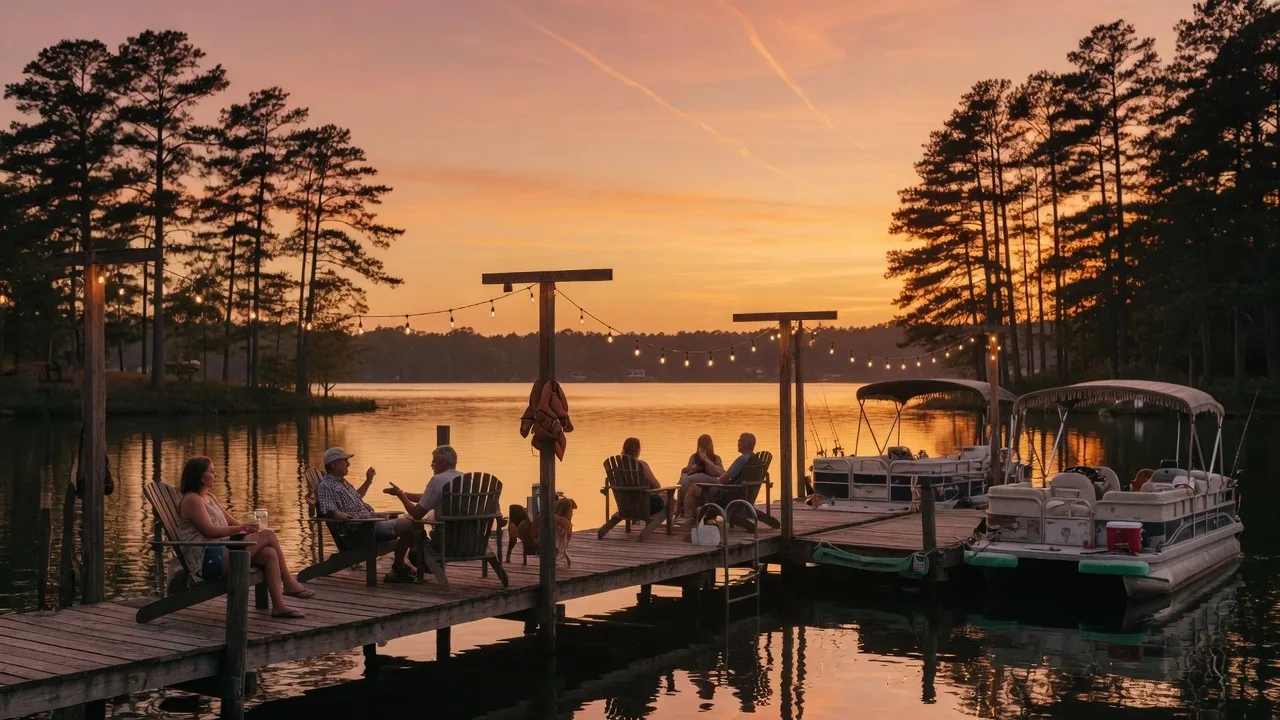
There's a difference between living on a lake and belonging to one. The first is a real estate transaction — waterfront footage, dock permits, a view premium baked into the appraisal. The second is something slower, less quantifiable, and more valuable: the process of becoming part of a community that exists because people chose to stay, not because they had to. Lake Hartwell has both. The question for anyone considering 257 Methodist Park Lane is which one they're looking for.
The visitor and the resident
Lake Hartwell draws more than 9 million visitors a year. They come for the Bassmaster tournaments, the Pre-4th Fireworks, the Memorial Day raft-ups, and the Labor Day weekends that feel like the last good day of summer. The lake accommodates them — 56,000 acres of water, nearly 1,000 miles of shoreline, and enough marinas, campgrounds, and boat ramps to absorb the seasonal surge without breaking.
But the community that defines Lake Hartwell isn't the visitor community. It's the year-round residents — the families in Hartwell and Anderson, the retirees who moved here for the water and stayed for the people, the professionals who discovered that a lake town an hour from Greenville and 90 minutes from Atlanta offers a quality of life that neither city can match. These are the people who show up for the Hart County Chamber events in February, who volunteer for the Splash Away the Trash cleanup in September, who eat at Southern Hart Brewing on a Wednesday night in January when the parking lot is half empty and the bartender knows their name.
The transition from visitor to resident on Lake Hartwell doesn't happen overnight. It happens in increments — a weekend visit that extends to a second home, a second home that becomes a primary address, a primary address that generates the relationships and rhythms that make a place feel like home. The timeline varies. Some families complete the transition in a year. Others take five. But the destination is the same: a point where the lake isn't a destination anymore. It's just where you live.
How the community forms
Lake communities aren't HOA developments. They don't have welcome committees, orientation packets, or mandatory social calendars. They form the way communities have always formed: through repeated contact, shared experience, and the slow accumulation of trust that comes from living near people who choose the same life you chose.
On Lake Hartwell, the social infrastructure begins on the water. The Lake Hartwell Boating Club organizes raft-ups — gatherings where boats tie together in a cove and the occupants spend the afternoon eating, swimming, and talking across gunwales. The Spring Rendezvous marks the unofficial start of the boating season. The Fall Cruise follows the changing foliage along the shoreline. These events aren't formal. They're the kind of spontaneous-when-planned gatherings where someone brings too much food, someone else brings a guitar, and the afternoon turns into evening without anyone checking the time.
Off the water, the community organizes around the town. Downtown Hartwell — a twelve-block historic district with a Georgia Exceptional Main Street designation — provides the physical space for the social life that the lake initiates. Southern Hart Brewing Company on East Howell Street has become the community's unofficial living room: craft beer on tap, a taproom that fills on Friday evenings, and the kind of relaxed atmosphere where conversations between strangers turn into friendships between neighbors. The parking lot fills early, which is the best review a brewery can earn.
Boathouse Grill at Hartwell Marina catches the waterfront crowd — boat-in dining that makes a Tuesday evening feel like a vacation. The Hartwell Farmers Market, operating during the growing season, is where the community's social calendar fills itself: you run into neighbors, learn about upcoming events, and discover the seasonal rhythms that define a small lake town.
The traditions that hold
Every lake community has its anchoring traditions — the events that mark the calendar year and give residents a shared sense of time. On Lake Hartwell, those traditions are well-established and genuinely local.
The Pre-4th Fireworks Extravaganza happens before the actual Fourth of July — a community decision that lets locals enjoy the spectacle without competing with the holiday crowds. Boats gather on the water, families claim their spots along the shoreline, and the fireworks launch from a barge in the lake. For residents, it's the moment the summer season officially begins.
The Lakeside Music Festival at the Hartwell Lakeside KOA brings regional acts to a lakeside setting over Memorial Day weekend — camping available, food trucks on-site, and the kind of multi-generational festival experience that introduces newcomers to the community's social fabric. The 2026 edition raised funds for local animal rescue, reflecting the genuine community investment that characterizes Hartwell's nonprofit culture.
The Dam Run, the Tugaloo Triathlon, and the Splash Away the Trash cleanup round out the annual calendar — events that combine recreation with community service and attract participants from across the region. For a property owner at 257 Methodist Park Lane, these events are ten minutes away: close enough to attend spontaneously, far enough to ignore when the pavilion and the pecan grove offer a better Saturday.
The institutions that matter
Beyond the events, Lake Hartwell's community is sustained by institutions that operate quietly but consistently. The Hart County Chamber of Commerce organizes business networking, community events, and the annual Northeast Georgia Ag Expo — a celebration of the agricultural roots that still define the region. The Hartwell Main Street program supports downtown revitalization, maintaining the historic buildings and streetscape that give the town its character.
The Hart Theatre — a restored downtown cinema — screens films and hosts community events throughout the year. The Hart County Historical Society maintains archives and exhibits that document the region's history, including the transformation from river valley to lake that defines Lake Hartwell's origin story. The Hartwell Botanical Gardens and the local library system provide the kind of cultural infrastructure that distinguishes a real community from a resort that happens to be open year-round.
For families considering relocation, the Hart County school system operates with small class sizes and community-oriented administration. The proximity to Athens — 45 minutes west, home to the University of Georgia — and Greenville, South Carolina — about an hour northeast, with a revitalized downtown, GSP International Airport, and a growing tech corridor — extends the cultural and economic footprint considerably. Lake Hartwell sits at the intersection of small-town community and regional accessibility, and that combination is the reason families who move here tend to stay.
What 257 Methodist Park Lane offers the community
A property like 257 Methodist Park Lane doesn't just benefit from the community — it contributes to it. The estate's 4.546 acres of flat, private waterfront represent one of the last remaining large parcels on Lake Hartwell's Georgia Corps of Engineers shoreline. Its preservation — whether as a private estate, a family compound, or a legacy property held for future generations — maintains the character of a shoreline that the Corps has worked to keep natural and undeveloped.
The property's pavilion, with its capacity for large gatherings, is the kind of space that community events gravitate toward. The annual pecan harvest connects the estate to Georgia's agricultural heritage in a way that no new construction can replicate. The historic home, built in 1873, provides a tangible link to the pre-lake community that once defined this stretch of the Savannah River valley.
In our experience helping families relocate — and we understand that process personally, having completed 16 moves during our military careers — we've learned that the quality of a community determines the success of a relocation more than the quality of a house. A beautiful home in a disconnected location produces regret. A modest home in a vibrant community produces belonging. At 257 Methodist Park Lane, you get both: a property with 153 years of history and a community that has been building its social infrastructure for over six decades.
The slow art of belonging
Belonging to a lake community isn't something you buy. It's something you earn — through presence, through participation, through the willingness to show up on a Wednesday evening at Southern Hart even when you could stay at the pavilion. It's the fisherman who tells you where the bass are holding this week. It's the neighbor who brings over a bag of fresh pecans from their own trees. It's the family at the end of the cove who waves every time your boat passes, even though you haven't learned each other's names yet.
Lake Hartwell's community rewards patience. The first summer, you're a visitor with a property. By the second, you're a regular at the dock-side gatherings. By the third, you're the one organizing them. The pavilion at 257 Methodist Park Lane is built for exactly this trajectory — large enough for the community gatherings that matter, private enough for the quiet weekends that restore, and positioned on four and a half acres of land that gives you the space to choose your level of engagement.
The pecan trees overhead have been providing shade for this community's gatherings since before the lake existed. The porch has been facing the right direction for over a century. The pavilion is ready for the next gathering, the next tradition, the next generation of families who will call this place home. The question isn't whether the community will welcome you. Lake Hartwell does that naturally. The question is whether you're ready to stay long enough to become part of it.