
Heritage
The graves that moved for the lake: Mt. Zion's 252 reinterments, the family plots carried to higher ground, and the high ground that kept its own
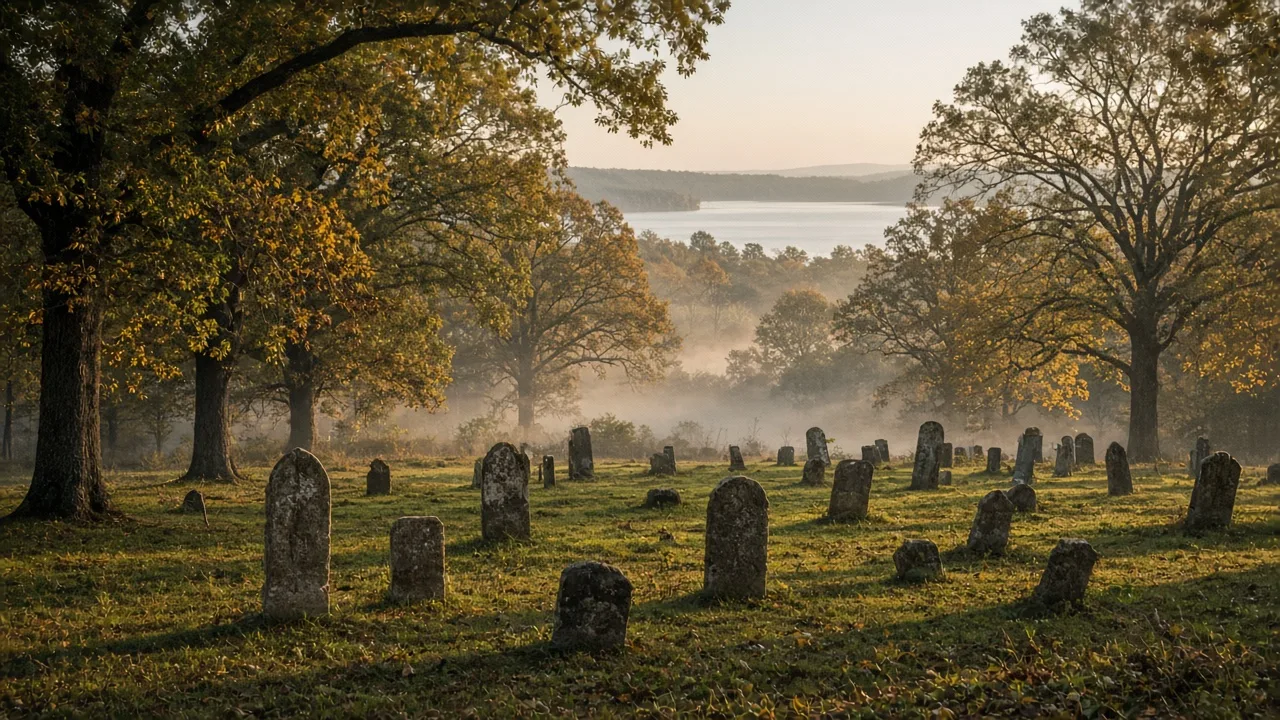
The hardest part of moving for a lake is the part most histories skip. Homes could be torn down, roads rerouted, fields let go. But the dead could not simply be left to the rising water, and so, before the gates closed at Hartwell Dam, the Corps of Engineers and the families of Hart County went out to the old burial grounds with shovels and quiet, and carried their people to higher ground. On the high ground at 257 Methodist Park Lane, the family who had held this land since 1873 never had to make that move, and for the generation that opens the gate today, the knowing of it is part of what the land holds.
The work no one photographs
Between the time Hartwell Dam was authorized in 1950 and the year the reservoir filled, an extraordinary, unglamorous operation took place across the Savannah River valley: the systematic relocation of cemeteries. The Corps of Engineers kept a master list of reinterments, a ledger that survives today, recording where each grave was opened and where the remains were carried. For Hart County alone, the list names Mt. Zion Methodist, the Durrett cemetery, Walters, and a scattering of family plots, each an accounting of a family's decision about what could not be abandoned.
The scale of the work is humbling. At Mt. Zion Methodist, a congregation organized in 1820 when this was still Franklin County, 252 graves were reinterred, largely to the cemetery at New Harmony Methodist Church, which had organized in 1890. When the water reached the old church grounds in May 1961, the burial ground that had served a century of families was already empty, its people resting on ground that would stay dry.
The same ledger records the Durrett cemetery, where 116 graves were moved, and Walters, where 13 were reinterred. And it records the family plots: the Linder family graves, carried to Reed Creek Baptist Church Cemetery around 1955, and the John Patrick McMullan family burial ground, moved to Northview Cemetery in town. Behind every line in that ledger is a story of a family gathered on a hillside, of open graves in the red clay, of names re-read and remembered before the ground was given back.
What it means to carry your own
In a valley where so much was surrendered to the reservoir, moving the dead was the most intimate kind of relocation. The cemeteries were the one thing the families insisted on bringing with them, the one part of the old landscape that could not be replaced by a new house or a new road. The reinterments were carried out with the care of people who understood that a place is only partly made of land; the rest is made of memory, and memory travels in the ground beneath a headstone.
For the family at 257 Methodist Park Lane, the decision to hold the high ground, made back in 1873 and renewed in every generation since, meant they never faced that particular farewell. Their family's resting place, wherever it was kept, stayed on ground the water never touched. In the years after the lake filled, when boaters on the new reservoir crossed coves that had been fields and roads and churchyards, the families who had stayed could point to their land and know their own history had not been moved, only joined by water at its edges.
The ground that never had to let go
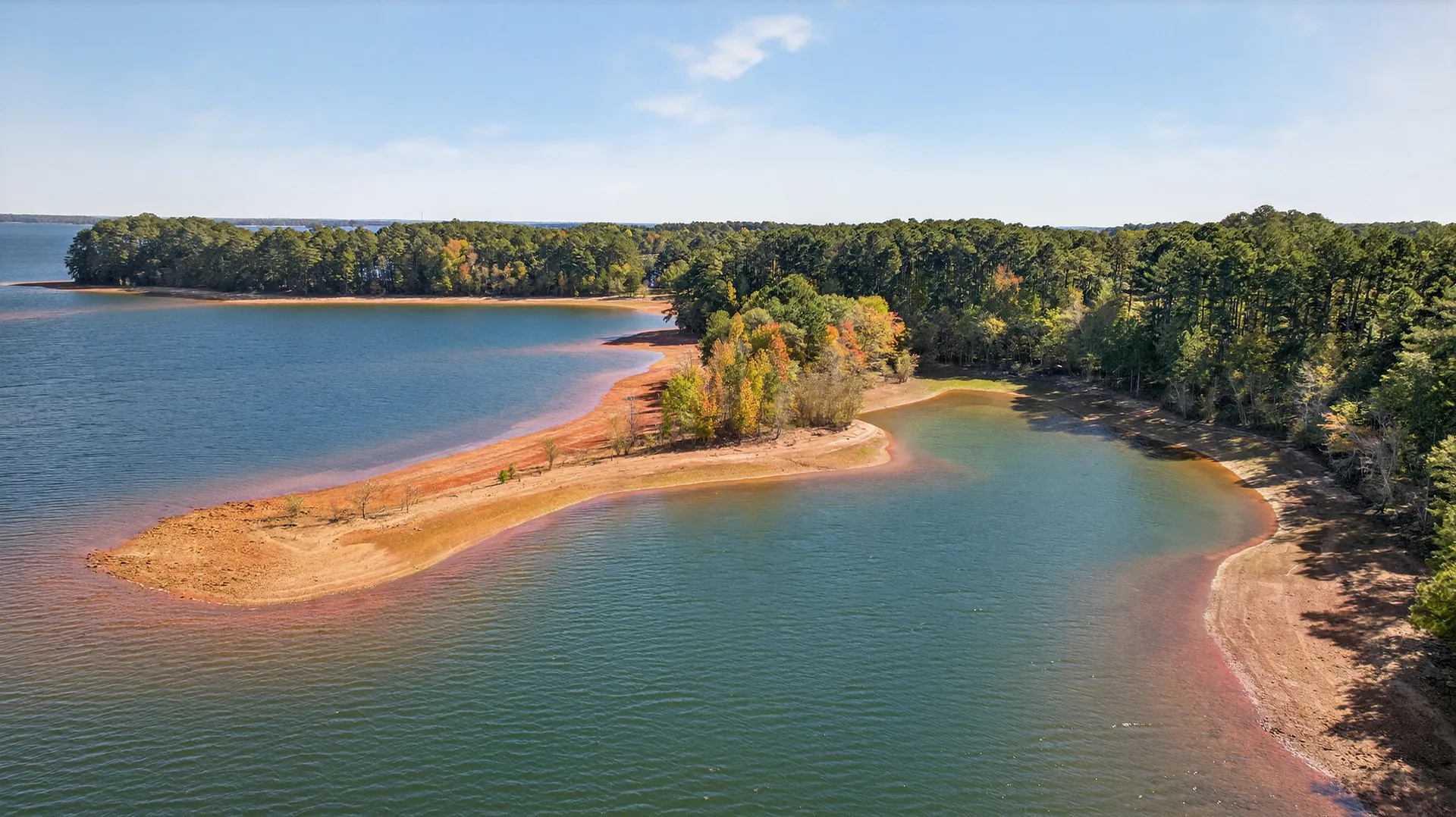
This is part of what it means to buy a property held by one family since the 1800s. The land at 257 Methodist Park Lane was chosen for its elevation, its flatness, its distance from the floodplain, practical reasons in 1873 that turned out to be prophetic. When the valley below filled in the early 1960s, this parcel never went under. The house stood, the pecan trees stood, and the family's place in the ground stood with them.
That continuity is rare, and it is worth pausing on. Almost everything else in this valley moved for the lake: the roads, the bridges, the railroad, the ferries, the farms, and in many places even the graves. This one property was never asked to move at all. For a buyer today, that is not just a romantic detail. It is the physical record, on the land itself, that a family kept faith with a place for 153 years, through the hardest transformation this valley ever experienced.
What the ledger leaves out
The Corps' master list of reinterments is a document of numbers: graves opened, graves reinterred, cemeteries named, counties listed. But the ledger cannot record the autumn mornings of the work, the damp earth smells, the families standing quietly apart, or the way a county said goodbye to its old burial grounds the way it said goodbye to everything else, with ceremony and with the plain necessity of moving on.
When we show this property, we sometimes tell this part of the story, because it explains what survived and why. The people who built here in 1873 could not have imagined the lake, any more than they could have imagined the boaters, the pavilion, or the summer sunsets over open water. But they chose ground that would hold whatever came, and that choice is the inheritance a new generation gets to stand on today.