
Generations
The lake weekend, then and now: 150 years of gathering on this land
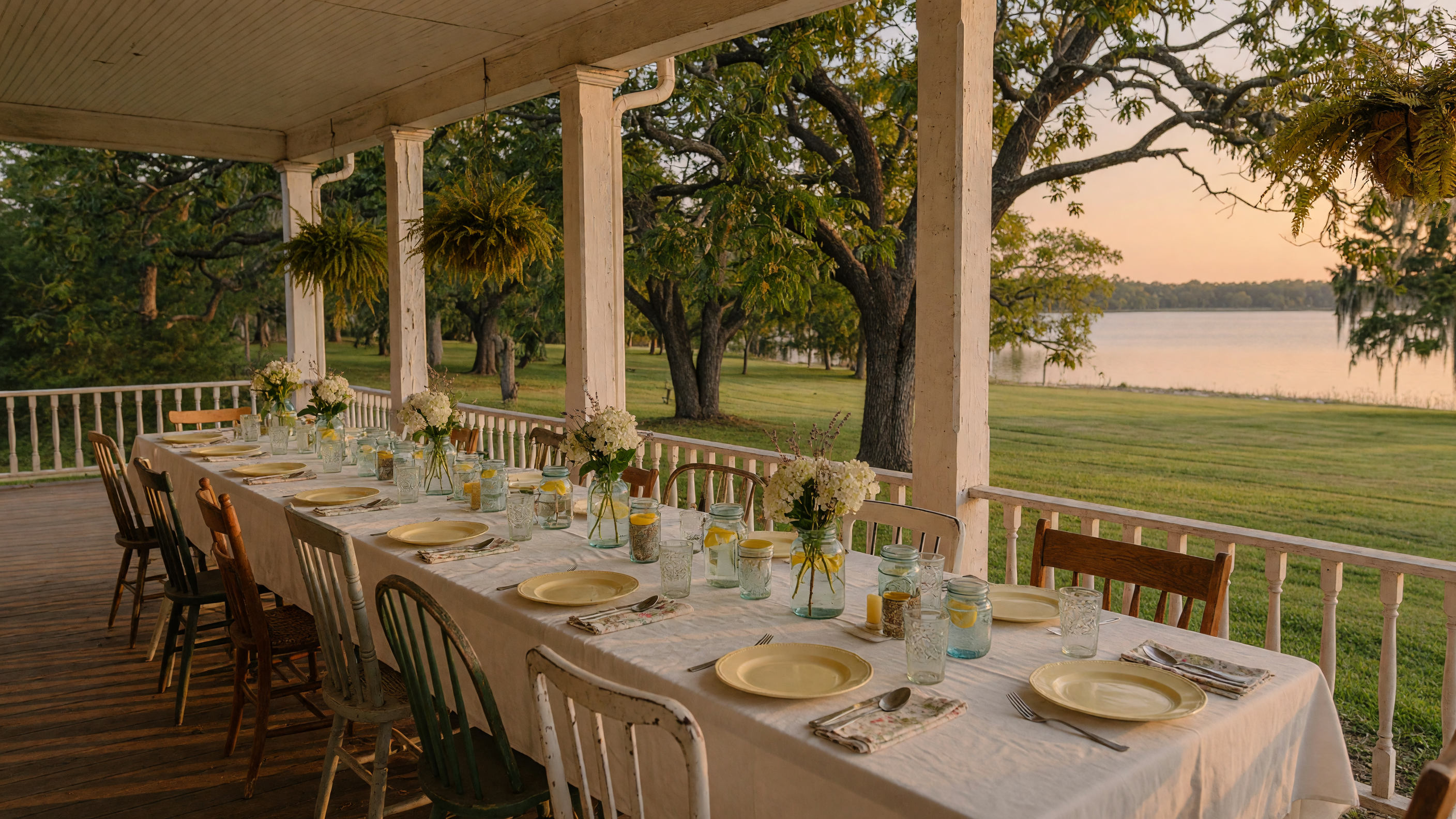
Every family that owns lakefront property has a version of the same story: how weekends became the center of gravity, how the porch or the pavilion became the room that mattered most, and how the tradition of gathering — of inviting people over and feeding them and watching the sun go down — is what makes the property feel like home rather than an investment.
The farm supper: 1873–1955
When the 1873 farmhouse was built, there was no lake. No marina. No weekend concept. People lived here year-round, working the land, raising children, and hosting the only kind of gathering that existed in a Georgia farming community: the farm supper.
Sunday dinners would have been served on the porch when the weather allowed — long wooden tables under the pecan trees, food carried from the kitchen in waves, neighbors and family sharing what the season produced. The pecan trees weren't decorative; they were part of the meal. The porch wasn't a leisure feature; it was the most practical dining room in a house without air conditioning, where the cross-breeze mattered more than the wallpaper.
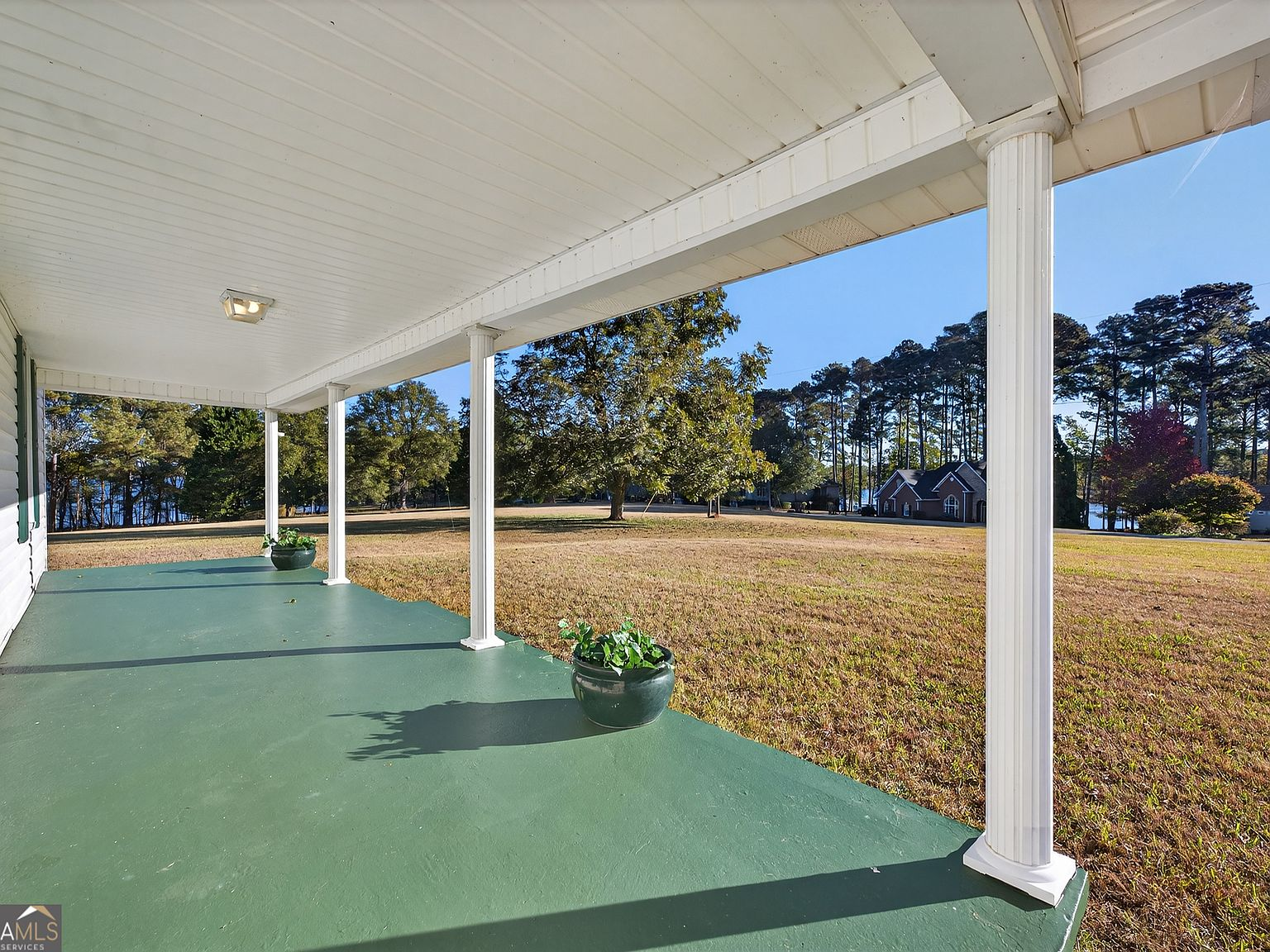
Those gatherings were the social infrastructure of Hart County. They were where news passed between families, where marriages were arranged, where harvest help was offered and accepted. The covered porch at 257 Methodist Park Lane served that function for decades before anyone imagined a dam or a reservoir.
The transition: 1955–1990
When the Corps of Engineers dammed the Savannah River and Lake Hartwell filled between 1955 and 1963, the property's identity changed fundamentally. A working farm on a river became a private estate on a lake. And the way people spent their weekends changed with it.
The lake brought boating, swimming, and fishing — recreational uses that the farming generations had never anticipated. But the family didn't sell. They adapted. The porch remained the gathering space. The pecan trees kept bearing. But now there was a new view from the columns: 56,000 acres of water where the river valley had been.
By the 1970s, Hart County had developed a reputation as a weekend destination for families from Atlanta, Greenville, and Augusta. Pontoon boats, outboard motors, and the emerging culture of "lake time" — that particular quality of Southern weekend leisure where the schedule dissolves and the day is measured in swims and meals — became the new rhythm. The family at 257 Methodist Park Lane hosted that evolution from the same porch where their grandparents had hosted Sunday suppers.
The lakeside pavilion: 1990–present
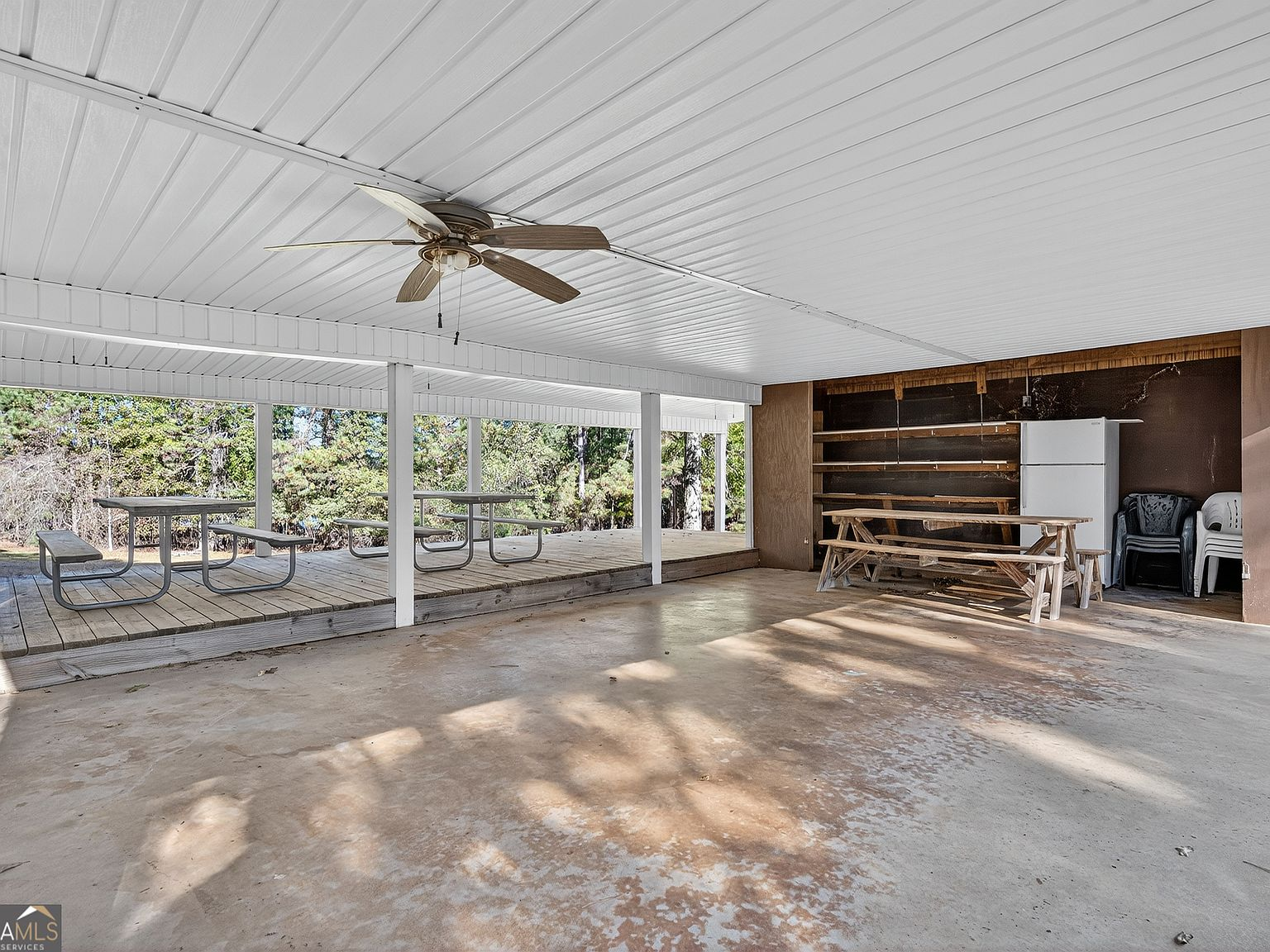
The lakeside pavilion — the property's most significant addition — was built to serve the lake-era lifestyle. A covered outdoor structure with two full bathrooms, ceiling fans, picnic tables, and room for a crowd, it represents the moment when this family acknowledged that entertaining on the water was now the primary function of the property.
The pavilion solved a specific problem: how to host weekend gatherings at scale without forcing everything through the 1873 farmhouse. It allowed events — birthday parties, graduation celebrations, family reunions, casual Saturday cookouts — to happen closer to the water, with the bathrooms and storage that make outdoor entertaining sustainable. The farmhouse remained the anchor; the pavilion became the extension.
Today, the pavilion is the center of gravity for every gathering at 257 Methodist Park Lane. Arrive on a summer weekend and the energy flows from the house to the pavilion to the water and back again. It's the spatial pattern that makes the 4.546 acres feel like a single, well-designed entertainment circuit rather than a collection of separate buildings.
What hasn't changed
Over 153 years, the specifics have changed — the menu, the boats, the reason people show up. But the fundamentals haven't. The gatherings still happen outdoors. The food is still central. The hosts still set up tables and chairs and make sure everyone has what they need. The sun still goes down in the same direction, and people still pause when it happens.
We've seen this pattern at properties across Lake Norman, Lake Wylie, and the Charlotte region. The properties that hold their value — and more importantly, that hold their meaning — are the ones where the tradition of gathering is deeply embedded in the physical space. A house that is designed for entertaining, where the porch faces the right direction and the flow from kitchen to table to water is effortless, is a house that gets used. A house that fights its own layout eventually becomes a museum.
257 Methodist Park Lane has never become a museum. It has always been a gathering place. The pecan trees were planted to feed people. The porch was built to seat people. The pavilion was added to host people. And the next owner will continue that tradition — whether it's a weekly family dinner, a monthly neighborhood cookout, or an annual celebration that fills the 4.546 acres and makes the place feel like it was designed for exactly what it's being used for.
What it looks like today
A Saturday in 2026 at 257 Methodist Park Lane looks something like this: coffee on the covered porch by 6:30 a.m., watching mist rise off the lake. A fishing run by 7:00 — the largemouth bass bite early in the summer. Back by 9:00 for breakfast in the farmhouse kitchen. The midday hours on the water — pontoon cruising, swimming, tie-ups at nearby Elrod Ferry Landing. By 4:00 p.m., guests are arriving at the pavilion. The fans are running, the bathrooms are accessible, and the cookout is underway. By sunset, the lawn is the seating area, the lake is the view, and the pecan trees are providing shade.
The rhythm is the same one the 1870s family would recognize: early rising, working in the cool hours, eating together when it's time to eat, and resting when the day is done. Only the work has changed from farming to fishing. And the "company" has expanded from neighboring farmers to friends arriving from Greenville, Atlanta, and Charlotte.