
Lake life
The lake's winter job: why Hartwell empties onto its flood-control bench, and the year the guide holds at 656
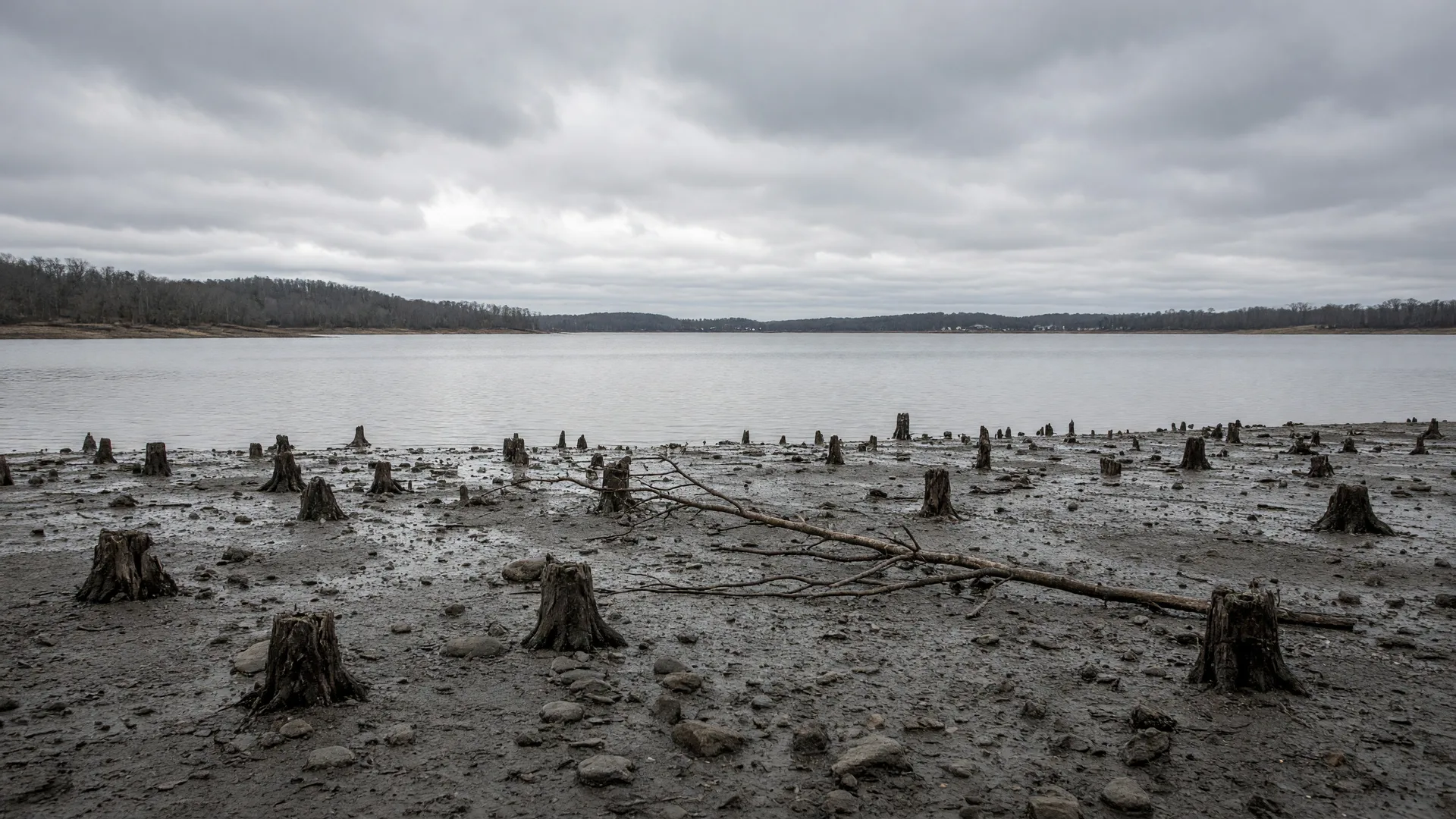
It is easy to look at Lake Hartwell in November and see only a lake doing lake things: the boats gone, the water low, the shore a little farther out than it was in July. But the lowering is the point. Hartwell is a flood-control project before it is anything else, and the reason the dam exists at all is so the Savannah River has a place to store spring water. Every winter the Corps of Engineers draws the reservoir down onto its flood-control bench, empties the pantry, and waits for the rains. The family at 257 Methodist Park Lane watched that mission begin in the 1950s, and this winter they are watching it hold steady at a number the whole lake has learned by heart: 656.
The dam was sold as flood control first
The Flood Control Act of May 17, 1950 authorized Hartwell Dam as the second unit in the comprehensive development of the Savannah River Basin. Read the old news coverage and the wording is everywhere: this was flood control and hydropower, in that order, with recreation as the happy byproduct nobody quite promised. The valley below 257 Methodist Park Lane had flooded for centuries, the river coming over its banks in the wet years and taking the fields and the low roads. The dam's first promise to the people of the basin was that the big rises would have somewhere to go.
That is still the mission. The project keeps a narrow band of flood-control storage between 660 and 665 feet above sea level, about five feet of empty room held ready at the top of the conservation pool. The Corps manages the lake with a seasonal guide curve: a summer full pool of 660 feet, held roughly from mid-April to mid-October so the recreation season has its water, then a deliberate drawdown to the winter pool as the wet season approaches. By design, the lake sits low when the storms are most likely to come, so the floodgates and the generators can take on the runoff of a spring nor'easter without sending it all downstream at once.
What the winter waterline does to the shore
The winter drawdown is why Lake Hartwell's shoreline always looks a little different in January. A four- or five-foot drop pushes the water back across the gently sloping lakebed and exposes a band of stumps, sandbars, rocks, and mud that was underwater in July. Around 962 miles of shoreline, that band runs to an enormous amount of visible lakebed, and in normal winters the Corps marks the worst of the navigation hazards it cannot clear. On the estate at 257 Methodist Park Lane, the effect of the drawdown is mild because the shoreline descends to the water gradually, but every winter reveals a little more of the land's original shape, the same clay and grade the river sculpted before the reservoir.
Extreme years widen the swing to a history lesson. In December 2008, a drought pushed the lake to a record 637.49 feet, more than twenty-two feet below full pool, stranding docks and marinas far from the water. At the other end, a flood event can push the lake into the 660-to-665 band and hold it there until the gates open. The point is that the fluctuation is not a malfunction. It is the operating philosophy of a flood-control reservoir, and anyone who buys lakeshore on Hartwell learns to read it the way the family here has read it for sixty years, with patience and a good gage.
The year the winter pool became the year-round number
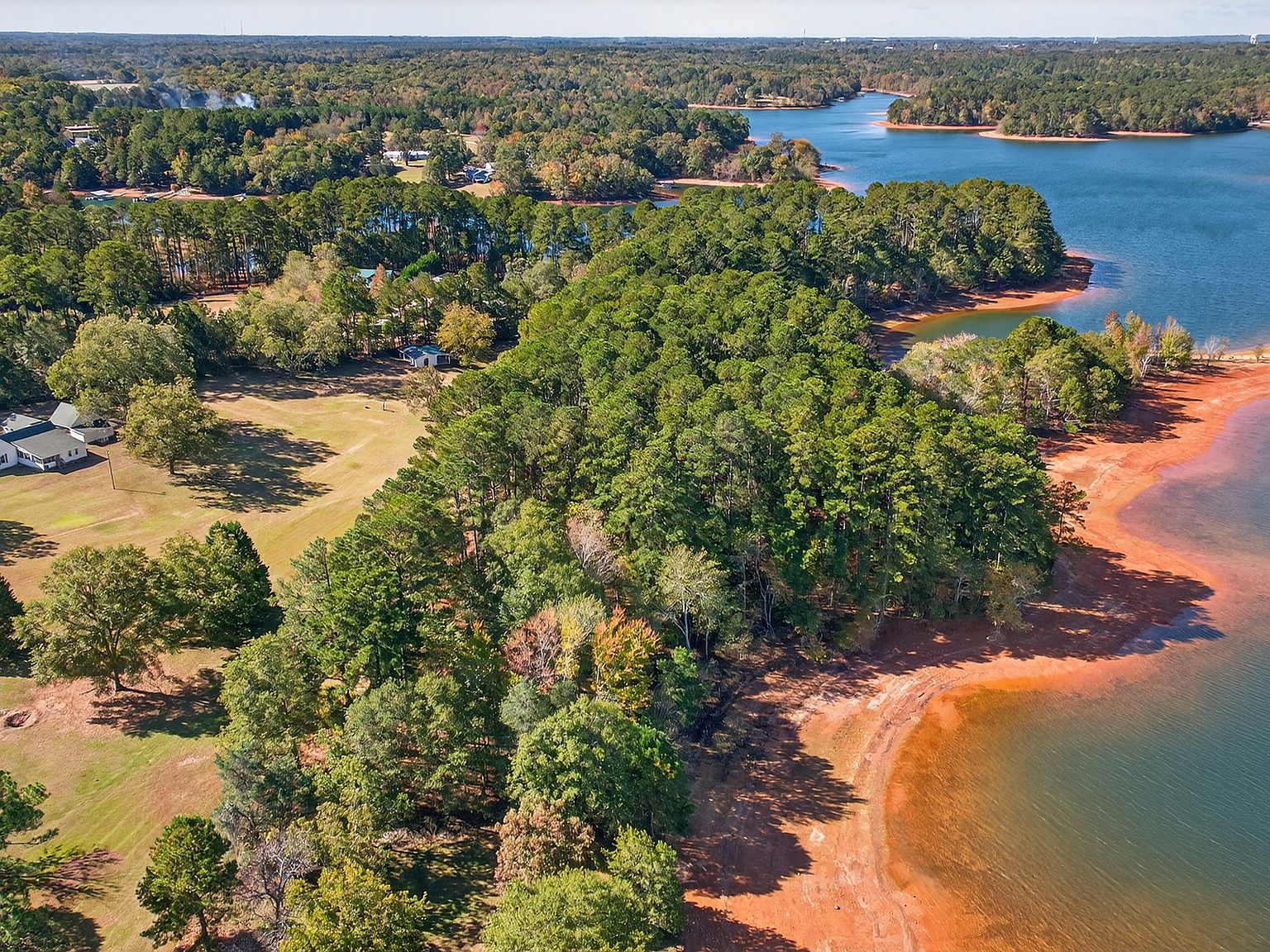
This winter carries an unusual plot twist. Because of seepage at the Clemson Lower Diversion Dam Saddle Dike, the Corps has held the guide curve at a flat 656 feet since late August, with a 662-foot ceiling, until a permanent fix is designed and built. Significantly, 656 is the lake's normal winter pool, the same number the drawdown always aimed at. What the saddle-dike restriction did was freeze the lake at its winter level through the summer as well, trading the seasonal rhythm for one steady holding pattern. For shoreline property owners the practical effect has been a strange, consistent year: no spring refill, no summer high, a single honest waterline from April to November.
The Corps has said the permanent fix could take up to ten years, a timeline we have written about before. For now, the lake behaves all year like the disciplined flood-control machine it was designed to be: low, watchful, and readied for rain. Buyers who toured Hartwell this fall saw the property at its most honest, the water at its working level, and 257 Methodist Park Lane still stood on dry high ground with a clear view across a full lake.
The mission the family watched begin
There is a reason the lake's winter job resonates on this particular property. The generations at 257 Methodist Park Lane were here in 1955 when the first construction began, stood on the high ground through the years the dam rose, and watched in February 1961 as the gates closed and the river began to slow. They did not just inherit a waterfront; they inherited the memory of the day the water arrived, and with it the understanding of why. Every winter since, when the lake walks back off its shore to make room for spring, the family has recognized the old mission still at work, the same federal purpose that once reordered their entire valley.
After sixteen relocations between us, we have learned that people who live near engineered water either fight the system or learn its calendar. The families who do best on a reservoir are the ones who keep the gage reading in their heads, who know that a low January lake is not a bad sign but a stored defense. A property at 257 Methodist Park Lane gives a family that fluency on day one: 4.546 flat acres, a porch that has faced the same view since 1873, and a shoreline that handles the winter drawdown with room to spare. The lake does its job. The land does its job. That is a rare pairing, and it is on offer.