
Generations
The porch that has witnessed it all: a century and a half of family life at Methodist Park Lane
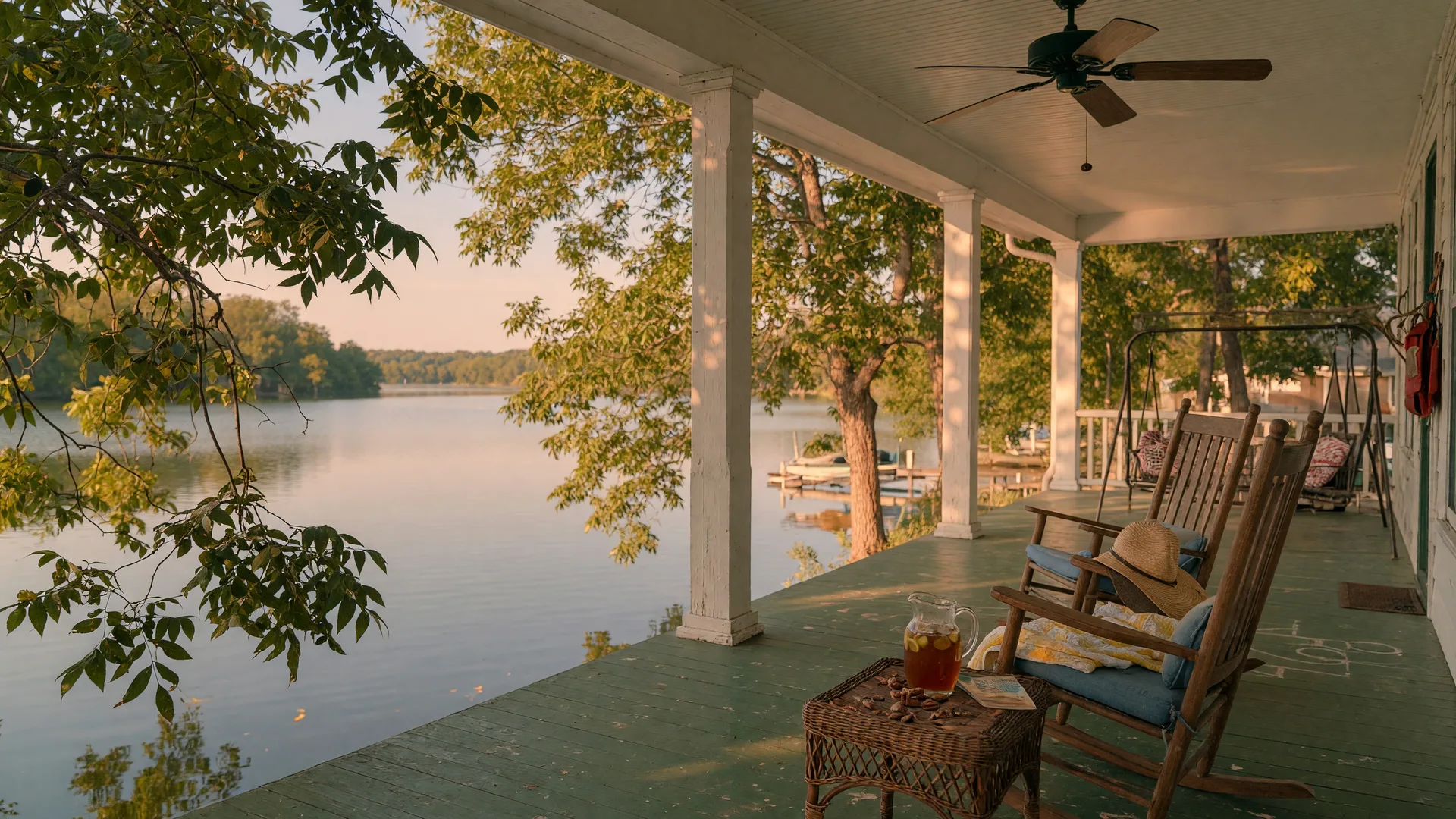
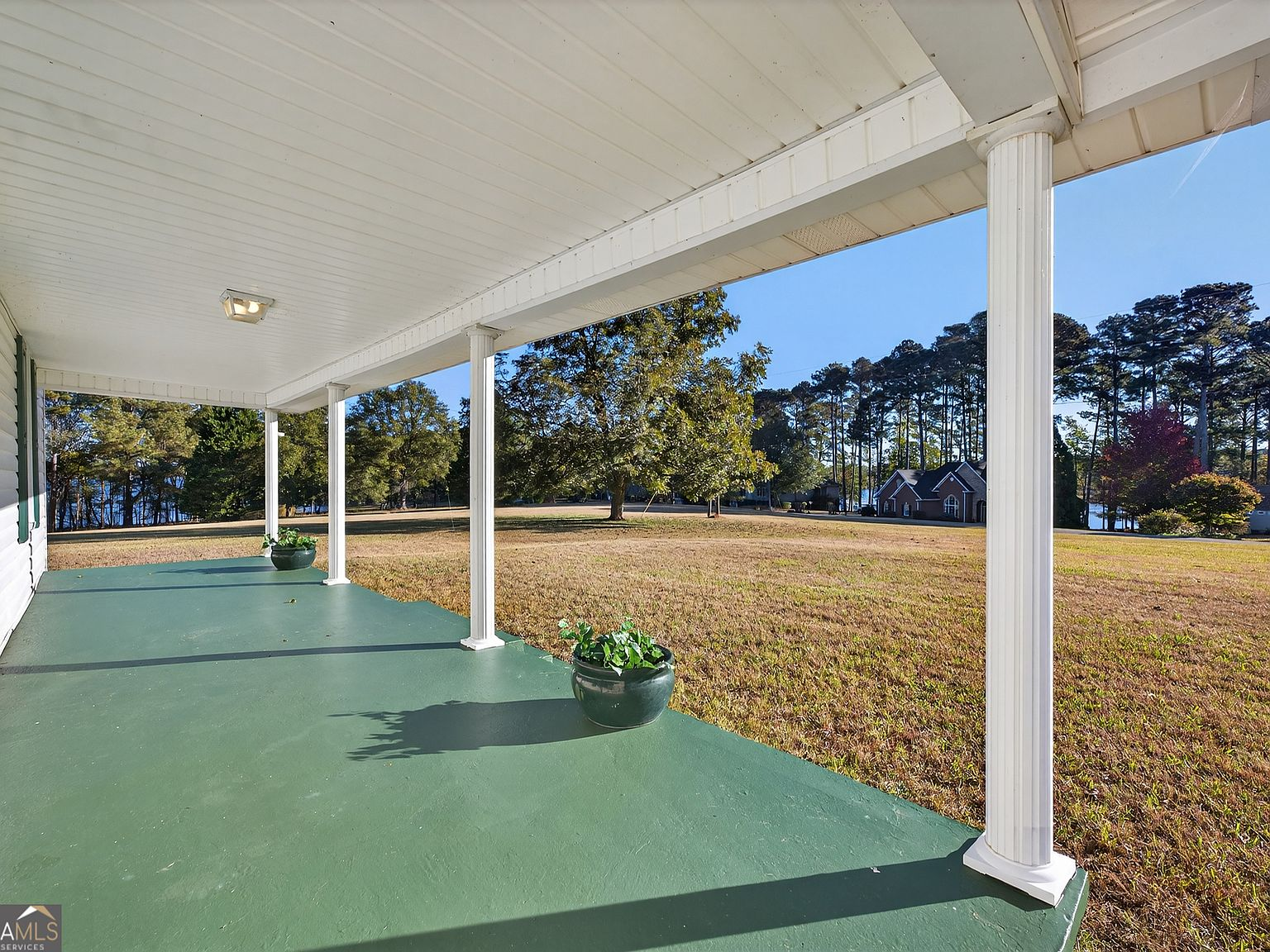
Some rooms you enter. This porch, you join. Since 1873, the covered porch at 257 Methodist Park Lane has held the same position on the same piece of ground, facing the same direction, receiving the same southwest breeze off what was once a river valley and is now a 56,000-acre lake. The columns are original. The orientation is original. And if the wood floors have been replaced a time or two, that is only because six generations of footsteps will wear through anything.
The porch as a room
In the modern lake house, the porch is often an afterthought -- a narrow strip between the door and the lawn, just wide enough for a boot tray and a bench. But the covered porch at Methodist Park Lane was designed as a room. At twelve feet deep and stretching the full width of the front facade, it was built for living. The 1873 homesteaders understood that in the Georgia foothills, where summer heat settles in by May and does not release until October, the porch is where life happens.
Before air conditioning, before ceiling fans, before screens, the porch was the coolest place on the property. The cross-breeze that moves across the four and a half acres of flat lawn and through the pecan grove arrives at the porch cooler than the air inside the house. The first family knew this. They oriented the home to catch that breeze, and every generation since has understood the same thing: when you want to feel the lake, you do not go inside. You go to the porch.
What the porch has watched
In the 1870s, the view from this porch was of the Savannah River valley -- a slow, winding river through bottomland farms, with the distant blue line of the Appalachian foothills on the horizon. The family would have watched spring planting from here, judged the weather by the movement of clouds over the valley, and kept an eye on the river during heavy rains, knowing that the floodplain downstream belonged to someone else.
By the 1880s and 1890s, the pecan trees the first generation planted were beginning to shade the lawn. The porch became the place where Sunday dinners spilled outdoors, where the children learned to shell pecans on the wide wooden floorboards, and where neighbors were welcomed before they ever crossed the threshold.
In the 1950s, the porch became a front-row seat to change. The U.S. Army Corps of Engineers arrived in the valley, and the work began. The family sat on this porch and watched the landscape they had known for eighty years transform. Trees were cleared. Roads were rerouted. The river began to widen, slowly at first, then inexorably, as the dam rose at Hartwell and the water crept up the valley. Families they had known for generations packed their belongings and moved to higher ground. The porch looked out on a world that was literally being remade.
By 1963, the water had reached full pool. Where the river had wound through the valley, there was now open water stretching to the horizon. The porch was still there. The columns were still vertical. The breeze still arrived from the same direction. But the view had changed forever.
The porch today
Stand on the porch today in late August 2026 and the experience connects you to every person who has stood in the same spot. The green painted floor reflects the afternoon light the way it always has. The white columns frame the same expanse of lawn and water, even though the water itself is different. The pecan trees that the first family planted now rise eighty feet overhead, their canopies meeting above the yard to create a cathedral of shade that keeps the porch cool even in the heat of a Georgia August.
A covered porch with two full bathrooms and an open-air deck stands down by the shoreline -- a modern addition built for the lake lifestyle, designed for summer gatherings, cookouts, and evenings when the boat is tied up and the grill is going. But the original porch, the one attached to the 1873 farmhouse, remains the heart of the property. The pavilion is for parties. The porch is for mornings, for slow afternoons, for the end of the day when the light goes golden and the lake turns glassy.
When we bring clients to 257 Methodist Park Lane, we do not start the tour inside the house. We start on the porch. We let them stand there for a minute, looking out across the lawn, through the pecan trees, toward the water. We do not talk. We let the porch do what it has done for 153 years: invite them into a rhythm that predates every modern convenience, every renovation, every generation that has come and gone.
What the porch asks of the next generation
A property like this does not ask much of its owners in material terms. The porch needs painting every few years. The floorboards need replacing when they wear through. The columns need to stay square and true. But what the porch asks in less tangible terms is significant: sit here. Watch the water. Let the breeze do its work. Do not hurry through this property the way we hurry through most of our lives.
As advisors who have helped families navigate major transitions -- and we have walked through sixteen relocations of our own -- we understand that a home is rarely just a home. It is a container for memory, for continuity, for the small rituals that make a family know itself. The porch at 257 Methodist Park Lane has held those rituals for longer than anyone alive can remember. The next owner gets to add their own.
The porch does not care whether you come from the river-valley generation or the lake-generation. It does not judge whether you use it for morning coffee or evening cocktails, for reading or for conversation, for solitude or for company. It has held all of it. It will hold all of it again. The only question is whether you are ready to take your place on it.