
Heritage
The water that shaped us: from a hand-dug well to Lake Hartwell
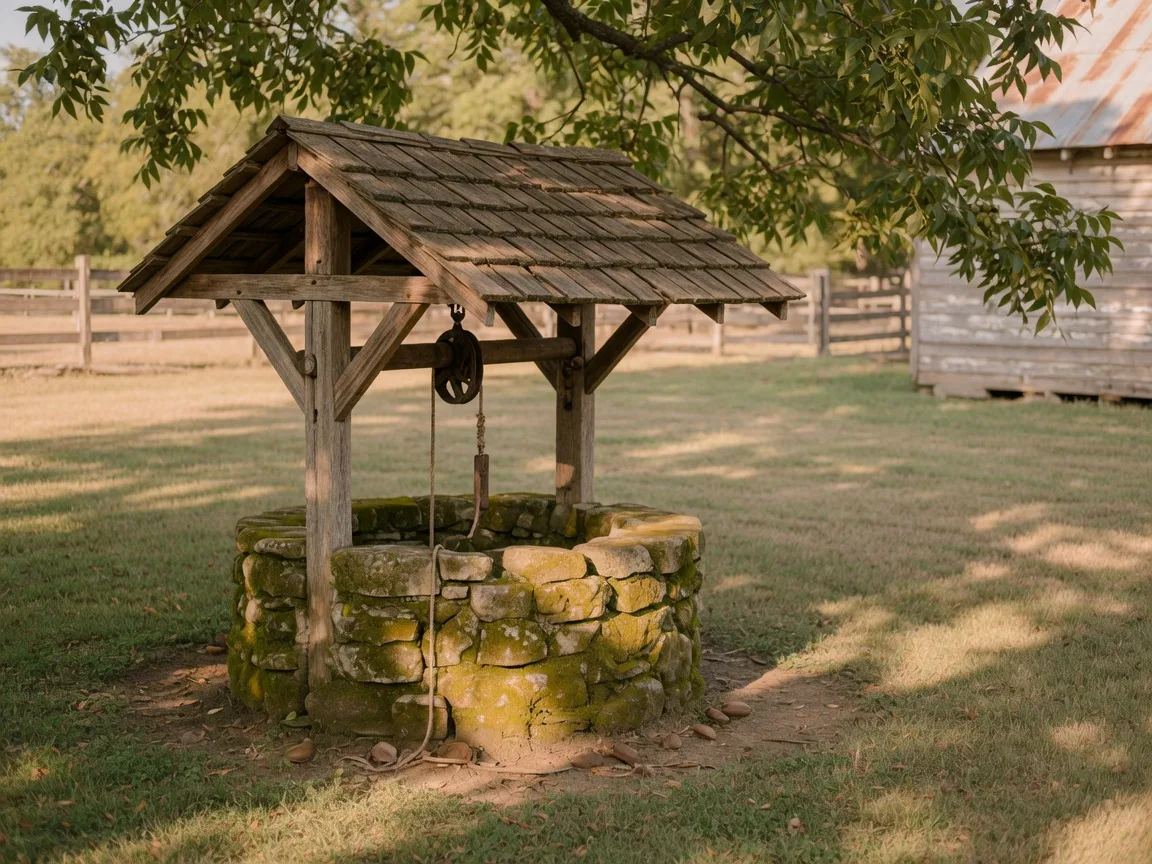
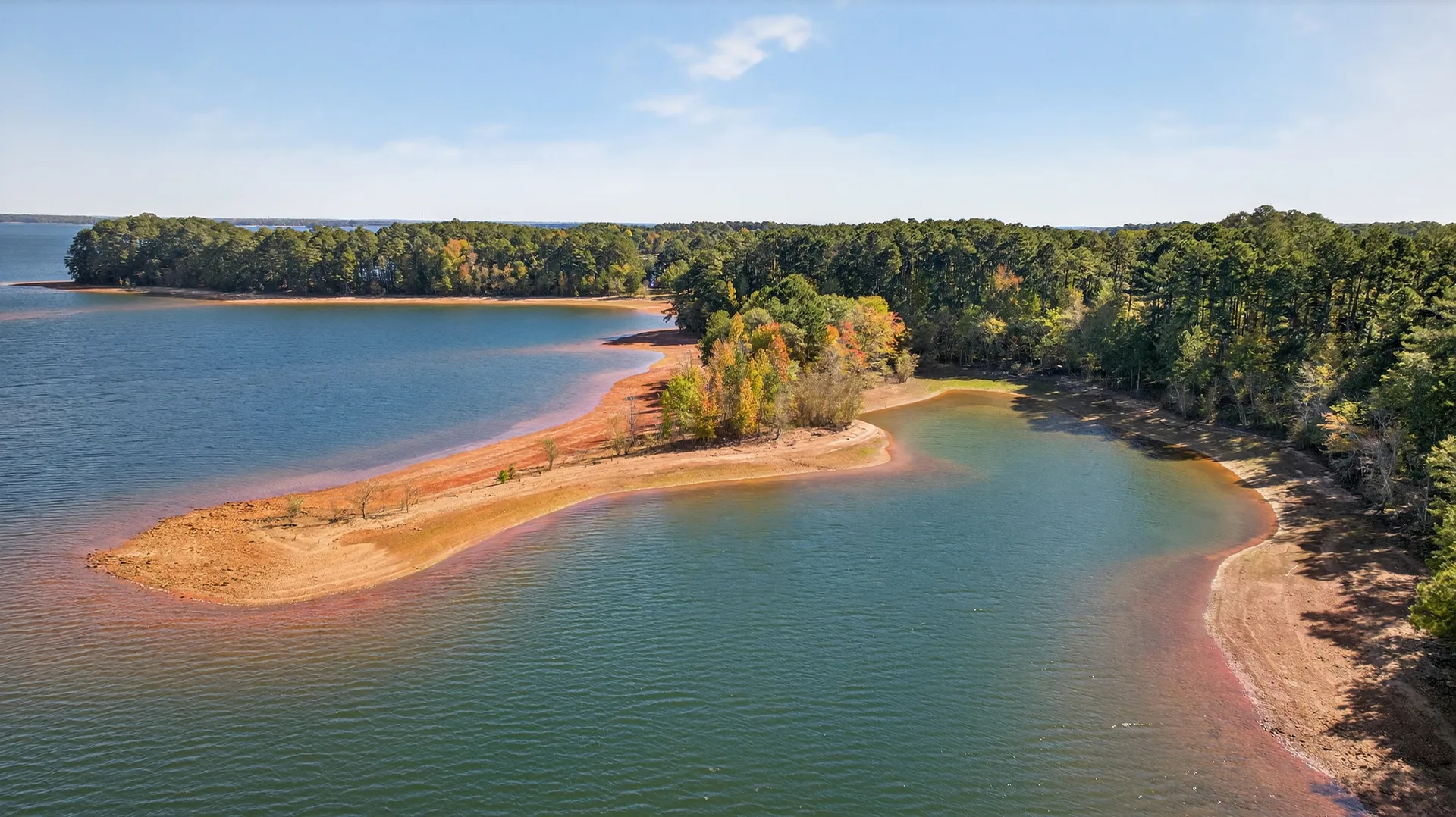
Water is the thread that runs through every chapter of this property's story. It just looks different in each one. In the 1870s, water meant a hand-dug well, a bucket on a rope, and the daily labor of hauling enough for a family, a garden, and livestock. In the early 1900s, water meant the Savannah River, where the family fished, watered crops, and watched for spring floods. And since the 1960s, water has meant Lake Hartwell -- 56,000 acres of reservoir stretching to the horizon, transforming this land from a working farm into a lakefront estate. The same element, three completely different relationships.
The well
The first thing the 1873 homesteaders did after raising the frame of the house was dig the well. It is still on the property, tucked at the edge of the pecan grove, a stone-lined shaft sunk by hand into the red clay until the diggers struck the water table. In the 1870s, that well was the center of daily life. Every drop of water for drinking, cooking, bathing, washing clothes, and watering the garden came up through that opening, one bucket at a time.
The geometry of the original homestead reflects the primacy of the well. The house sits close enough that a person could carry a full bucket without spilling, but far enough that the well's dampness would not affect the foundation. The kitchen was placed on the well side of the house. The garden was laid out within easy reach of the water source. Every decision about where things went on this property started with the question of water.
Rural electrification reached Hart County in the late 1930s when Hart EMC was chartered, and with it came the first electric pumps. The hand-drawn bucket gave way to a spigot in the kitchen. But the well itself remained in service for decades, supplementing the modern system, providing water for the garden and the yard through droughts that tested the municipal supply. The well is dry now -- or at least no longer in use -- but the cap is still visible in the grass, a quiet monument to the generations who started every day by lowering a bucket into the dark.
The river
The Savannah River, before the dam, was the second relationship this land had with water. The property sits high enough above the historical floodplain that the river was never a threat, but close enough that the family could walk to it, fish from its banks, and use its water for livestock when the well ran low in dry summers.
The river shaped the property in ways that are easy to miss today. The flatness of the lawn -- unusually level for the Georgia foothills -- is the result of centuries of river valley geology. The deep soil that supports the pecan grove was deposited by the river over thousands of years. The microclimate that keeps the property a few degrees cooler than the surrounding hills in summer and a few degrees warmer in winter is a function of the river valley's thermal dynamics.
For the families who lived here before 1960, the river was also a boundary and a connection. It marked the edge of their known world -- the line where their land ended and the wider landscape began. But it also connected them to the communities up and down the valley, to Augusta downstream, and to the cycles of flood and drought that defined life in a river-bottom farming community.
The lake
When Lake Hartwell reached full pool in 1963, the relationship between this property and water changed completely. The river that had been a feature of the landscape became the defining feature. The water that had been a resource became a lifestyle. The view from the porch that had looked out on a wooded river valley now looked out on open water stretching to the horizon.
For the family that held the property, the transition was neither immediate nor simple. The lake brought benefits -- fishing that surpassed anything the river had offered, recreational opportunities that transformed weekends, a real estate value that climbed with every year of the lake's maturity. But it also brought changes that required adaptation. The community along the river scattered. The agricultural economy that had supported the family for generations gave way to a tourism economy built on boat ramps and rental cabins. The family had to decide whether to lean into the lake lifestyle or hold the property as it had always been.
They chose both. The historic farmhouse was preserved and updated. The lakeside pavilion was added -- a modern structure designed for the kind of outdoor entertaining that the lake lifestyle demands. The pecan trees were kept. The lawn was maintained. The property became something that did not exist before Lake Hartwell: a lakefront estate with deep agricultural roots, a 19th-century home with 21st-century amenities, a place that honored its water history in every form.
The next relationship
Every generation on this land has had to negotiate a new relationship with water. The first generation hauled it by hand. The second generation pumped it. The third generation watched the river become a lake. The fourth and fifth generations learned to live on the water, to boat and fish and entertain on a 56,000-acre playground. The question for the next generation is: what will your relationship with this water look like?
The infrastructure is already in place. The lakeside pavilion with its two full bathrooms and open deck is ready for the next era of gatherings. The dock is positioned in a protected cove that offers easy access to open water and shelter from heavy weather. The Corps of Engineers manages the shoreline, keeping it natural, undeveloped, and protected from overbuilding. The water is clean, the fish are plentiful, and the community around Lake Hartwell is growing in ways that respect the lake's value without exploiting it.
But the deeper question is not about infrastructure. It is about whether you understand what it means to hold a property where water has always been the central fact. The well in the pecan grove, the river that used to run through the valley, the lake that covers it now -- these are not just features of the property. They are the property. The land is the constant. The water is the story.
At The Petrenko Group, we have spent our careers helping families find properties that match not just their needs but their sense of what a home should mean. 257 Methodist Park Lane is the rarest kind of listing: a place where the story is so rich and so long that the next owner does not have to invent anything. They just have to arrive, walk the lawn, stand at the edge of the lake, and understand that they are stepping into a relationship with water that started when the first bucket hit the bottom of a hand-dug well in 1873.