
Heritage
The winter the old valley came back into view
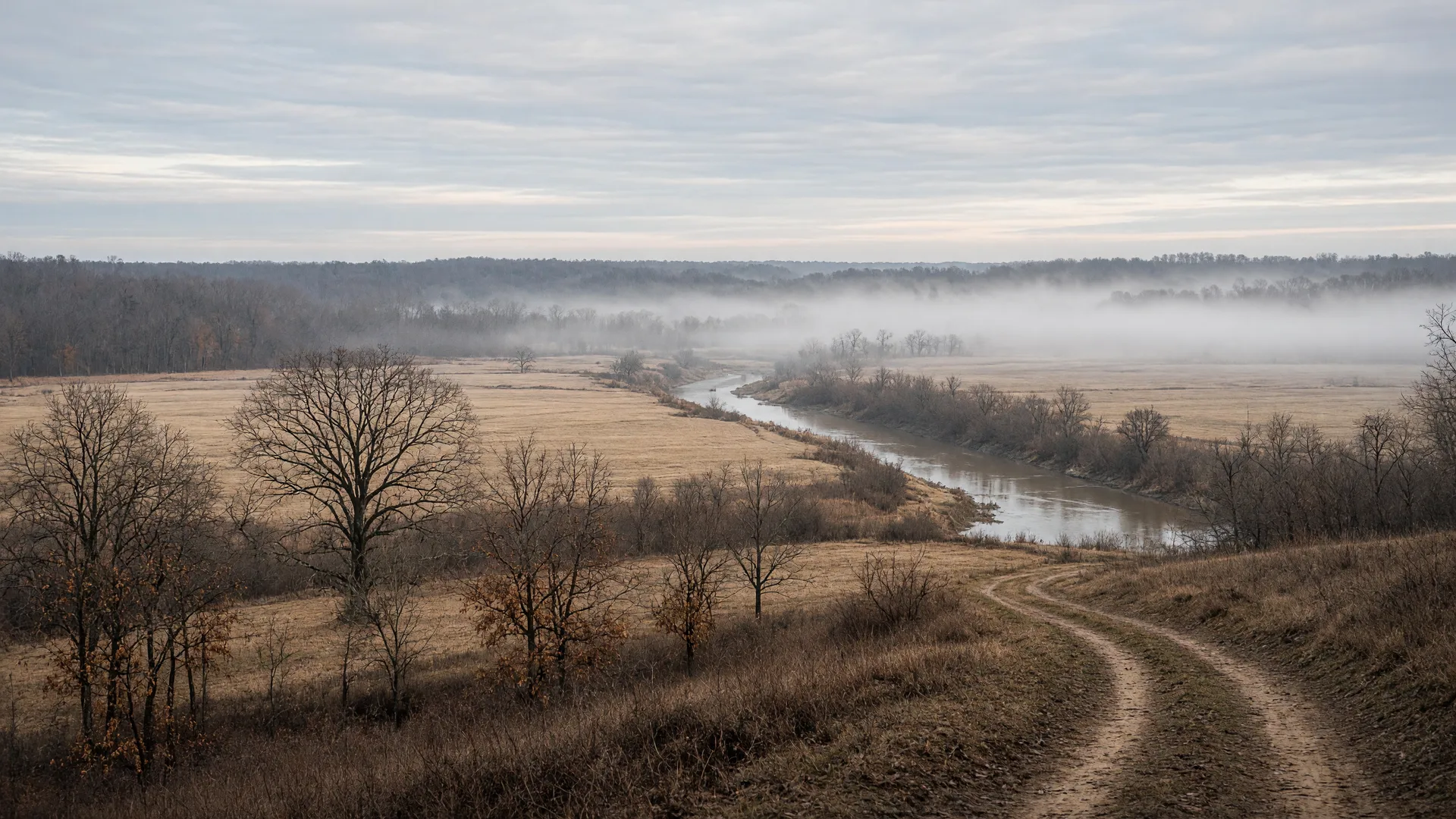
All through the fall the lake has been sitting more than ten feet below its full pool, and the shoreline around Hartwell has turned into a classroom. What the low water is showing us, in coves and along the red-clay banks, is the ghost of the valley that lay here before the dam. And standing on the high ground at 257 Methodist Park Lane, you can read the valley's story almost as easily as you could in 1873.
What the receding water hands back
Low water is not only trouble. It is also an archaeology. Where the reservoir normally hides its floor, the retreating surface has exposed drifted timber that stood on riverbank flats, rolled red-clay bottomland that once took a plow, and the humps of ground that were high spots before they were islands. Around the lake, volunteers turned the dry shoreline into a project, gathering roughly eight thousand pounds of trash that had been hidden underwater for years, including a record haul of tires. In one dry season the reservoir gave back a memory of the country that was here before the Corps of Engineers began its work in 1955.
The valley that lake covers now was a working Southern landscape. The Savannah River and its tributaries threaded through bottomland that families had farmed since the early 1800s, growing corn, cotton, and vegetables in some of the richest soil in northeast Georgia. Between the fields stood houses on the higher ground, church communities, bridges, and the roads that tied them together. When the water rose in the early 1960s, most of that went under. Two thousand families moved. Towns were submerged. And a few parcels, chosen for their elevation, stayed dry.
The high ground that was always high
257 Methodist Park Lane is one of those parcels. The house was erected in 1873 on a rise of flat, well-drained land close enough to the river valley to share its gentleness and high enough to be out of its risk. The pecan trees that now shade the lawn were planted as food for a working family, not as ornament, and they are old enough that they know the sky the land had before the lake.
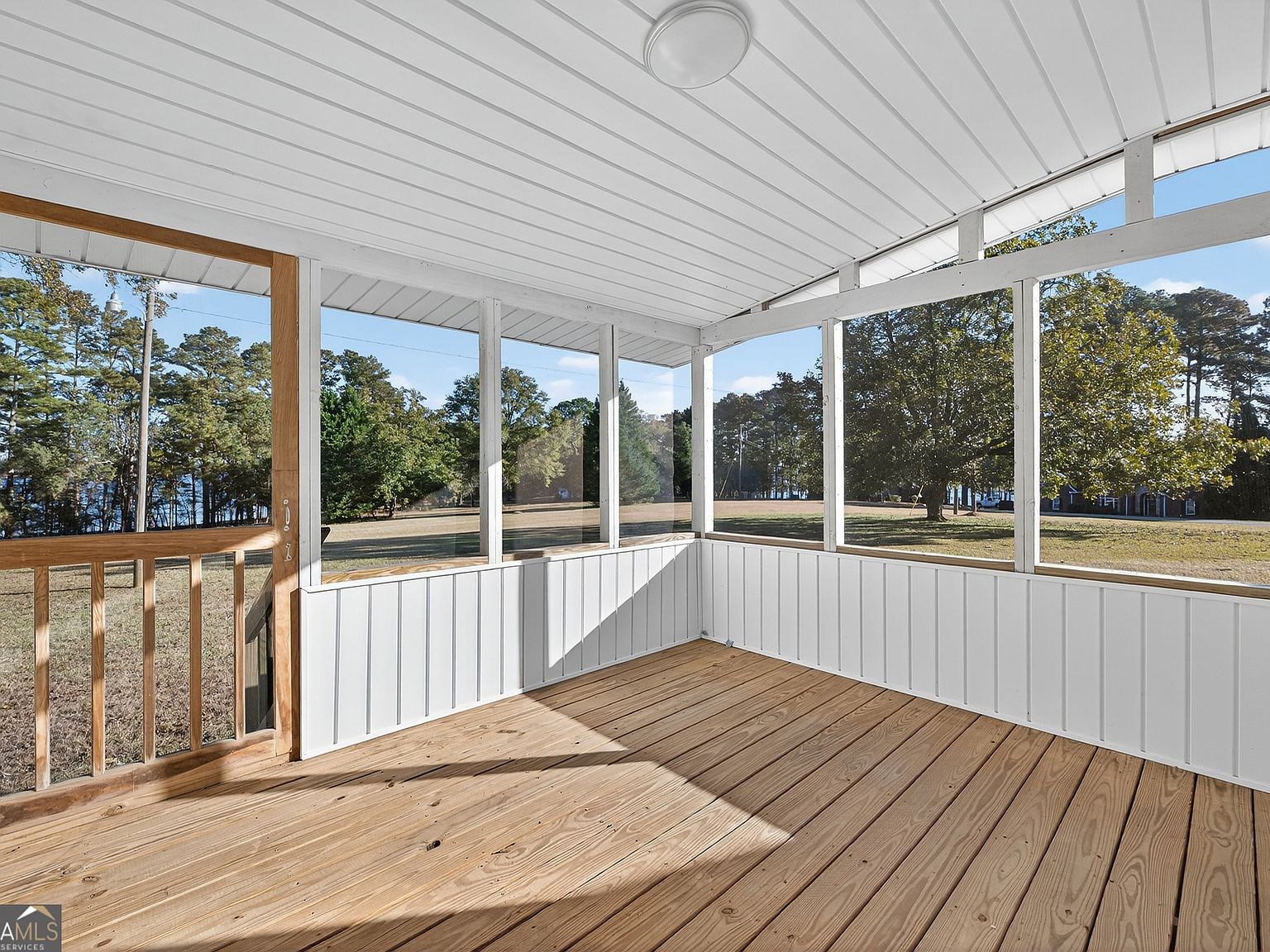
The winter the valley came back into view, standing on that lawn was like holding two maps at once. East across the low winter water you could picture the fields and the farm lanes of the 1870s. West, beneath the pecan canopy and behind the porch, you could see the unchanged high ground where the same family kept gathering, season after season, while everything lower down the slope changed its name from river to lake.
What the season teaches
A low-water winter is a good time to understand what makes a lakefront parcel durable. The shoreline that looks beautiful at full pool can be a mudflat or a stump field at low pool, and that is exactly what a long drawdown exposes. Land that holds its own at both ends of a reservoir's range is not an accident. It is geology and history working in a family's favor.
The 4.546 acres under this house are flat enough for lawns and gatherings, private enough to feel like a retreat, and high enough that the waterline question has never been a threat to them. They are, in the Corps' own language, Georgia shoreline on Lake Hartwell, one of the last remaining large-acreage parcels on that stretch. In a winter when the valley is showing itself, that distinction reads clearly: the land that was here before the lake, and stayed above the lake's reach, is the land that will still be here at the end of the next drawdown.
A quiet season on the old ground
There is a peculiar peace in standing on high ground while the reservoir is low. The lake rests under the winter sky, the cove shortens, the birds gather on the exposed banks, and the land feels older than usual, closer to what it was before the engineering. Families who had kept this place for generations would not have found that strange. For them the lake was always the interloper, and the ground was the constant.
Recalling the valley this winter is not nostalgia for a lost world. It is the practical wisdom of a property held for 153 years. When you understand that the lake is a recent tenant and the high ground is the landlord, you stop treating the waterline as the thing the property depends on. You plan around the ground, and you let the water be what it will be. That is the lesson a low winter hands to anyone walking the shore, and it is the same lesson the 1873 builders of 257 Methodist Park Lane understood before a single bucket of reservoir water had been released.