
Community
What the receding water gave back: the record-breaking October cleanup on Lake Hartwell
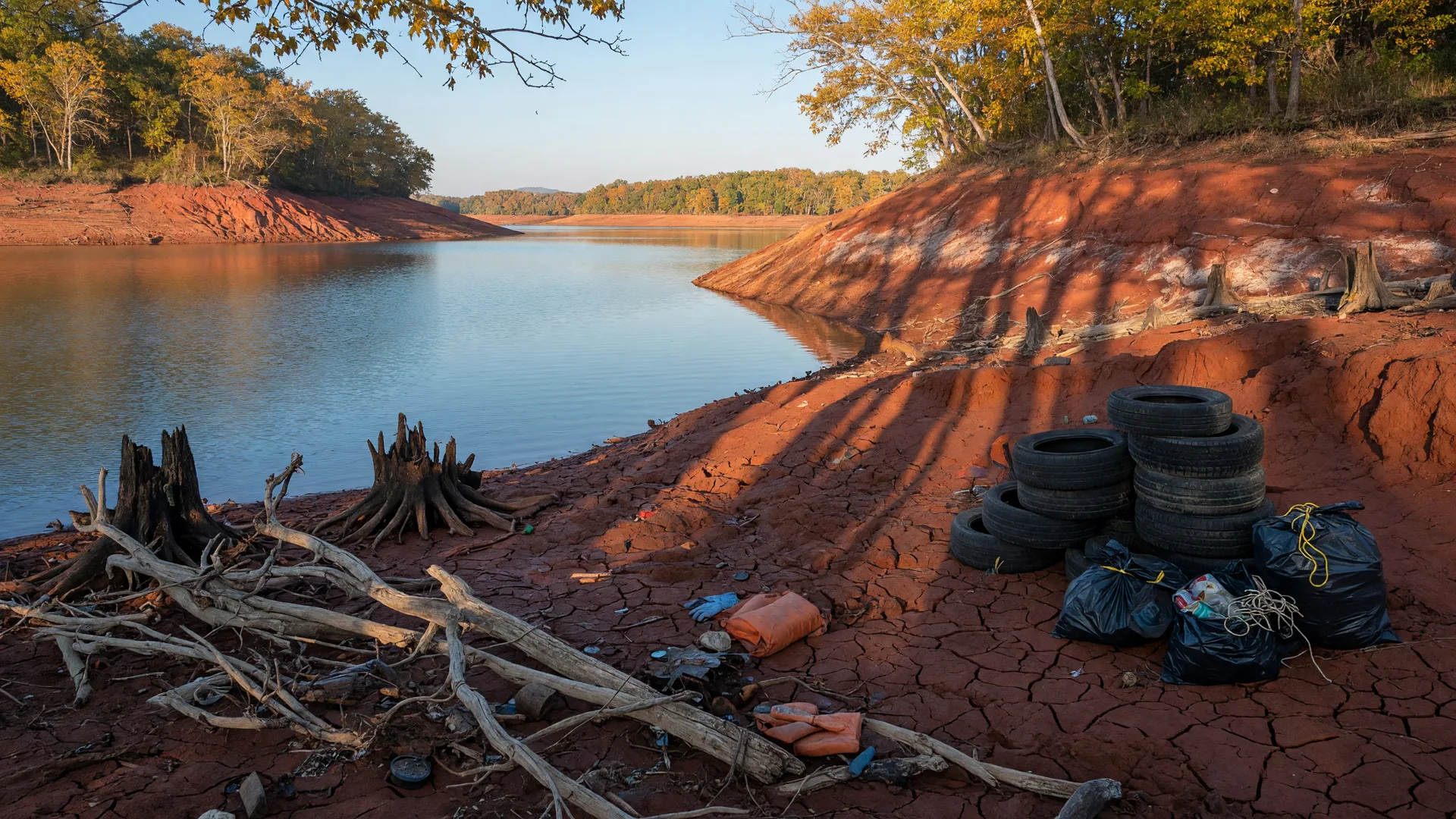
In the first days of October 2026, the shoreline cleanup that Lake Hartwell has held for years set a record: 148 volunteers across 14 sites in five counties pulled about 8,300 pounds of trash off the banks, including a record 36 tires, the highest tire count the Lake Hartwell Partners for Clean Water has ever recorded in a single cleanup. The reason the haul was possible is written in the lake itself. A prolonged regional drought has held Hartwell well below its normal full-pool level, and the receding water exposed debris that had been hidden underwater for years.
A record haul at the waterline
The numbers from the early October cleanup are worth setting down plainly, because they measure something real about how this lake is cared for. One hundred and forty-eight volunteers moved out about 8,300 pounds of trash. Thirty-six of those pounds by count, not weight, were tires, the most ever collected in one of these cleanups. The work spread across 14 supply and drop-off sites in five counties, from the Georgia shore to the South Carolina side, with Lake Hartwell Partners for Clean Water and its community partners organizing the day. Sites that normally hide their shoreline problems under water, like Sadler's Creek State Park, were suddenly open to view, and the volunteers met what the water had revealed.
The low pool that exposed all of it is the same story we have been writing about since August: the Corps of Engineers holding Hartwell at a reduced level while it designs a fix for seepage at the Clemson Lower Diversion Dam Saddle Dike, layered on a summer of drought. What those conditions mean for boaters and lakefront owners has been widely discussed. What the recent waterline has meant for the lake itself is quieter and stranger. The reservoir is showing its original floor.
What the receding water shows
Before Lake Hartwell, before the dam, this same ground was a river valley: farms and homesteads and bottomland threading along the Savannah, Seneca, and Tugaloo Rivers. The reservoir began to fill in February 1961 and reached full pool in March 1962, and in the decades since, most of that old valley has sat under as much as a hundred feet of water. When the pool drops by several feet, the newest shoreline is the oldest land. Stumps, old debris, abandoned tires that drifted into the coves decades ago, and banks of sediment that had been underwater since long before most current residents were born come back into the light.
For the volunteers in early October, the exposed trash was simply work to be done, and they did it without complaint, hauling out what the drought had uncovered before the water could rise and hide it again. For anyone who loves this lake, the sight of those banks is a reminder of where the water came from. The valley floor is not a myth or a history book detail. It is right there under the receding surface, and on a dry October morning you can stand on a bank that no one has stood on in sixty years.
The habit of tending the shoreline
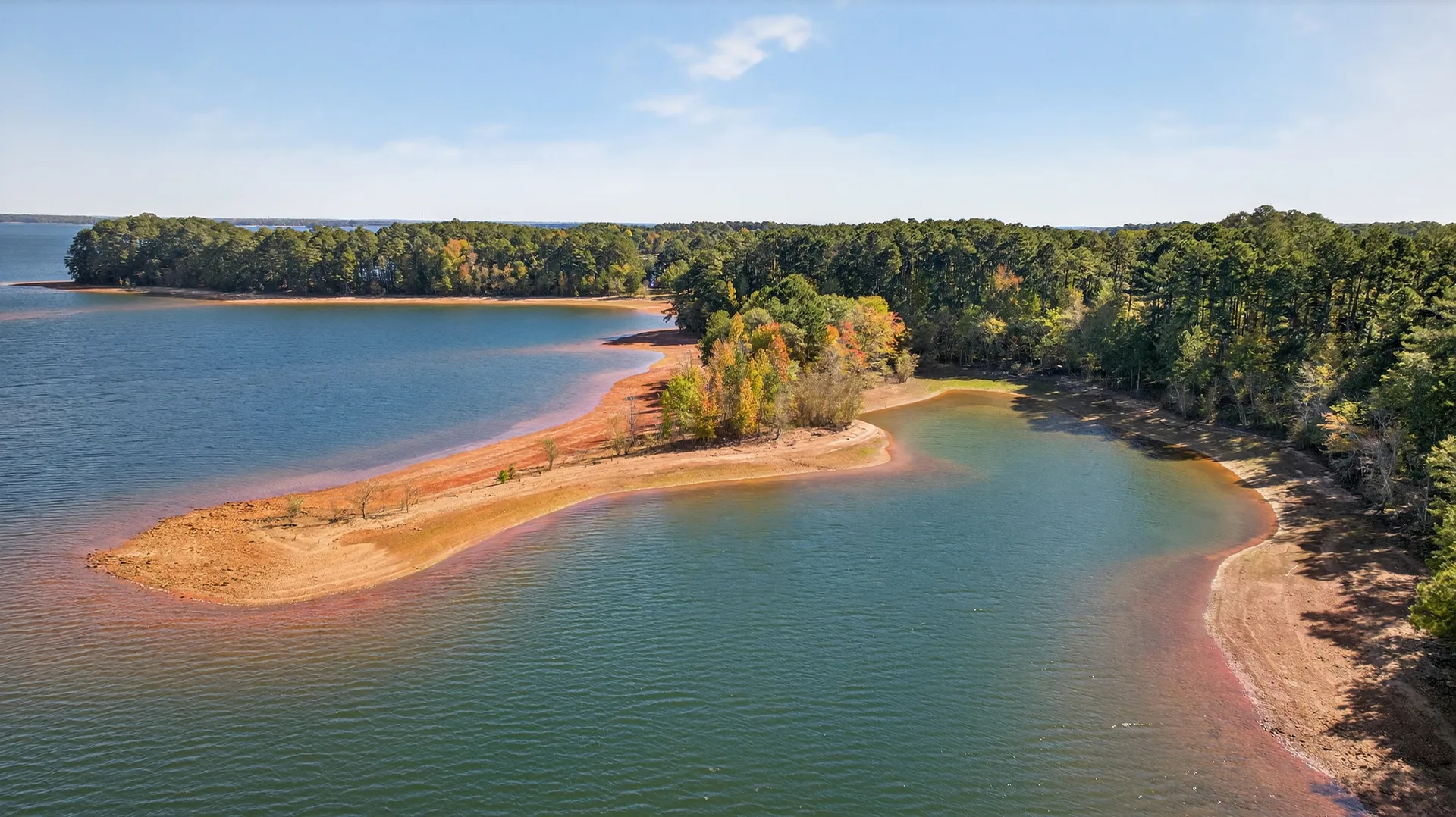
The October cleanup was not the first time this lake's community has organized itself around its banks. In late September, the Corps of Engineers, Lake Hartwell Partners for Clean Water, and the Lake Hartwell Association hosted Splash Away the Trash at ten sites in observance of National Public Lands Day. Year-round residents paddle and walk the shore picking up what the coves deliver, the Lake Hartwell Association keeps its eye on water quality, and thousands of acres around the reservoir have been conserved to keep the shoreline the way the water found it.
That instinct did not start with the lake. The families who lived in this valley before the dam tended the same banks by hand for generations: clearing the landing, pulling what the river left, keeping the high ground around their homes clean and working. The implements have changed from hoes and wagons to trash grabbers and pickup trucks, but the relationship is the same. People who live on this water treat it as something they are responsible for, not something they merely view.
From the high ground, the same view
The property at 257 Methodist Park Lane was chosen in 1873 for exactly the reason that makes it comfortable today: elevation. The family who built the farmhouse picked flat, high ground above the river, ground that would stay dry no matter what the water did, and the same choice kept the estate intact when the reservoir filled a century later. On 4.546 acres with the lake at the foot of the lawn, the family has watched every pool level since 1962, high water and low, without ever wondering whether the house itself was safe.
This fall the lake has shown its old floor to anyone willing to look, and the community has responded the way lake people always do: by gathering, cleaning, and putting back what the water gave up. For us, that is the whole argument for a place like this one. A house on the water is a purchase. A share of the oldest shoreline in the valley, held by one family since before the dam, tended by hand through every era, and now ready for the next generation to care for, is something else. The receding water proved how much of that story is still visible, and the volunteers proved how many people want to keep it clean.