
Heritage
What the water covers, what the land still holds: living at Methodist Park Lane before and after Lake Hartwell
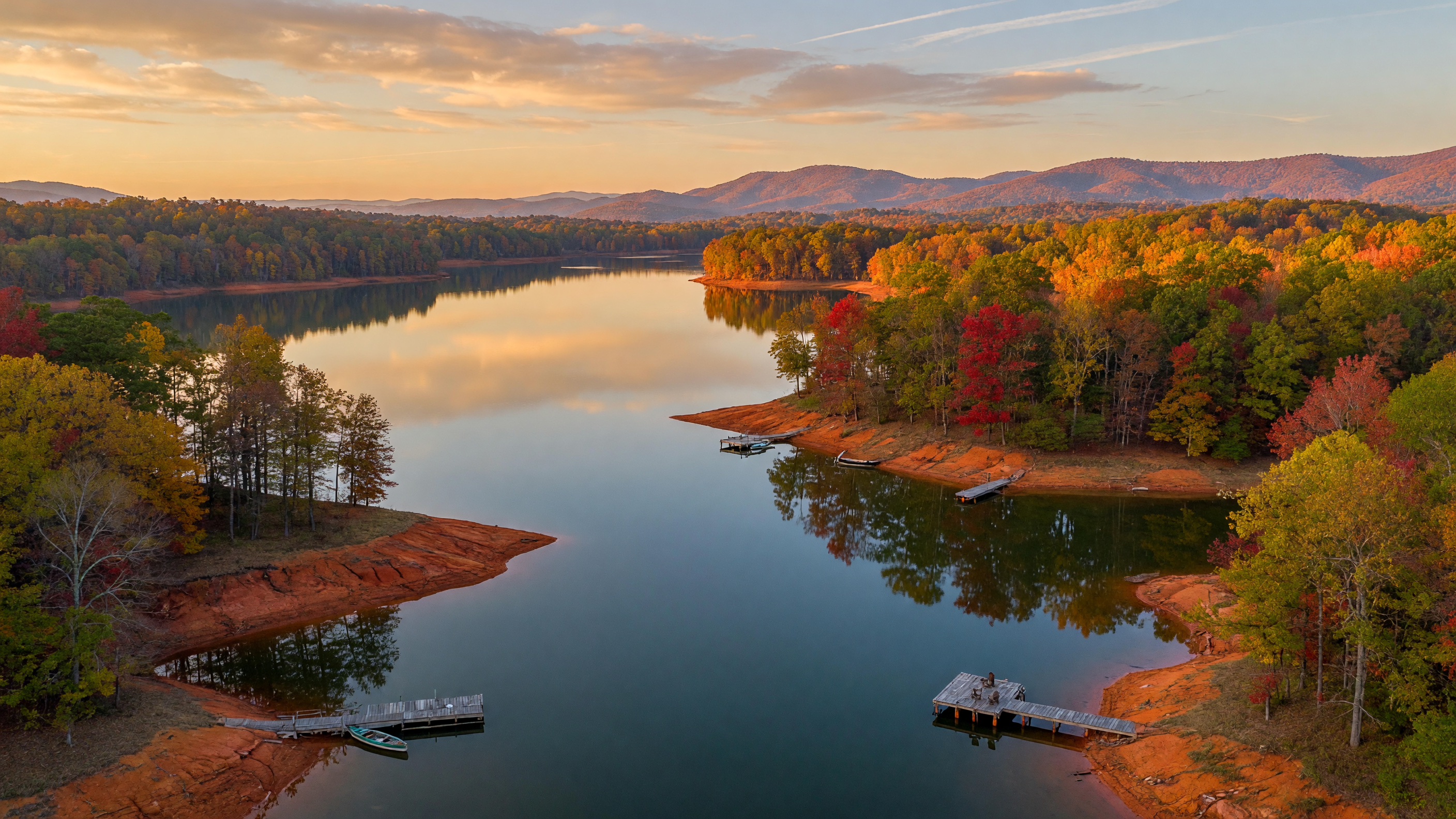
Somewhere beneath the water off the Georgia shoreline of Lake Hartwell, there is a church foundation. A roadbed. The stone steps of a house that someone built with their own hands, where children were born and parents were buried. The water covers the Andersonville Baptist Church, established in 1839, and the streets of the river port town of Andersonville, South Carolina, which was founded in 1801. It covers nearly 2,000 home sites, each one a place where a family lived, worked, and raised children before the water rose. And yet, on a natural rise just off Methodist Park Lane, the house that was built in 1873 is still standing.
What the water covers
Between 1955 and 1962, the U.S. Army Corps of Engineers constructed Hartwell Dam across the Savannah River, creating a reservoir that would eventually flood an area larger than the city of Atlanta. The project required the relocation of approximately 2,000 families from properties in both Georgia and South Carolina. The town of Andersonville, South Carolina, founded at the confluence of the Seneca and Tugaloo Rivers, was completely submerged. Its foundations, chimneys, and roadbeds now lie roughly 60 to 90 feet beneath the surface of the lake.
The reservoir also inundated miles of the Tugaloo River valley and the Seneca River valley, covering farmland, forests, and rural communities throughout the region. For the families who were displaced, the experience was traumatic. Many had lived on the same land for generations. Their homes, their cemeteries, their churches, the physical fabric of their community life, vanished beneath the rising water.
The scale of the displacement is hard to grasp from the surface of the lake today. When you boat across the open water off Methodist Park Lane, there is no visible sign that any of this history exists below. The lake is beautiful, clean, and apparently eternal. But the water is a relatively recent arrival. The land it covers holds the memory of a way of life that was deliberately and permanently changed.
What the land still holds
The family who built the house at 257 Methodist Park Lane in 1873 chose their ground well. They built on a natural rise above the Savannah River flood plain, high enough that the spring floods never reached the foundation. When the Corps of Engineers drew the flood pool for the new reservoir, that same elevation protected the property. The water rose to the edge of the land and stopped.
That decision, made by a farmer in the 19th century who was simply trying to keep his family dry, turned out to be one of the most consequential choices in the history of this property. It meant that while nearly 2,000 families were displaced, the family at Methodist Park Lane stayed. While Andersonville vanished beneath the water, this property remained exactly where it had always been. While entire communities were dismantled and relocated, the 1873 farmhouse continued to shelter the same family, generation after generation.
What the land still holds, then, is not just the physical property. It holds the continuity of a place that survived a transformation that erased almost everything around it. The pecan trees that the 1873 family planted are still producing. The porch boards that the 1890s family wore smooth are still underfoot. The foundation that was laid when Ulysses S. Grant was president has never shifted.
Living the lake lifestyle today
The lake lifestyle that has grown up around this survivor property is vibrant, active, and deeply connected to the water. In the summer of 2026, Lake Hartwell is in its prime. The Bassmaster Elite Series visited in April for a week of tournament fishing that drew anglers from across the country. The annual Cars & Guitars Festival in May filled downtown Hartwell with thousands of visitors. The Pre-4th Fireworks Extravaganza at Long Point in June lit up the sky over the lake in a display visible from the pavilion at 257 Methodist Park Lane.
For the owner of this property, the lake lifestyle is immediate. The dock is a short walk from the back porch. The fishing is world-class from your own shoreline. The boat ramp at Elrod Ferry Landing is minutes away. Methodist Park, which gave the lane its name, offers public access to the water for friends and family who arrive without a boat. The lakeside pavilion with its two full bathrooms, ceiling fans, and covered seating area makes every summer weekend an opportunity to gather.
But part of what makes the lake lifestyle at 257 Methodist Park Lane distinctive is the awareness of what came before. When you sit on the porch at sunset and watch the light fade over the water, you are not just watching a beautiful lake. You are watching a landscape that was remade within living memory. The water that reflects the sunset also covers the foundations of a vanished town. The lake that draws boaters from across the Southeast also marks the place where a way of life was submerged so that a new one could emerge.
The privilege of the survivor property
There is a particular kind of responsibility that comes with owning a property that survived when others did not. It is not guilt. The dam was built for good reasons, providing flood control, hydroelectric power, and water supply to the region. But it is awareness. The awareness that this land has seen the full arc of the valley's transformation, from river-bottom farm to lakefront estate. The awareness that the history beneath the water is real and worth remembering.
The City of Hartwell was named a 2026 Visionary City Award honoree by the Georgia Municipal Association for choosing controlled growth over sprawl, for preserving its historic downtown while embracing the economic opportunities the lake provides. That is the same balance that the property at Methodist Park Lane represents. Not a rejection of the lake lifestyle, but a way of living it that stays connected to the land and the history that made it possible.
When we represent a property like this, we are not just selling a house or a piece of land. We are connecting a buyer with a story. The story of a family who built on high ground in 1873, who watched the valley fill with water in the 1960s, who kept the pecan trees alive and the porch screened and the foundation solid through every change the last 150 years could throw at them. That story is available to the next owner. All they have to do is step into it.