Heritage
When the wind cleared the view: storms, resilience, and the making of a lakefront estate
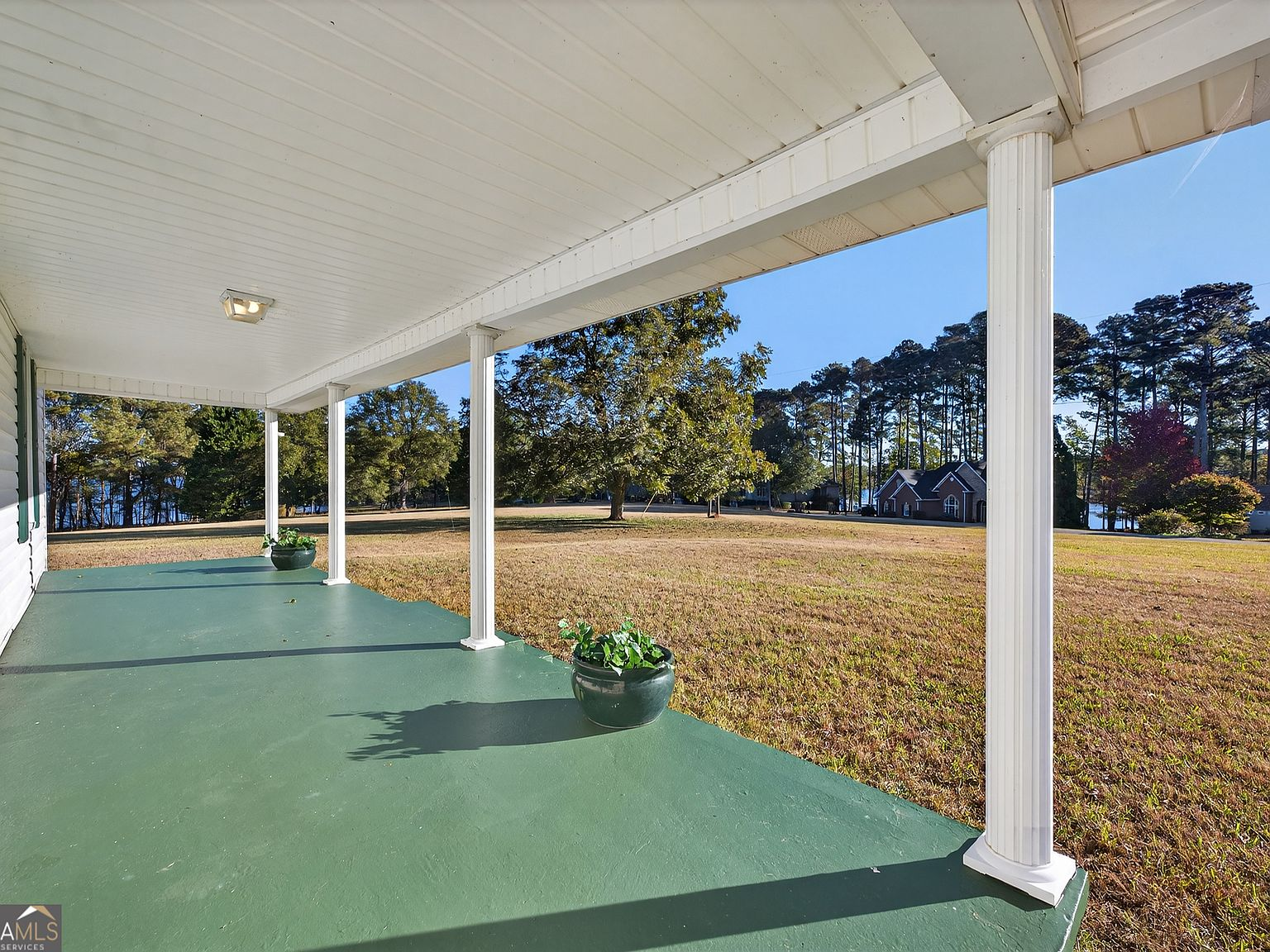
For decades, the view from the covered porch at 257 Methodist Park Lane was a view of trees. The lawn rolled out from the house in a broad, flat carpet of green — mature pecans to the left, hardwoods to the right, and a dense wall of timber along the lake-facing boundary that marked the edge of the property and blocked the water from view. The lake was there, of course. You could hear it on quiet nights, and you could smell it when the wind shifted. But you couldn't see it — not from the porch, not from the lawn. The trees had claimed that sight line long before anyone thought to preserve it.
The day the wind came through
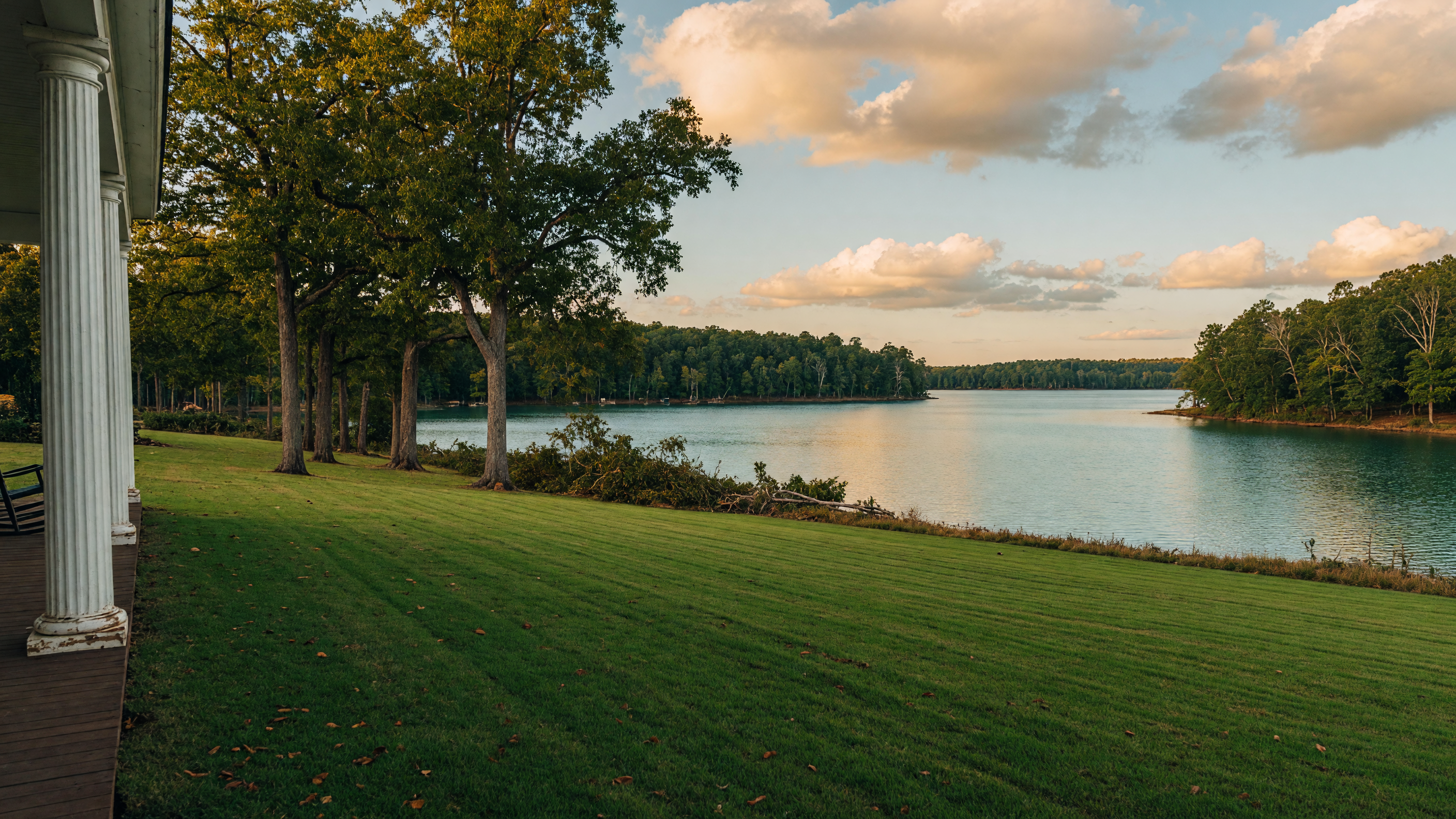
Then the storm arrived. A tornado — not the largest the region has seen, but powerful enough to change the landscape — tore through the tree line along the property's lake-facing edge, snapping trunks, uprooting root systems, and clearing a wide corridor of timber that had stood for decades. The damage was significant. The clean-up took days. And when the debris was finally cleared and the broken wood hauled away, something remarkable emerged that had been hidden behind the wall of trees for as long as anyone could remember: an unobstructed, sweeping panoramic view of Lake Hartwell.
From the covered front porch, you could now see the water — not a glimpse through the branches, but a full, cinematic sight line stretching from the pecan grove across the open lawn to the far shore of the lake. The view was breathtaking in its scope: the cove, the wooded peninsula, the open water catching the afternoon light. It was the kind of view that real estate photographers spend hours staging with drones and wide-angle lenses. But this one was real — revealed by nature, not manufactured by marketing.
The family that owned the property did what families on this land have done for 153 years: they adapted. The storm had taken trees, but it had given something back — a connection to the water that had always been just beyond the tree line, invisible but present. The tornado didn't destroy the property. It revealed it.
Living with weather on the lake
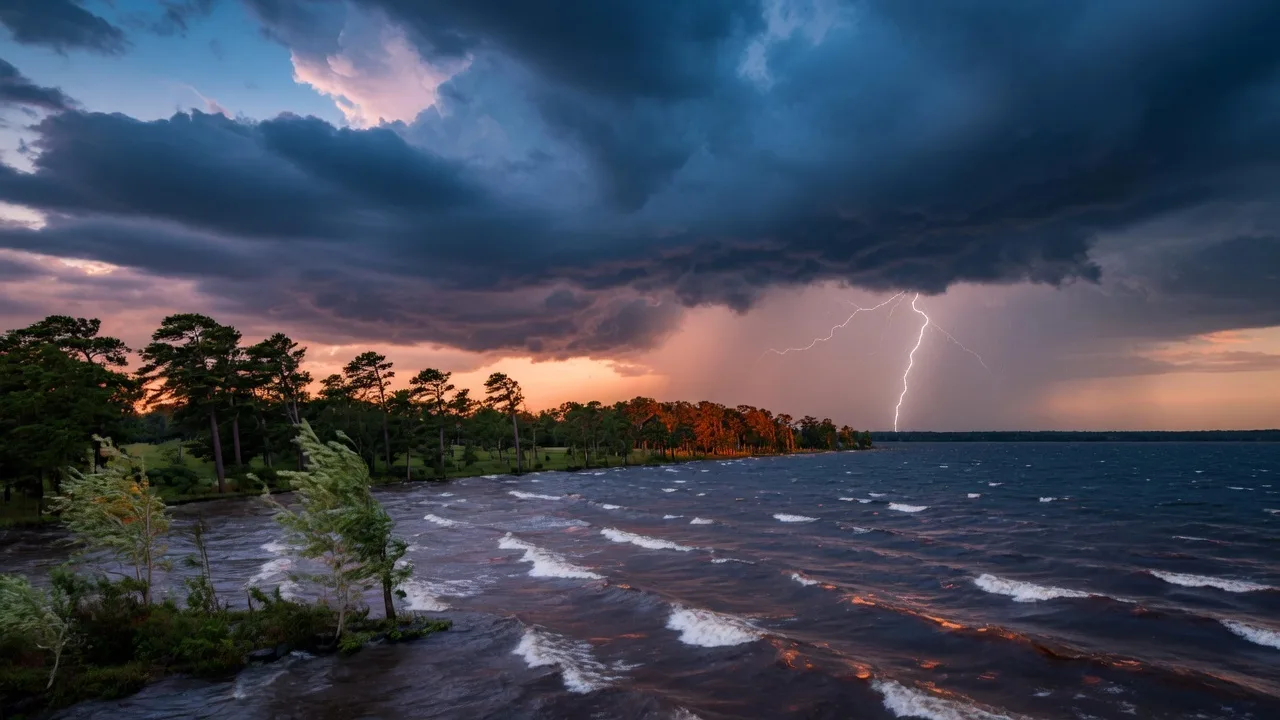
Severe weather is part of life in the Appalachian foothills of northeast Georgia. The region sits at the intersection of Gulf moisture moving north and cold air descending from the Great Lakes — a geographic crossroads that produces some of the most dramatic weather in the Southeast. Spring brings the highest risk of severe storms, with tornado watches appearing regularly from March through May. Summer delivers the slow-build thunderstorms that roll across the lake in the late afternoon, building from cumulus to cumulonimbus over the warm water before releasing their energy in thirty-minute bursts of lightning, wind, and rain.
For property owners on Lake Hartwell, storms are both a risk and a rhythm. The lake moderates temperature extremes — water takes longer to heat and cool than land, so the immediate shoreline experiences less dramatic temperature swings than the surrounding hills. But the lake also generates its own weather: on hot summer afternoons, the temperature differential between the water and the land can produce localized wind cells that whip across the surface without warning, sending whitecaps across a cove that was glass-calm twenty minutes earlier.
The 1873 farmhouse at 257 Methodist Park Lane has weathered all of it for 153 years. The original builders used local timber — hardwoods milled from the surrounding forest — and constructed the walls with a solidity that modern framing rarely matches. The thick walls, the deep-set windows, the pitched roof designed to shed heavy rain — these aren't aesthetic choices. They're engineering decisions made by people who understood that a house in northeast Georgia needed to survive hurricanes, ice storms, tornadoes, and the slow, relentless work of humidity and time.
What storms teach about a property
Every property reveals its true character during and after a storm. The questions that matter aren't in the listing: How does the water drain off the lawn after three inches of rain? Where do the trees fall when the wind comes from the southwest? Does the roof hold, or does it leak along the ridge? Is the property on high ground, or does it take water when the creek rises?
At 257 Methodist Park Lane, the answers have been tested across 153 years of weather — and the property's performance is a testament to the people who built and maintained it. The flat lawn drains naturally, graded by decades of use rather than by a landscape architect's plan. The mature pecan trees, with their deep taproots and broad canopies, are among the most storm-resistant trees in the Southeast — a fact that the original planters understood intuitively, even if they couldn't have cited the arboricultural research. The house sits on elevated ground — high enough to avoid flooding, close enough to the lake to benefit from the water's moderating influence on temperature.
And the Corps of Engineers shoreline — the undeveloped, wooded buffer between the property and the water — acts as a natural windbreak, absorbing the energy of storms before they reach the estate. The Corps' management policy, which prohibits development along the shoreline, is typically discussed in environmental terms. But it also provides a practical benefit: a maintained natural buffer that protects the property from wind, erosion, and the direct impact of storms rolling in off the open water.
The view that remains
Stand on the covered porch today and the view is everything the storm revealed — and more. The cleared corridor has grown back partially, with young hardwoods beginning to reclaim the edges, but the central sight line from the house to the water remains open and dramatic. In the morning, the lake catches the sunrise through the gap. In the evening, the setting sun paints the far shore in amber and gold. In the middle of the day, the water shimmers through the tree frame like a painting hung in a gallery of green.
The tornado changed the property's relationship to the lake — not by moving the water closer, but by removing the barrier that kept it invisible. It was, in the language of real estate, a value-enhancing event. But in the language of this property — a place that has been shaped by weather, held by families, and transformed by forces larger than any individual's plan — it was simply the latest chapter in a story that has always been about adaptation.
The families who built this house in 1873 adapted to Reconstruction. The family who held the property adapted to the creation of the lake. The family who weathered the tornado adapted to the loss of trees and gained a view. Each generation has faced the same fundamental question: what does this land need from us, and what does it give back? The answer, in every case, has been the same: the land gives more than it takes, if you're willing to hold on through the storm.
The next owner of 257 Methodist Park Lane will face their own weather — literal and figurative. They'll endure storms, manage drought, watch the lake rise and fall with the Corps' annual cycles. But they'll also inherit a property that has been tested by 153 years of Georgia weather and emerged intact: the house still standing, the pecan trees still producing, the view still open, the porch still facing the right direction. The storm gave the view. The view makes the property extraordinary. And the house — built by people who understood that the only thing permanent about a landscape is its capacity to change — is ready for whatever comes next.