
Heritage
Where the river ran: what six generations experienced on the land at Methodist Park Lane before the lake
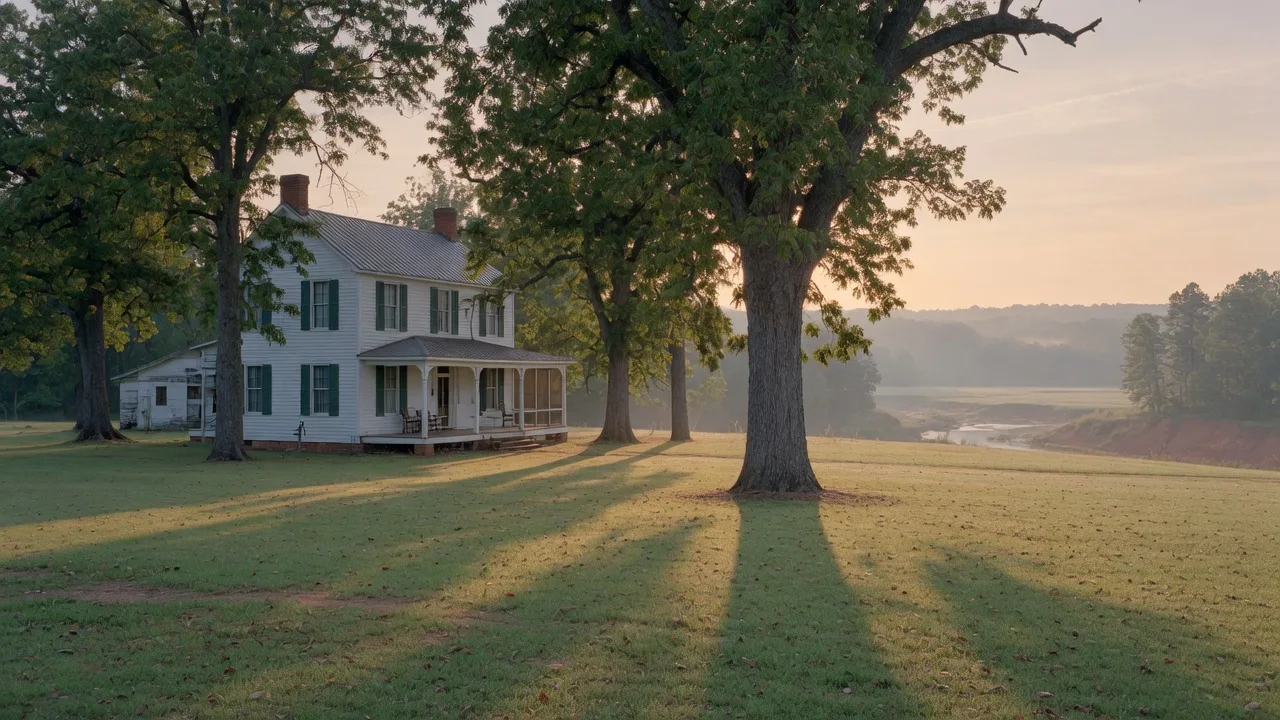
Of the many remarkable things about 257 Methodist Park Lane, what has stayed with us as we have worked with this property is not the lakefront, not the pavilion, not even the 4.546 acres of flat, private shoreline. It is this: the same family lived on this land for six generations before the lake existed, and for three generations since. That is not a holding period. That is a lineage. And it is the lineage, not the water, that makes this estate irreplaceable.
The first generation on the ground
The home at 257 Methodist Park Lane was built in 1873, eight years after the end of the Civil War and twenty-three years before Hartwell would incorporate as a city. The first family to occupy it chose this specific spot on the ridge above the Savannah River valley for the same reasons anyone in 1873 would have: flat, arable land; reliable access to water; mature timber for building and fuel; and elevation above the flood plain of the river that curved through the valley below.
Hart County at that time was a landscape of subsistence farms and small cotton plantations, linked by dirt roads that followed the contours of the Piedmont ridges. The railroad would not reach Hartwell until 1879, so the river was the primary transportation corridor. Flatboats carried cotton, timber, and tobacco downstream to Augusta, where they were traded for goods the farms could not produce: coffee, sugar, salt, tools, and cash. It was a hard life by any modern standard, but it was a life that required competence, resilience, and the willingness to do every job yourself because there was no one else to do it.
The first generation planted the pecan trees that still stand. They dug the well. They cleared the fields that became the flat lawn. They built the covered porch that faces the afternoon breeze. And they established the pattern of stewardship that every subsequent generation would either uphold or abandon. Six generations chose to uphold it.
What the land asked of each generation
A working farm in the Savannah River valley was not a passive investment. It was a relationship of mutual obligation: the land provided food, shelter, and income, but only if the family provided labor, attention, and the wisdom to know when to plant, when to harvest, and when to let the land rest.
The second generation — the children of the 1873 homesteaders — would have grown up learning the skills their parents brought from scratch: how to read the clouds for rain, how to butcher a hog and preserve every part of it, how to sharpen a plowshare, how to navigate the river's currents when the spring melt sent the Savannah rising. By the time they inherited the property, the pecan trees were producing. The house had been improved. The outbuildings — the barn, the smokehouse, the chicken coop — were in place. Their job was to keep it all running, to improve where they could, and to pass it on in better condition than they found it.
The third generation, arriving around the turn of the century, would have witnessed the first major changes. Hartwell was growing. The railroad brought new goods and new ideas. The farm could sell crops for cash rather than barter. But cotton prices fluctuated wildly, and the boll weevil arrived in Georgia in 1915, devastating the crop that had been the family's primary source of income. The family adapted — diversified into corn, livestock, and the ever-dependable pecan harvest — and survived the economic turbulence that broke so many farming families across the South.
The generation that held during the Depression
The fourth generation on this land lived through the Great Depression. For a family whose income depended on cotton and corn, the collapse of commodity prices in the 1930s was not a theoretical economic event — it was the question of whether the family could eat. The pecan trees, planted by the first generation, became the family's lifeline. A pecan crop did not require purchased seed, fertilizer, or equipment. The trees produced every year without being asked, and the nuts could be stored through the winter, traded with neighbors, or sold for small amounts of cash that kept the family going when the banks failed and the markets closed.
This is the generation that proved the wisdom of the first generation's choices. The 1873 homesteaders had planted trees that would not produce for a decade, anticipating a future they would not fully see. Their great-grandchildren reaped the benefit in the most desperate years of the 20th century. That kind of foresight — planting for a generation you will never meet — is the defining characteristic of multi-generational stewardship. It is also why the pecan trees at 257 Methodist Park Lane are not merely landscaping. They are the physical evidence of a family that understood what it meant to hold land for the long term.
The river as the constant
Throughout the first eight decades of the property's existence, the Savannah River was the fixed point in the landscape. It defined the southern boundary of the family's world. It provided fish for the table, water for the livestock, and a natural corridor for travel and trade. The family could hear it on quiet nights — the sound of moving water that had been cutting through the Piedmont for millennia.
The river also brought danger. Spring floods were a recurring threat that every generation managed in its own way. The family had chosen their building site well — on elevated ground above the flood plain — but the lower fields could still be inundated, washing out crops and depositing debris that took weeks to clear. The rhythm of the river was a lesson in humility: you could work with it, but you could not control it. That understanding — that the water was larger than any single generation — prepared the family, perhaps unconsciously, for the day when the water would change entirely.
What the generations knew
Across six generations on the same ground, the family accumulated knowledge that no deed could convey and no survey could capture. They knew which direction the prevailing wind came from in July and how to orient the porch to catch it. They knew where the spring rose on the property's north slope and how deep the well needed to be to reach it reliably. They knew that the pecan trees required pruning every three years and that a winter with heavy rains meant a better crop the following fall. They knew that the house's foundation — laid by hand in 1873 on native stone — would settle and shift and need to be maintained, and they maintained it.
This kind of knowledge is not recorded anywhere. It lives in the hands and minds of the people who work the land, and it dies when the connection between a family and a property is broken. The fact that this property has been continuously held by the same family line for over 150 years means that knowledge has been transmitted — father to daughter, mother to son, grandparent to grandchild — across six transitions. That continuity is rare. On a lakefront estate of this size and quality, we believe it is unmatched.
What the next generation inherits
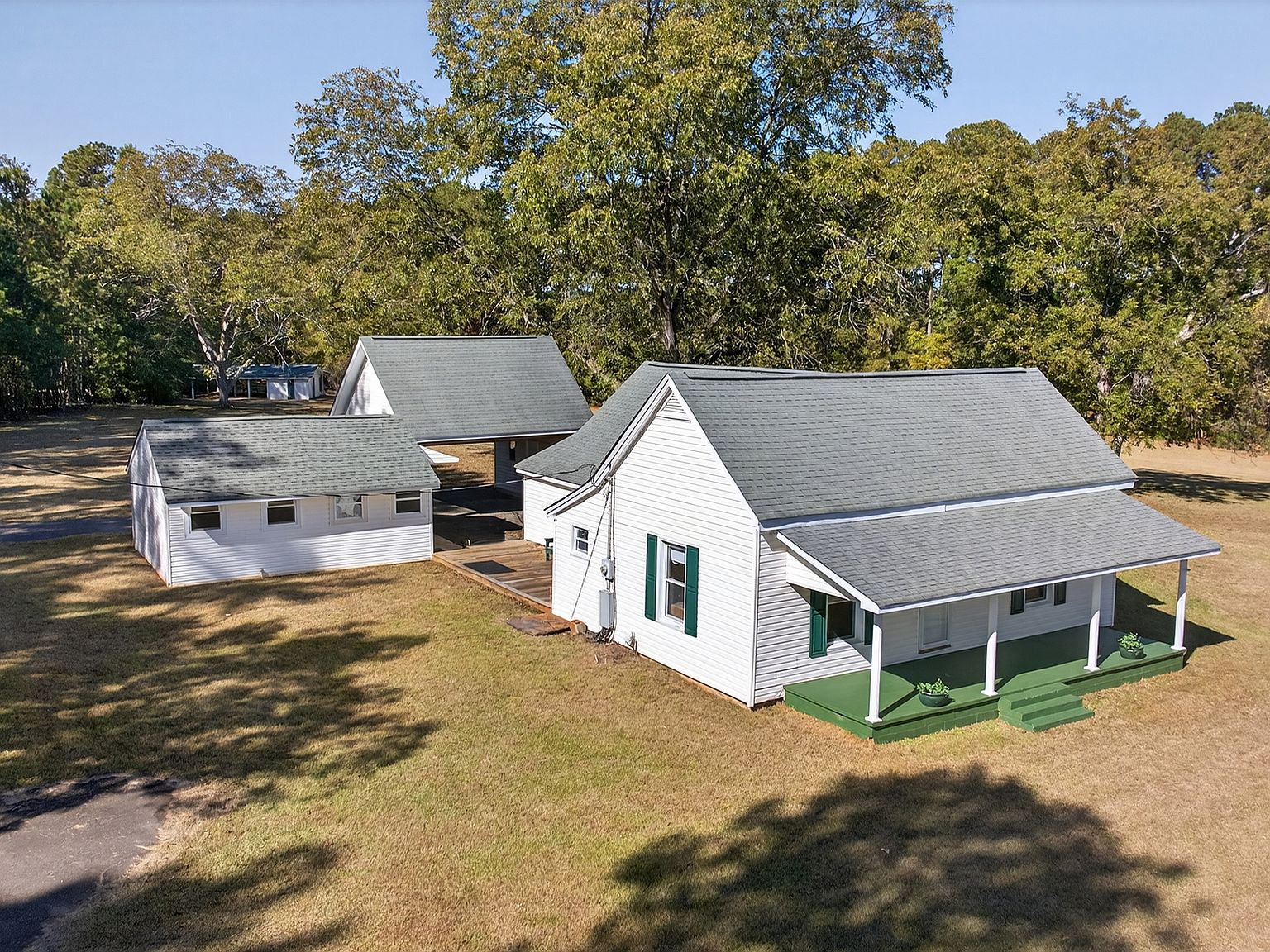
The property today is different from what the first generation built. The lake arrived in the 1960s and turned a river valley homestead into a lakefront estate. The pavilion was added. The dock was built. The boathouse replaced the barn as the property's most-used outbuilding. But the bones of the original property — the house, the pecan trees, the flat lawn, the covered porch, the elevated ground that saved it — are exactly as they were. The next owner will inherit not just a Lake Hartwell estate but the accumulated wisdom of six generations who understood that land is not something you consume. It is something you hold, improve, and pass along.
We cannot tell you what the seventh generation will do with this property. That is for the next owner to decide. But we can tell you that the land is ready. It has been waiting, in a sense, since 1873 — not for a particular family, but for someone who understands what it means to become part of a story that started long before they arrived.