
Heritage
A November morning before the lake: one day on this land in the late 1940s
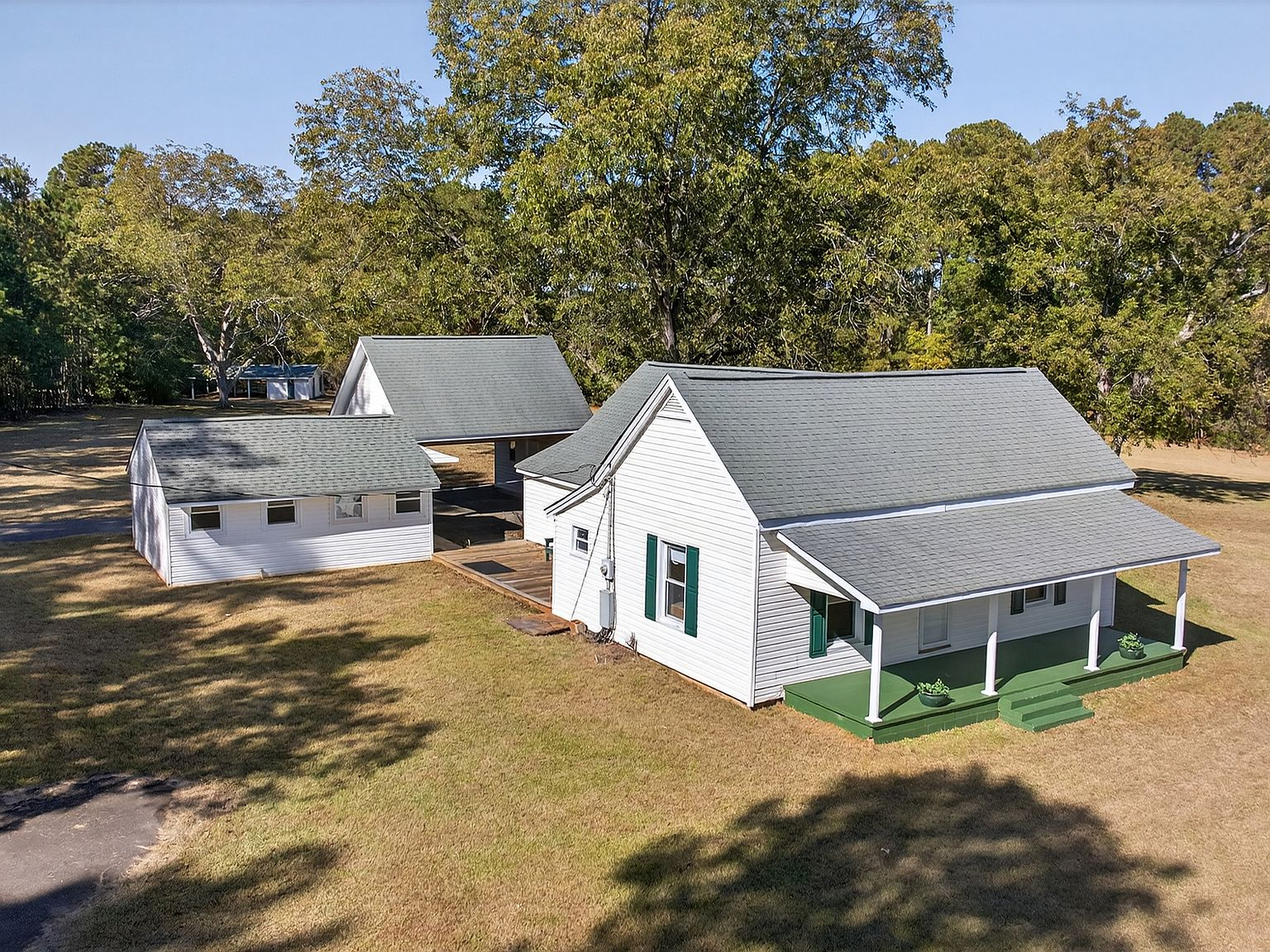
We cannot know the details of any single morning on this land before the water came, but we can stand on the property and read what the land itself tells us: the flat high ground, the mature pecan trees, the porch that faces the river valley that used to lie below. So picture this. Picture a November morning in the late 1940s, a few years before Hartwell Dam was even authorized, when 257 Methodist Park Lane was a farmhouse and the lake was still a river.
The valley before the water
In the late 1940s, no map of Hart County showed a lake. The U.S. Army Corps of Engineers had photographed the valley from the air in 1938, and those aerials show what the ground looked like: dirt roads winding through bottomland farms, narrow bridges crossing the Savannah River and its tributaries, and fields laid out along the floodplain below the ridges. On the high ground at Methodist Park Lane, the farmhouse was already approaching eighty years old, and the family working it had been there since before the Civil War.
The Flood Control Act of May 17, 1950, which authorized Hartwell Dam, was still unwritten. Congress had not voted, the surveys had not begun, and the families of the valley had no reason to believe their river would ever become a reservoir. The river was simply the river: the boundary of the county, the source of the bottomland's rich soil, the water that carried floods in wet years and shrank to its bars in dry ones. It was the oldest thing on the horizon, and it seemed the most permanent.
Dawn at the well
A November morning on that farm began in the dark. Someone was at the hand-dug well before full light, drawing the day's water while frost stood on the grass. In the kitchen, the wood stove took the chill off the room, and the sound of it, the crack and settle of fire, joined the other morning sounds of the place: the axe at the woodpile, the roosters, the lowing of cattle from the lot, and, up the lane, the first bell of the day from the Methodist church that had stood on this road since before the farmhouse. The church organized its congregation in 1854 and raised its brick sanctuary in 1897, and its bells had measured the hours of this land for generations.
The porches of the farmhouse faced the valley and the southern sun, the same orientation the house keeps today, and on a clear November morning the first light came low across the pecan grove. The trees were old even then. Planted by an earlier generation for shade and harvest, they had watched children grow, families gather, and seasons turn, and they had already outlived every generation that planted them.
The pecan harvest and the day's work
November was the month the harvest came home. The pecans fell through the month, and the family gathered them the way the ground demanded, by hand, into baskets and sacks, the good ones kept for winter tables and gifts, the rest for the kitchen. The garden was done for the year, its shelves lined with canned goods put up in late summer. The woodpile was being laid in for the cold months, and the smokehouse held the meat of the year's butchering, work that had its own late-November season on Hart County farms.
None of it was easy, and all of it was ordinary. That is the point of the ordinary: the family did not think of themselves as living a historic life. They were living the only life the ground offered, in a house that had been passed down, on land that had been held, through everything, since the 1800s. They had no idea the ground they stood on would one day be described as one of the last remaining large-acreage parcels on Lake Hartwell's Georgia shoreline. They knew only that the land was theirs, that it was good, and that it had never once failed to be enough.
The lane and the church
The lane that gives the property its name was a working road in the 1940s, serving the farms and the church that gathered the neighborhood. On a Sunday morning in November, the families of the lane walked or drove the short distance to services, and the same families sat together that had sat together for seventy, eighty, ninety years. Methodist Park Lane was not named for a park; it was named for the church and its grounds, the gathering place at the heart of the community, and the farmhouse at 257 was part of that community's oldest memory.
The road was the neighborhood's spine. Neighbors traded news across it, children learned to ride along it, and the church bells set its clock. When the day's work was done, the porch at 257 was the family's place, catching the last of the November light over the valley, with the smoke of supper rising from the kitchen chimney behind the house.
What they could not have known
The rest of the story is documented. The Flood Control Act of 1950 authorized the dam. Construction began in 1955 and ran through 1962, and the Corps of Engineers built one of the largest man-made reservoirs in the Southeast. The water began rising in February 1961 and reached full pool in March 1962, covering the bottomlands, the farms, the bridges, and the river that had given the valley its reason to exist. Families were displaced from the floodplain, and the towns beneath the lake were dismantled or submerged.
The family at 257 Methodist Park Lane was not displaced, because their ground was high ground. The flat 4.546 acres sat above the full pool line, close enough to the new water to claim the view and far enough above it to have been safe since the first survey. They watched the dam rise from a porch that predated the project by nearly nine decades. They watched the valley fill. And they stayed, the way their grandparents had stayed, the way the pecan trees had stayed, the way the church up the lane had stayed. The river became a lake, and the farmhouse became a lakefront estate, and the ground never moved.
The same November now
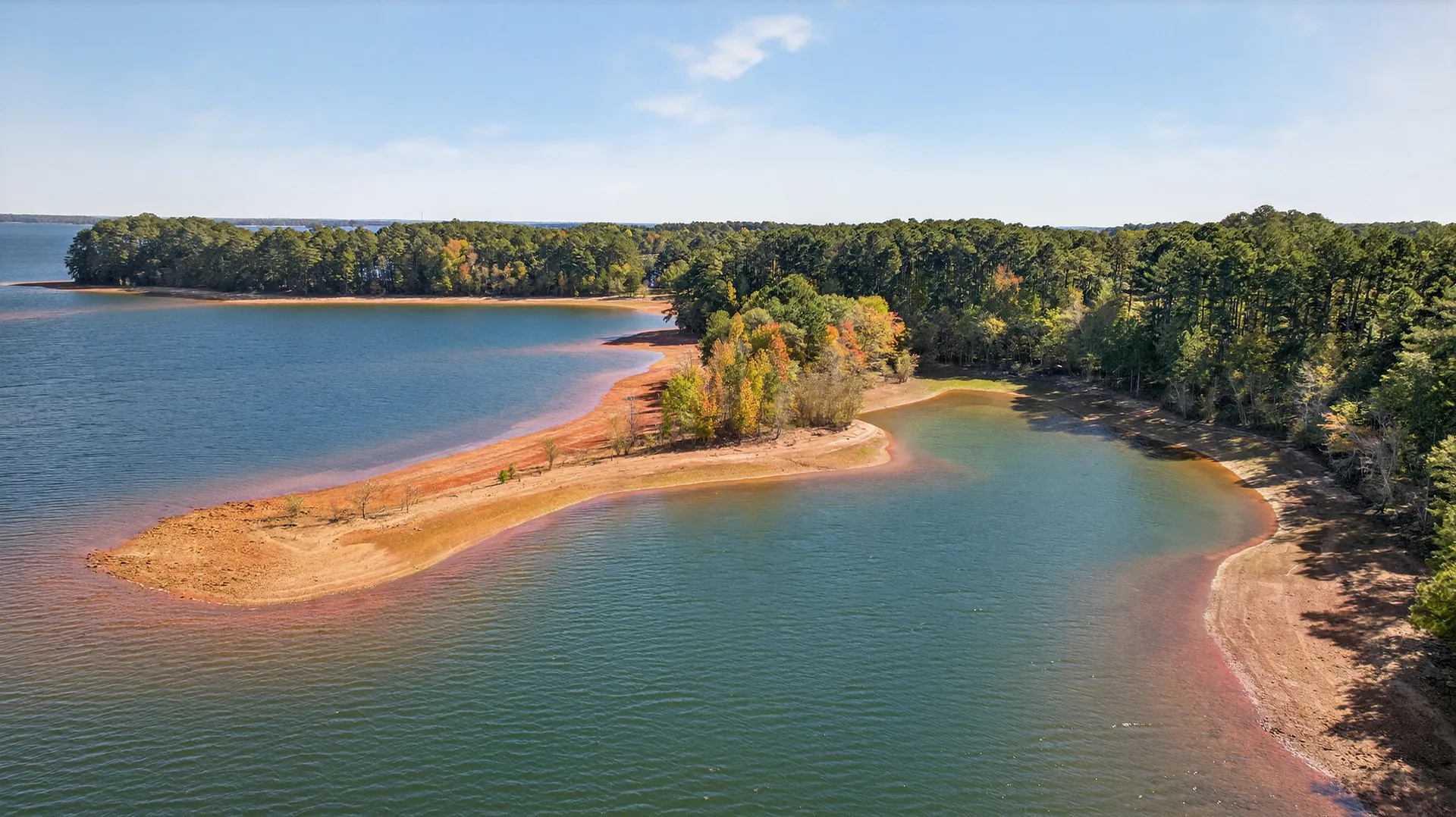
This November, from the same porch, the view holds 56,000 acres of water and 962 miles of shoreline. The lake that filled the bottomlands is in its 65th year, still the center of Hartwell's life: the Mercury B.A.S.S. Nation Championship weighs in on the water in mid-November, the tree lighting comes on the 23rd, the parade follows in December, and the quiet season settles in between. The pecan trees that shaded the 1940s harvest still stand over the lawn. The church still rings its bells up the lane. And the farmhouse, expanded, updated, and loved across six or seven generations, still faces the valley that became the lake.
Every once in a while we walk a buyer out to the flat ground near the water and watch them do what we do: look at the lake, then look back at the house, and try to hold both in their mind at once, the river morning and the lake evening. That double view is the estate's whole argument. Very few properties in America can show you a century and a half on one piece of ground, from plow to pontoon, and this one can. In the late 1940s a family on this lane could not have known what was coming. Now the story is written, and the property is ready for the family who will read it forward, into its next chapters, on the same high ground.